I Needed Emergency Surgery. My Parents Said They Couldn’t Miss My Brother’s Party.
“Don’t bother us. Deal with it yourself.”
My father shouted it into the phone. My mother repeated it a moment later, then hung up. Beside my hospital bed, my fifteen-year-old daughter lowered the phone she had been holding for me and stared at the screen.
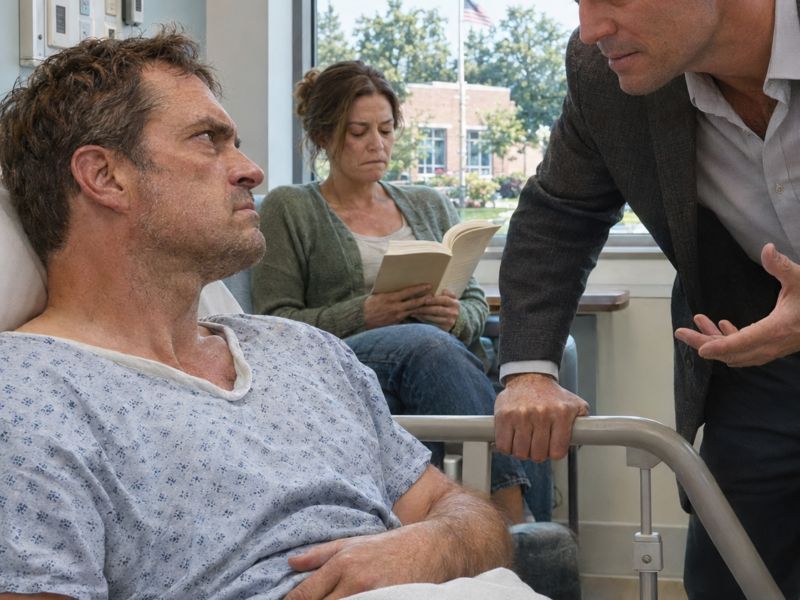
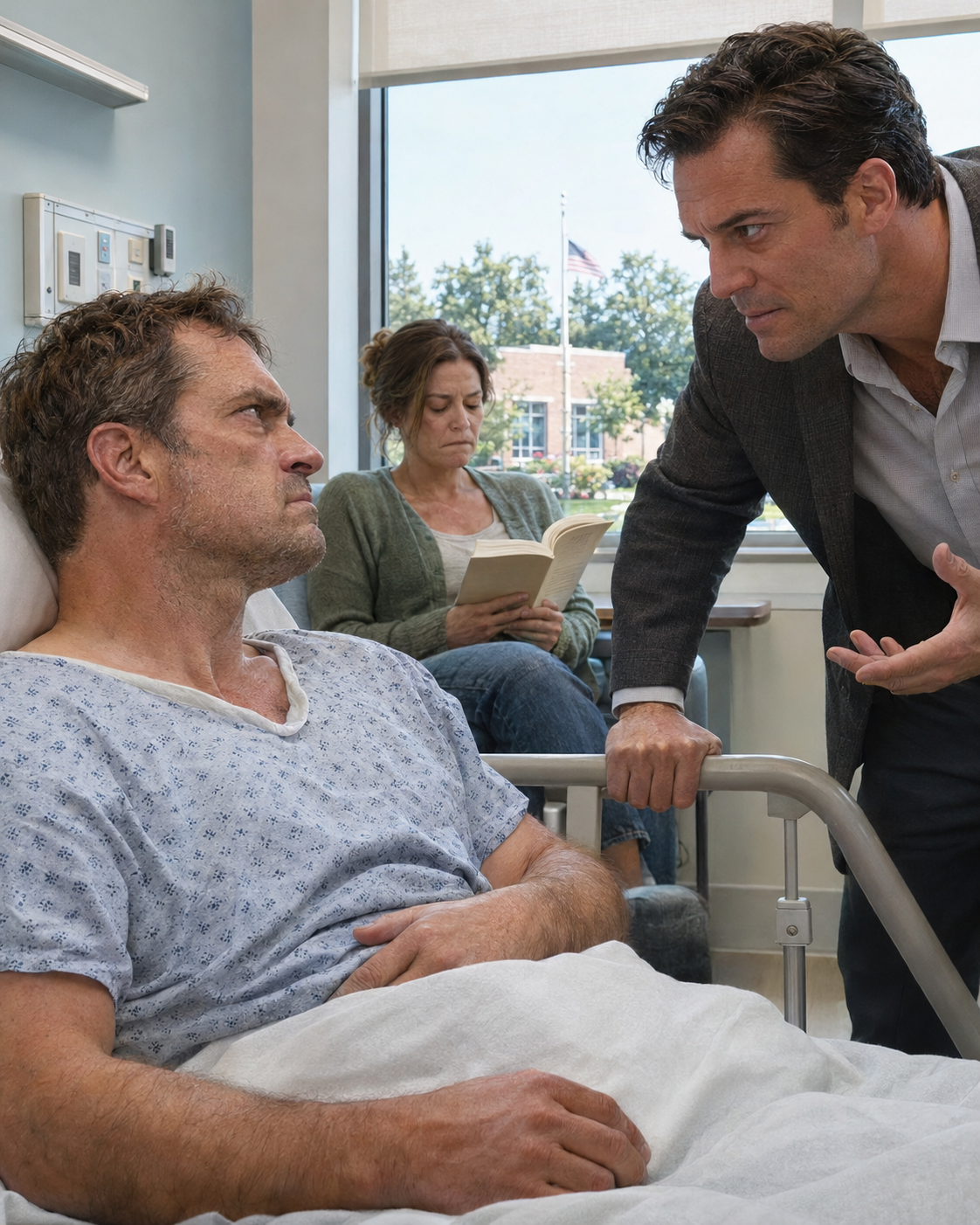
I had a torn spleen, two broken ribs, and less than an hour before surgery. My wife was on a plane. My parents lived twelve minutes from the hospital, and all I had asked them to do was come sit with their granddaughter.
But my brother had a party that evening.
For a few seconds, I watched Callista try to make her face look normal. Then I asked the nurse for enough time to make one more call.
This one wasn’t going to my family.
My name is Benedict Wainwright. I was forty-three that spring, and I owned a marine rigging yard on Back Creek in Annapolis. Most of my working life had been spent hanging masts, replacing worn fittings, and telling boat owners that a repair was going to take longer than they hoped.
Callista did her homework in my office most afternoons. She claimed our Wi-Fi was better than the school’s. I suspected she also liked the old refrigerator I kept stocked with things her mother considered dessert.
That afternoon, shortly before four, I was helping set the mast on a forty-foot sailboat when a shackle in the lifting assembly failed. The mast swung, and the cable whipped across my left side.
I remember the impact. I remember gravel against my cheek. Then Callista was beside me, holding her phone to her ear.
“He’s breathing,” she told the dispatcher. “He’s talking. Please tell them to come through the big gate by the office.”
My foreman knelt on my other side. He’d worked with me for eleven years, and I’d never seen that look on his face. “Don’t let anybody move the equipment,” I told him.
“Dad, stop talking about the crane.” Callista’s voice was steady until she looked down at me. “Please just stay still.”
At the hospital, a doctor pointed to an image on a screen and explained that my spleen was bleeding into my abdomen. They needed to operate. She was calm and direct, which I appreciated, although I would have appreciated her news more if it had concerned somebody else.
My wife, Althea, taught eighth-grade science. She was flying home from a conference in Denver and wasn’t due to land until around eight. I called anyway, left a message, then sent a text asking her to contact the hospital as soon as she could.
The nurse waited until I put down the phone. “Is there another adult who can stay with your daughter?” she asked. “We’ll look after her, but it would help to have someone she knows.”
Callista sat with her backpack upright on her knees. The knee of her jeans was dirty from kneeling in the yard. She kept rubbing that spot with her thumb.
Althea’s sister was five hours away in Pittsburgh. My foreman was securing the accident scene and dealing with the people who needed to inspect it. My parents were across town, getting dressed for Braddock’s business launch.
I hadn’t asked them for much in years. That had become a habit, partly because they were rarely available and partly because it was easier to do things myself than hear why someone else’s needs mattered more.
But this was different. I wasn’t asking for a weekend. I needed a few hours.
I texted: I’m in the emergency room. I need surgery. Please help. Then I added: Callista is here alone.
My mother called almost immediately. My hands were shaking, so I asked Callista to put my phone on speaker.
“Benedict, what is going on? Your father and I are dressed. Braddock’s launch starts at seven.”
“I had an accident at the yard. Mom, I need you to come sit with Callista.”
“Can’t she wait with you?”
“They’re taking me into surgery.”
“For what?”
“My spleen’s bleeding. A cable hit me.”
She let out a tired breath. “Oh, you and your dramatics.”
Callista picked up her own phone. “Can I record this for Mom? So she’ll know what’s happening?”
“Yes,” I said.
“Fine,” my mother answered. “Maybe she can explain to him that we have obligations.”
My father’s voice came from farther away. “Go ahead. She can hear it too.”
Callista touched the screen. I watched the ceiling because looking anywhere else made the room tilt. “Please,” I said. “She shouldn’t have to sit here by herself.”
“You’ve always needed an audience,” my mother said.
“Tell him tonight is Braddock’s night,” my father called. “Tell him we don’t have time for this.”
“Dad, I wouldn’t ask if—”
“Then don’t. Don’t bother us. Deal with it yourself.”
“Deal with it yourself,” my mother repeated. “We have waited two years for tonight.”
The call ended.
“Grandma hung up,” Callista said.
“I know, sweetheart.”
She set my phone on the blanket, carefully avoiding the tubing beside my hand. She hadn’t cried when the ambulance arrived. She hadn’t cried when the doctor said surgery. Now her mouth trembled, and she pressed her lips together until it stopped. There was something I needed to do before they wheeled me away.
Eight years earlier, my parents had lost their waterfront house on Spa Creek to foreclosure. My father, Meriwether Wainwright, had retired from the insurance business with a comfortable income and enormous confidence in his own judgment. Then he had backed a series of ventures, several of them my younger brother’s ideas, until the money ran out.
I bought the house at auction through a limited liability company I owned. The price was $780,000. It took my savings and borrowed money, and for a long time afterward I lay awake calculating what a bad season at the yard could do to us.
Althea knew the cost. She also knew I couldn’t stand the thought of my parents losing their home. She agreed to the purchase, though she asked me to put everything in writing.
We did. My parents signed an occupancy agreement allowing them to live there for one dollar a year. The company owned the property. They couldn’t sublet it, pledge it, or treat it as something they could give away.
I softened the explanation when I handed them the papers. I said I’d worked out an arrangement after the foreclosure. I didn’t make them sit through a speech about whose money had saved them. Looking back, I can see how eagerly I helped them avoid that conversation.
“We knew you’d fix it,” my mother said.
Afterward, I sent them $6,500 every month. I covered the property taxes and insurance separately. Their Lincoln and SUV belonged to my company. I paid for the yacht club and gave them a supplemental credit card for expenses.
I also employed Cates, a retired Naval Academy facilities man, to oversee the property. He knew where the shutoff valves were, kept contractors honest, and had never once mistaken my father’s commanding voice for authority over his paycheck.
My brother Braddock was thirty-eight. That evening, he was launching an import business called Wainwright and Son Reserve. Son. Singular. I had noticed, but I hadn’t said anything. My parents were proud of Braddock in a way that made every disappointment temporary and every small success historic. With me, they mostly seemed relieved that something broken had been repaired.
For years, I told myself that was simply how families worked. Different children filled different roles. Then I looked at the child beside my bed and understood what mine had cost her.
Cates answered on the second ring. “Mr. Wainwright. I heard about the accident. Are you—”
“I want it stopped. The money, the cars, the cards. All of it.”
He was quiet for a moment. “Your parents, sir?”
“They won’t come sit with Callista. I’m going into surgery, and they told us to deal with it ourselves. I want them out of the house.”
“I’m going to bring your attorney onto this call.”
“Cates—”
“So we do it properly.”
That got through. I closed my eyes and said yes.
My lawyer joined us a few minutes later. She listened without interrupting, then told me there would be no changing locks, no putting belongings outside, and no shortcuts because I was angry.
“Then start whatever has to be started,” I said.
“We can prepare notice. The unauthorized cottage rental gives us a separate issue under the agreement. But notice starts a process, Benedict. It doesn’t finish one.”
Cates had recently found the guest cottage advertised online. I’d been meaning to ask my parents about it. There had always been something I was meaning to ask them about.
The cars could be collected peacefully by the company’s authorized agent. The supplemental card could be canceled. Future transfers could stop. My lawyer went through each item until I understood what could happen that evening and what would have to wait.
Then she asked whether I was sure. I didn’t pretend I wasn’t frightened or medicated. I was both. But I could still see Callista sitting three feet away, trying not to make my emergency harder for me.
“Ask me again when I’m home,” I said. “I’ll give you the same answer.”
“All right. And we need to address the bank letter.”
I opened my eyes. Two weeks earlier, Cates had brought me a letter delivered to the Spa Creek house. A bank wanted mortgage information in connection with my father’s application. The letter referred to the property as an asset he owned.
I had put it in a drawer at the yard. I told myself there must be some explanation, some confusion about an address. I had intended to call my father when I wasn’t tired.
There was never a convenient day to discover your father might be using your house to borrow money.
“Take it out of the drawer,” I told Cates. “Give her everything.”
The nurse came through the curtain. The operating room was ready. “One thing,” I told him before we hung up. “Do this politely. But don’t cover for them.”
“Understood, sir.”
Callista stood as the orderlies released the brakes on my bed. The nurse put a hand on her shoulder and promised to stay with her until someone could take over.
“I’m not scared,” my daughter said.
“You can be.”
Her eyes filled. I reached for her hand before the bed started moving. “Your mom will be here soon.” It was the last thing I could give her before the doors closed between us: a promise about somebody who would come.
When I woke, Althea was holding my hand. There was green dry-erase marker on one knuckle, a small familiar detail that nearly undid me. “Hi,” I said.
She leaned forward and kissed my forehead. “Hi.”
She told me the surgeon had removed my spleen and stopped the bleeding. There would be recovery instructions, follow-up appointments, and precautions about infections. For the moment, I was awake, and she seemed determined to keep checking that fact.
“Callista?”
“Here. She’s been waiting for you to make sense.”
“Could be a while.”
Althea smiled, then bent her head over our joined hands. I let her have that minute.
Callista came in with a blanket around her shoulders. She showed me her phone. “I saved it,” she said. “The call.”
I remembered her asking. I hadn’t understood how much it mattered to her.
“I thought Mom should hear it,” she said. “Then I wanted to keep it for me.”
“Why?”
She watched the screen. “In case later I started thinking it wasn’t that bad. Or that I remembered it wrong.”
Althea’s hand tightened around mine. “You remembered it right,” I told Callista. “You don’t need to prove anything to us.”
“I know.” She looked up. “But can I keep it?”
“Yes.”
Althea had already saved a copy. She put Callista’s phone on the table and pulled a chair close to my bed. That night, nobody asked my daughter to be brave again.
Cates arrived the following morning carrying a thermos and a manila envelope. He asked how I was feeling, listened to the answer, then waited while a nurse checked my blood pressure. That ordinary courtesy seemed almost extravagant after the previous evening.
When the nurse left, he pulled a chair beside the bed. “The transfers have been stopped. The card has been canceled. The club has been notified. Your attorney is handling the notice.”
“And the cars?”
“Both secured.”
Althea looked up. “How did that go?”
Cates unscrewed his thermos. “Your mother had ordered a champagne tower.”
I waited. He was a man who believed useful information should be delivered in its proper order, even when he clearly enjoyed the order.
“An additional thirty-eight hundred dollars. She was trying to pay for it when I arrived at the hall.”
The card had already been declined twice. My mother was explaining to the catering manager that his machine was defective. Behind her, a string quartet was finishing a piece while about eighty guests stood beneath arrangements of white flowers.
Cates had collected the SUV from the garage first. Then he went to the launch with the Lincoln’s spare key, proof of company ownership, and his written authorization to act for me. He made arrangements with the valet before approaching my parents.
“I told them I was there on your behalf to collect the vehicle.”
“In the room?” I asked.
“Near the entrance, sir. Your father chose to speak more loudly.”
I could picture that without help.
“He said, ‘You can’t take my car.’ I explained that it belonged to the company. Then he asked whether you planned to take his house next.”
Cates paused to drink from the thermos. “I told him the house had belonged to your company for eight years. That he had signed an occupancy agreement. That I managed the property for you.”
“Who heard?” Althea asked.
“Several people. Including the commercial loan officer standing beside your brother.”
I looked at the envelope in his hand. “The bank from the letter?”
“Yes, sir. He introduced himself afterward and asked for your attorney’s contact information.”
My father had tried to move the discussion outside. My mother had stayed where she was, furious that an employee would contradict them in front of guests. She accused me of trying to ruin my brother’s evening.
“I reminded her that you were in surgery,” Cates said.
For a moment, I wanted to hear that she had stopped. That something about hearing it in a crowded room had finally made it real to her. “What did she say?”
“She asked how they were supposed to get home.”
I looked away.
“And what did you say?” Althea asked.
“That they would have to make their own arrangements.” He set the thermos down. “Then I repeated the instruction they had given Mr. Wainwright.”
I looked back at him.
“Deal with it yourself,” Cates said.
Althea pressed her lips together. I almost laughed, but the movement tugged at my side and settled the matter.
My parents had gone home in a rideshare. The attorney’s notice would follow. Nobody had touched their possessions or prevented them from entering the house.
“One person did ask about you,” Cates added. “Your sister-in-law stopped me before I left.”
Shania was thirty-six, a hospice nurse, and the only person connected to Braddock’s new company who seemed more interested in people than their usefulness. She had texted twice after hearing about the accident. My mother told her I was exaggerating.
“She wanted to know whether you were out of surgery. She also asked about the house papers.”
“What did you tell her?”
“That your attorney could answer questions about those.”
He handed me the envelope. Inside was the first account summary my accountant had prepared after I authorized her to examine the transfers.
The account receiving my monthly payments was a joint account. My parents had added me years earlier so I could handle emergencies. I deposited money into it regularly and had somehow persuaded myself that looking at what happened afterward would be insulting.
There were pages of outgoing transfers. The same amount kept appearing beneath my deposits: $5,500. The recipient was Braddock. The description was “family loan.”
“Every month?” I asked.
“She’s checking the full history,” Cates said. “So far, yes.”
The full account history would confirm the pattern: ninety-six deposits from me, followed by ninety-six payments to my brother. A total of $528,000 had passed through my parents’ account into his. They had kept a thousand dollars a month for themselves while I paid their major expenses separately.
Althea read that first summary over my shoulder. She didn’t say anything for a long time.
I thought about the evenings I’d stayed late at the yard. The calculations before buying equipment. The times I had told Althea that helping my parents was temporary, even after temporary had stretched into years.
“Did you know?” she asked.
“No.”
She nodded. She believed me. That made what came next harder to hear. “I kept asking whether they really needed all of it.”
“I know.”
“You said you couldn’t make your father account for groceries.”
I set the papers down. “I should have listened.”
She pulled the blanket away from a kink in my IV line. “We’ll talk about it when you’re stronger.”
It wasn’t forgiveness tied up neatly. It was room to have the conversation without losing each other.
My phone held fourteen voicemails from the previous evening. Althea had listened first, then turned it off so I could sleep. That morning, she played a few.
My mother wanted the card restored. My father wanted Cates disciplined. Braddock’s launch had been humiliated. People were talking. They’d been forced to ride home with a stranger. The final message was my father saying, “This is unforgivable.” Not one of them asked whether I had come out of surgery.
Callista was by the window, pulling the paper sleeve off a straw. I reached for the phone before the next message could play. “That’s enough,” I said. This time, I meant enough for her, too.
Braddock came to the hospital on the third afternoon. By then I could walk to the bathroom with help, provided nobody made me laugh, cough, or move with any ambition.
He walked in wearing a charcoal jacket and carrying nothing. No overnight bag, no coffee, no card. I noticed because the nurse had just carried in clean socks for me, and I was beginning to pay attention to what people brought into a room.
“What the hell did you do?” he asked.
Althea closed her book. “He had surgery,” she said.
“I know that. I’m talking about Cates. He walked into my launch and told everyone Dad doesn’t own his house.”
“He doesn’t,” I said.
Braddock shook his head. “The loan officer pulled me aside before my toast. Before my toast, Benedict. Do you understand what that looked like?”
“I’m starting to.”
He paced to the window and back. He had always looked like our father when he was angry, right down to straightening his cuffs before saying something he thought settled the matter. “Mom hasn’t stopped crying.”
“Did she tell you why I called?”
“She said you’d had an accident and were upset. She said you were taking it out on everybody because we couldn’t drop everything.”
Althea put her book on the windowsill. Braddock finally looked at the monitors, the tubing, the pillow I was holding against my abdomen. “Look, I’m sorry you got hurt. I didn’t know it was this serious.”
“You know now.”
He dragged a chair closer but didn’t sit. “Then why are you making it worse? You cut off the trust money. Dad says the bank account’s been frozen or something.”
“What trust?”
“His investment trust. The family money.”
I looked at Althea. She reached for the envelope. “Dad didn’t make his money back,” I said. “I’ve been sending him sixty-five hundred dollars a month. He’s been sending fifty-five hundred of it to you.”
Braddock stared at me. “No.”
“Eight years.”
“No. He told me the investments recovered.”
I handed him the summary. He read the top page without moving, then turned it over as if the other side might explain the first.
“That’s your money?”
“Yes.”
He sat down. For once, I didn’t fill the silence. I let him look at the dates and amounts. Some of the anger drained out of his face, leaving something younger and much less certain.
“I thanked him,” he said.
I knew he had. I’d sat through dinners where he raised a glass to our father’s faith in him while I checked my phone for calls from the yard. “You can confirm all of it with my accountant,” I said.
Braddock pressed the paper flat on his knee. Then he looked toward the door, and I saw him push the discovery aside because something more immediate frightened him. “The closing is in nine days.”
“What closing?”
“The expansion loan. One point two million. We need it for the company. The bank wants the property owner to sign, and Dad says you can straighten out the LLC part.”
“You mean use the house as security.”
“It’s a standard consent.”
“Do you understand what it does?”
He looked down again. “Dad said he was going to explain it at dinner. He said it was mostly for tax purposes.”
Beside me, Althea took a slow breath.
“The loan officer wants you there,” Braddock said. “If you don’t come, this could fall apart.”
I could have told him no from that bed. I nearly did. But the bank had my father’s version of the facts, and I wanted the people making decisions about my property to hear mine directly.
“I’ll attend,” I said.
Relief crossed his face so quickly it was painful to watch.
“Thank you. I knew we could work this out.”
“I said I’d attend.”
He nodded, already gathering himself, already standing. He left the account summary on my blanket. After he was gone, Althea picked it up. “He heard what he needed to hear.”
“He learned that at home.”
She called my attorney while I rested. By evening, the lawyer had spoken with the bank’s loan officer. The title work showed my company owned the house. My father’s personal financial statement, meanwhile, listed it as his own property, worth $1.9 million, free and clear.
He had certified that information as accurate. The same statement had supported his guarantee of the company’s existing $450,000 credit line. Now, with an expansion loan pending, the bank wanted security in the house itself. That required an owner’s consent he did not possess.
“This isn’t about a disagreement at a party,” my lawyer said. “They need to know whether the asset they were told about was ever his to offer.”
“It wasn’t.”
“Then that’s what we’ll establish.”
I came home with discharge instructions, medication bottles, and a lifting restriction Althea treated as a personal assignment. Callista carried my bag from the car. She also brought my shoes upstairs, though I told her I could get them later. “I know,” she said, and carried them anyway.
For a day, our lives narrowed to things I understood: when to take a pill, whether I could get comfortable, how to stand without pulling at my incision. The yard called with questions my foreman mostly answered himself. Althea put a glass of water beside me every time she passed the couch.
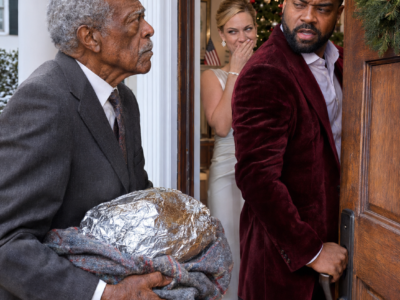
On the second afternoon, my parents rang the doorbell. My father held a casserole wrapped in foil. My mother wore a pink cardigan and an expression I recognized from church visits to people she didn’t particularly like.
“We were nearby,” she told Althea.
“Come in,” I called before my wife had to answer.
They stood in our front room looking uncomfortable. My father’s gaze moved over the laundry basket, Callista’s shoes, and the stack of medical papers on the coffee table. My mother looked at my face. “You’ve lost weight.”
“It’s been a rough few days.”
She adjusted the casserole in my father’s hands instead of asking anything else.
“We came to clear up this misunderstanding,” he said.
“Which one?”
“You made it sound as if we’d refused to help you in some terrible situation. We didn’t understand.”
“I told you I needed surgery.”
“You were talking very fast. We were trying to leave.”
I waited for him to say he was sorry. He set the casserole down. “And then Cates appeared in front of people we have known for years.”
Althea folded her arms. “Your granddaughter needed someone she knew.”
A floorboard creaked near the stairs. Callista stood on the fourth step, her hands tucked inside her sweatshirt sleeves. My mother brightened. “There you are. Come give your grandmother a hug.”
“No, thank you.”
The room went still.
“Callista.” My mother kept smiling. “We’ve missed you.”
“I needed you at the hospital.”
“Sweetheart, you don’t understand everything that was happening.”
“I understood what you said.”
My father drew himself up. “That isn’t how you speak to your grandmother.”
“Dad,” I said. “Leave her alone.”
He looked at me as if I’d broken an old agreement. In a way, I had. Usually I would have smoothed the moment over, offered an explanation for him, told Callista to be polite and then apologized to her later. She was already being polite. Her hands were shaking inside her sleeves.
“She doesn’t have to hug anyone,” Althea said.
My mother turned back to me. “This is what I mean. The whole family is being torn apart over a bad phone call.”
“Then you understand it was a bad phone call.”
She pressed her lips together.
My father shifted impatiently. “We need the transfer restored. The card doesn’t work. The club called your mother. This has gone far enough.”
“The payments aren’t coming back.”
He looked at Althea, as though she must be responsible. I waited until his attention returned to me. “I said that,” I told him. “It was my decision.”
My mother put her handbag on the table. A folder slipped forward inside it, far enough for me to see a yellow signature tab. “Braddock says you’ll be at the bank.” Her voice had changed, becoming careful and pleasant. “You did tell him that?”
“I did.”
“Good.” My father’s shoulders relaxed. “We can sort the rest out afterward.”
Callista looked from the folder to me. I gave her a small nod. I had seen it, too.
My mother tucked the folder back into her bag. She hadn’t asked about the operation, my recovery, or how Callista had managed until Althea arrived. She had brought papers with places marked for me to sign.
When they finally turned to leave, Althea picked up the casserole and followed them to the door. “You forgot this.”
“It’s for Benedict,” my mother said. “Chicken and rice.”
“We have meals covered.”
My father took the dish. For once, neither of them could think of a suitable instruction to leave behind.
After the door shut, Callista came down the stairs. She stayed near the bottom step. “Was that rude?” she asked.
“No.”
“Grandma looked like she was going to cry.”
I shifted to make room beside me. “You didn’t call her names. You told her what you needed. That’s allowed.”
She sat carefully, remembering my sore side, then leaned against me. “They brought the papers here.”
“I saw.”
“Were you going to sign them?”
“No.”
She let out a breath. Althea sat on her other side, and for a while the three of us stayed there, with nothing to explain and nobody to persuade.
Cates came the next day with his laptop. My lawyer wanted the cottage listing preserved, along with the dates and guest reviews. He set the computer on the coffee table and turned it toward me.
“Charming waterfront cottage in historic Annapolis,” Althea read. “Private dock. Helpful local hosts.”
The photos showed a roof I’d paid to replace, deck chairs I’d bought, and a little kitchen my parents had told me they rarely used. Cates had seen visitors at the property, but my parents described them as friends. Only recently had he found the listing that explained how often their friends seemed to change.
It had been operating for eleven months. The rental records eventually showed roughly $41,000 in bookings. None of that had reduced the amount they expected from me.
Althea scrolled through the reviews. Several praised my father’s knowledge of Annapolis. One guest mentioned that the hosts’ younger son owned a promising wine business. Another had received a bottle of Wainwright and Son Reserve as a welcome gift. Then she stopped scrolling.
“What?” I asked.
“The gentleman also mentioned another son who does something with ropes.”
I looked at the screen. “Something with ropes.”
Cates leaned forward to read it. “An incomplete description, sir.”
Callista started laughing from the doorway. She tried to stop when she saw me holding my side, which made Althea laugh, which made it impossible for me to remain sensible. For half a minute, we were a perfectly ordinary family laughing at something ridiculous, with Cates pretending to study the laptop.
“Don’t make him laugh,” Althea told our daughter, while laughing herself.
It hurt, but I didn’t want them to stop. Callista sounded like herself again.
When we settled down, Cates closed the computer. The public listing and the rental records would go to counsel. There was no need to turn every review into another argument. My parents had agreed not to rent the cottage, and they had rented it anyway.
The night before the bank meeting, Shania called. She began by asking how I was sleeping. Then she asked whether Callista was back at school. We spent several minutes talking before she mentioned the money.
“Braddock showed me the account summary,” she said. “I checked it with your lawyer. He really believed it was his father’s trust.”
“I know.”
“I believed it, too. I never asked to see anything.”
There was a rustle on her end, then quiet. I could hear how hard she was working to keep her voice even. “People lie to someone they love,” she said, “and sometimes the person being lied to helps by never asking a difficult question.”
I looked at the closed folder on my coffee table. I had kept a bank letter in a drawer for two weeks. I understood more of what she meant than she knew.
“You asked now,” I said.
“I’m coming tomorrow. I wanted you to know.”
After we hung up, Althea came downstairs carrying the shirt she’d ironed for me. She laid it over a chair, then sat at my feet. “You can still let the lawyer do the talking.”
“I probably will.”
She smiled a little. “Probably.”
I was tired and sore, and the prospect of sitting across from my parents made me feel ten years old. There was no pleasure in admitting that to my wife. But when I did, she put her hand on my ankle and stayed until I was ready to go upstairs.
The next morning, the bank’s conference room seemed designed for people with nothing to hide. Glass walls, bright light, a long polished table. I arrived early, moving slowly with a cane Althea had bought for me. She had put a cartoon crab sticker near the handle so I wouldn’t confuse it with my father’s taste in accessories.
She sat on my left. My attorney sat on my right, with a box of documents at her feet. Across from us were the loan officer Cates had met and the bank’s attorney. The loan officer asked about my recovery, then explained that ownership and the financial statement had to be addressed before any loan documents could proceed.
My family arrived together. My father wore his navy blazer with brass buttons. My mother, Ivelisse, wore pearls and a cream suit. Braddock came behind them, looking as though he’d slept poorly. Shania took a seat at the far end of the table.
“There he is,” my father said. “I told your mother you’d be up and around.”
I stayed seated. Getting up to greet him would have hurt, and I no longer saw a reason to pretend otherwise.
My mother came around the table. For a moment, I thought she might lean down and hug me. Instead, she touched my sleeve. “Your father and I have talked,” she said quietly. “We’re willing to put the party behind us.”
“The party.”
“Yes. We don’t need to keep hurting each other.”
My father pulled out a chair and opened his leather folder. “Let’s get this handled. The consent is ready.”
He slid a document toward me. Yellow tabs marked the signature lines, just as they had on the occupancy agreement eight years earlier. I left my hands in my lap. Before he could offer me a pen, the bank’s attorney spoke.
“Mr. Wainwright, your financial statement lists the Spa Creek property as personally owned by you. Our title work shows a limited liability company as the owner. We need to resolve that discrepancy.”
My father gave a short laugh. “It’s a family arrangement. Benedict handles that side of things. He’s here to sign whatever you need.”
“No,” I said.
He turned to me, still half smiling. “I’m not signing a consent to use the house,” I told him.
The smile went away. My mother looked at Althea, then at me. Braddock sat forward in his chair. “You said you’d come,” he said.
“And I came.”
“Dad said—” He stopped and looked at our father.
“I told him you would understand,” my father said. “There is no reason to make a performance out of this.”
“You told him it was for tax purposes.”
“It concerns the company’s finances.”
“It concerns a house you don’t own.”
My attorney put a copy of the recorded deed on the table. Then the auction documents, the company records, and the signed occupancy agreement. She had organized them so nobody needed to take my word for any part of the story.
“My client is the sole member and manager of the company,” she said. “The property was purchased for $780,000 after foreclosure. Mr. and Mrs. Wainwright have occupied it under this agreement. They have no authority to encumber it.”
The bank’s attorney read the agreement. My father’s initials appeared beside the provisions. My mother’s signature sat beneath his. “You both acknowledged the company’s ownership,” she said.
My father leaned back. “Benedict put all that together. I didn’t read every line.”
“You also certified the accuracy of the personal financial statement you provided us.” She placed the two documents beside each other. “They describe two different ownership situations.”
For the first time that morning, my father didn’t answer immediately. My mother filled the space. “He’s been through a terrible shock,” she said, gesturing toward me. “He’s taking strong medication. He’s angry because we couldn’t be at the hospital, and now he’s making decisions he wouldn’t normally make.”
My lawyer kept her voice even. “His instructions have been consistent. He is not authorizing this transaction.”
“It’s family business,” my mother said. “We should have a chance to discuss it privately.”
“You had that chance in my living room,” I said.
She shook her head. “We came to help. You and Althea wouldn’t even let us explain.”
Althea took out her phone and laid it beside the untouched consent form. “You keep saying we misunderstood,” she said. “Callista asked your permission to record the call so I could hear it. You both agreed. I have heard it.”
My mother glanced toward my father. He began to say something, then stopped.
“Our daughter was fifteen years old, sitting beside her father while he waited for emergency surgery,” Althea continued. “She needed somebody she loved to come through the door. That’s what Benedict asked for.”
“Nobody’s disputing that he was hurt,” my father said.
“Then please stop describing it as a misunderstanding.”
She looked at me. I nodded.
The recording began with my voice asking them to come. It sounded thinner than I remembered, interrupted by a breath I couldn’t take properly. Then my mother’s voice filled the room. “You’ve always needed an audience.”
Braddock lowered his eyes to the table.
“Tell him tonight is Braddock’s night,” my father said through the speaker. “Tell him we don’t have time for this.”
My own voice tried again. “Dad, I wouldn’t ask if—”
“Then don’t. Don’t bother us. Deal with it yourself.”
My mother repeated it. We heard her say they’d waited two years for that evening. Then the call ended.
Althea touched the screen. The whole thing had taken about forty seconds.
Shania had put a hand over her mouth. The loan officer looked at the papers in front of him. My parents sat very still, hearing their words without the protection of the story they had told about them.
“You knew he was going into surgery,” Braddock said.
My father turned toward him. “We were trying to support you.”
“You told me he was making a scene because of the party.”
“This is hardly the place,” my mother whispered.
Althea put her phone away. “It apparently wasn’t the hospital, either.”
The bank’s attorney waited until the room was quiet. Then she returned to the documents. “We cannot proceed with the proposed $1.2 million loan,” she said. “The owner has not consented to the security, and the financial information supplied to the bank materially misrepresented the guarantor’s assets.”
Braddock gripped the edge of the table. “Can we give you something else?”
The loan officer shook his head. “There is a problem with the existing facility as well.”
Under the terms of that credit agreement, the bank would demand repayment of the outstanding balance on the $450,000 line within thirty days. Formal notice would follow. The misrepresentation was also going to compliance for review. No one called it a misunderstanding. No one offered my father a new form with another yellow tab.
“The company doesn’t have that money,” Braddock said. “It’s in inventory. It’s tied up.”
My father stared at the financial statement. The bank’s attorney advised him to retain counsel and preserve the relevant records. She made no predictions about what the review would find or where it would lead. Then Braddock turned toward him. “You said it was your house.”
“It’s been our home for thirty years.”
“That’s not what I asked.”
My mother reached for Braddock’s arm. He moved it away, not roughly, but enough that her hand remained suspended over the table.
“And the trust?” he asked. “You let me thank you for that money.”
“We were helping you,” she said.
“With his money.” Braddock looked at me, then back at our father. “You let me sit at dinner and tell everybody what you’d done for me.”
My father closed his folder. “We did what we thought was best for this family.”
For years, that sentence had ended discussions. This time, nobody accepted it.
Shania stood and moved beside her husband’s chair. He reached for her hand, but she kept it at her side. “Did you know about the house?” she asked.
“I thought Dad had worked it out. I thought Benedict knew.”
“But you never asked him.”
Braddock looked down. Shania’s eyes were wet, and she didn’t wipe them. “I didn’t ask enough questions, either,” she said. “I’ve been thinking about that for days. I need to stay with my sister for a while.”
“Shania, we can talk at home.”
“We’ve talked at home. You keep telling me someone will fix it.”
She turned toward me and said she was sorry. I told her I appreciated the calls about Callista, and the simple fact that she’d wanted to know whether I was all right. She nodded, picked up her bag, and left.
Braddock watched the glass door close. Then he looked across the table at me. “Benedict, please. You don’t have to give me money. Just let us use the house. We can restructure. You can help me save this.”
I won’t pretend the old response wasn’t there. It rose before I could stop it: work out the numbers, find the solution, make the room bearable again. I had been doing that since we were boys. Then Althea moved her chair so I could reach my cane. I thought about the monthly transfers she had questioned. About the bank letter I’d hidden from myself. About Callista wondering whether saying no to a hug was something she should apologize for.
“I can’t keep fixing this for you,” I said.
“You’re my brother.”
“Yes. I am.”
He waited for that to become a reason for me to sign. I stood carefully, with my wife’s hand under my elbow. “You’ll have to deal with it yourself.”
My father looked away. My mother stared at the unused pen beside the consent form. As my lawyer gathered our papers, my mother asked whether I still intended to make them leave the house.
“The notice stands,” my lawyer answered. “We’ll follow the process.”
“I’m asking my son.”
I looked at her. “Yes, Mom.”
She waited for me to soften it. I was already tired enough to need the wall on the way to the elevator. Althea walked beside me, matching my pace, and nobody followed us.
The next several weeks were slow and untidy. There were letters, deadlines, and a hearing. My parents remained in the house while the case proceeded. My attorney handled the filing and the rental records, and the court awarded possession based on the agreement and the breach.
I concentrated on healing and keeping the yard operating. Some mornings, standing long enough to shower took most of what I had. On those days, the idea that I was directing an elaborate campaign against my family would have been funny if I’d had the energy.
The bank’s compliance review continued. I didn’t know how far it would go. My lawyer kept me informed about anything that concerned my property.
Braddock closed the tasting room. The Porsche went back, and he gave up the condo. My parents found a one-bedroom apartment two hours inland for $1,700 a month. Their retirement income would nearly cover the rent, but there would be decisions about expenses they hadn’t made in years.
I knew those facts because arrangements had to be made, papers forwarded, and dates coordinated. I didn’t need daily reports about whether they were unhappy.
About six weeks after the accident, I stood on the Spa Creek lawn while movers carried the last boxes to a rented van. A deputy waited near the porch. Cates checked the property with the moving crew, making sure personal belongings stayed with my parents and company property remained behind.
My father came down the steps holding the rail. My mother followed with a framed photograph pressed against her chest. She was sixty-nine, and for the first time in a long while, she looked her age to me. I could see her fear. I didn’t have to pretend it wasn’t there to remember ours.
“We’re your parents,” she said when she reached me.
“I know.”
“Then how can you watch this happen?”
I looked past her at the open front door. I remembered standing there eight years earlier, exhausted from arranging financing, waiting for my father to understand what I had done. He had been concerned about whether the lawn service would continue.
“I’ve spent years making sure nothing changed for you,” I said. “I can’t keep doing it.”
My father shifted the keys in his hand. “We raised you. We put a roof over your head.”
“I haven’t forgotten.”
“You act as though none of it matters.”
“It matters. So does what happened to my daughter.”
My mother glanced toward Althea, who was waiting by our car. Callista was at school. We had agreed she didn’t need to watch her grandparents move out or listen to another argument about what she had heard. “I said things I shouldn’t have said,” my mother told me.
I waited. She looked at my father, then back at the house. “Say you forgive us, Benedict. Your father is sorry. I’m sorry. Can’t you at least give us that?”
For a moment, I wanted to. I knew exactly how relieved she would look. I knew how quickly that relief would become a request to reconsider, to wait, to send a little money until things settled down.
“I’m not ready to say it.”
Her face tightened. “You’ll regret this when we’re gone.”
I let the words settle without trying to argue them away. Maybe I would have regrets. Families leave plenty of room for those. But I could not build the rest of my life around being frightened of a sentence my mother might use.
“In all these weeks,” I said, “you still haven’t asked what the surgeon told us. Or how Callista was after you hung up.”
My father looked toward the moving van. My mother opened her mouth, then closed it. I gave them time. Finally, my father put the keys in Cates’s hand.
They left in an older sedan with a dent in the passenger door. He held the door for her, and she settled the photograph on her lap. I watched until the car turned out of the driveway.
Then I went down to the dock and sat with my cane across my knees. Cates finished with the deputy. Althea joined me without asking whether I felt better.
I wasn’t sure what I felt. The creek smelled familiar. Somewhere behind us, a mover pulled a strip of tape across a cardboard box. After a while, I took my wife’s hand and let that be enough.
The house went under contract nine days after we listed it. A young couple bought it for $2.1 million, and when the sale closed, I paid off the remaining acquisition debt, set aside money for Callista’s education, and invested in the yard.
We replaced the crane. I still checked the fittings myself, but I also learned to let my foreman finish a sentence before I tried to solve his problem. Cates took over the yard’s property office and received the raise he’d earned. I had a small plaque made for his desk, thanking him for service above and beyond. He told me it was unnecessary, then put it where visitors could see it.
Braddock eventually found work selling wine for a distributor on commission. His emails grew longer for a while. Some contained apologies; some contained proposals that seemed to require me to risk something. I let my attorney sort out anything that needed an answer.
Shania filed for divorce and stayed with her sister. She continued sending Callista birthday cards. We kept in touch because there was no reason to discard a person who had treated our daughter with care.
My parents stayed in the apartment. I knew where they were. I didn’t know whether they had changed their account of what happened, and I stopped asking other people to tell me.
One clear afternoon, a few weeks after the sale closed, Althea and I sat on the deck outside the yard office. The boats were shifting gently in their slips. My foreman had locked the equipment shed, and for once I wasn’t making a list of things to check after everyone left.
My phone lit up on the railing between us. Mom.
Althea looked at the screen, then at me. “You don’t have to answer.”
“I know.”
I let it ring until it stopped. When the voicemail notice appeared, I turned the phone over.
Callista came outside carrying a mug of cocoa. She wore an oversized yard sweatshirt, and there was a pencil tucked behind her ear. She looked at the phone, then settled on my other side. “You okay, Dad?”
“Yes.”
She leaned against my shoulder, the good one, out of habit now. For a while, the three of us watched the light move across the creek. “I still have the recording,” she said eventually.
“You can keep it as long as you need it.”
She turned the mug between her palms. “I don’t listen to it. I just want to remember that it happened. So if somebody tells me it didn’t matter, I know.”
“It mattered.”
“I know.” She glanced across me at her mother. “I know what it looks like when people come, too.”
Althea reached over and brushed the pencil from our daughter’s hair before it fell. Callista laughed and took it from her. I put my arm around her shoulders, and she rested her head against me again. The office phone rang inside. My foreman called out that he’d get it. I stayed where I was.