My Wife Handed Me Divorce Papers Over Dinner and Gave Me 48 Hours to Leave
“You have forty-eight hours to pack your things and leave the house.”
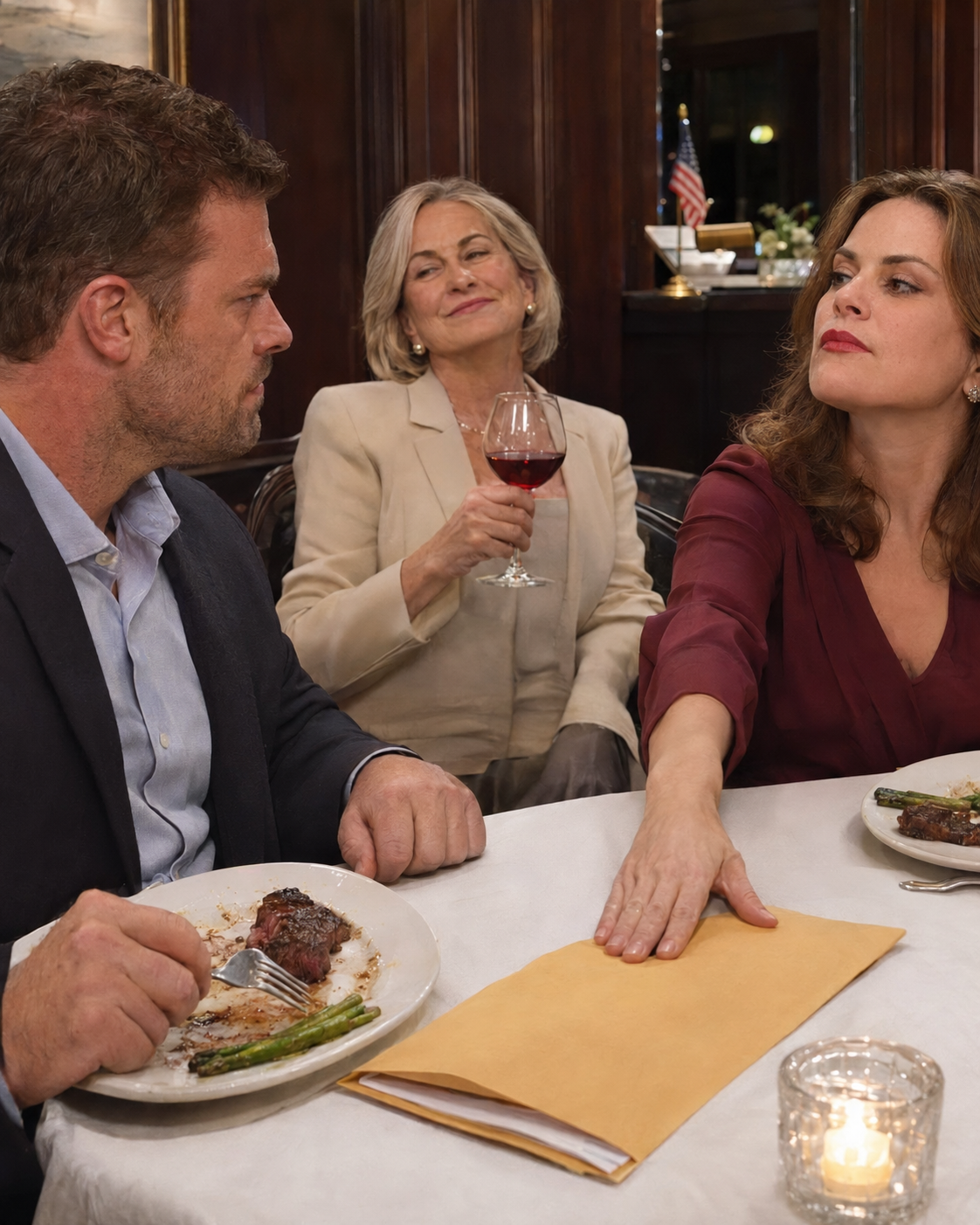
Rosetta said it while I was still chewing. Then she put a manila envelope between the candle and the salt shaker and rested her hand on it.
Across the table, her mother lifted her wineglass. Nola didn’t look surprised. She looked pleased that we had finally reached the part of dinner she’d come for.
“The house,” I said.
“Forty-eight hours, Wilfred.”
“I heard the number.”
We had been married twelve years. That morning, Rosetta had called me at the shop and said her mother wanted to take us out. She told me to wear my good shirt. I had ironed it myself, standing at the same kitchen counter where we used to eat breakfast together.
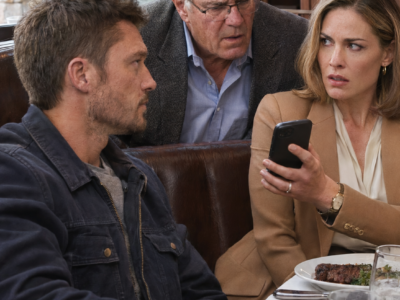
The steakhouse was a block off the Strand in Galveston, all dark wood and little candles in glass jars. Rosetta had picked it. She hadn’t chosen a restaurant for the two of us in years, and I had let myself think that might mean something good.
I had also turned on my phone’s recorder before getting out of the truck.
Both things were true. I still hoped my wife wanted dinner with me, and I no longer trusted a dinner her mother had arranged.
“I’ve filed for divorce,” Rosetta said. “Everything you need is in there.”
She pushed the envelope toward my plate. Her steak had one neat slice cut from it. She hadn’t eaten the slice.
“There’s no reason this can’t be civil,” Nola said.
I set down my fork. At forty-one, I had spent most of my adult life fixing marine engines. When something broke, I wanted to see the damaged part before anybody started explaining whose fault it was. I opened the envelope.
A woman rose from the next table and approached us carrying a small leather case.
“Mr. Carlton? I’m a notary. I’m here to witness your signature on the waiver of service.”
I looked at Rosetta. Then at the woman.
“You were waiting for us?”
“For this part,” she said quietly.
Rosetta slid a gold pen across the cloth. “It just means you received the papers. Auden said it would save you the embarrassment of someone bringing them to the shop.”
There was the name.
Auden was a divorce lawyer whose face appeared on a highway billboard. I had never met him, but six months earlier I’d heard Nola tell my wife what he thought about a certain agreement. Ever since, my own attorney, Sutter, had been preparing for a conversation I kept hoping wouldn’t happen.
I read the petition’s first page, checked the filing date, and then read the waiver all the way through. It was the limited form Sutter had described to me. I was acknowledging receipt and dispensing with formal service, not agreeing to the property demands or giving up notice of hearings.
The notary checked my identification. I signed. She completed her part and returned to her table.
Rosetta watched me put the cap back on the pen. She seemed to be waiting for something else. A raised voice, perhaps. Or a question she had practiced answering.
I gave her the question she hadn’t practiced.
“Your lawyer didn’t tell you the truth, did he?”
Nola lowered her glass.
“What’s that supposed to mean?” Rosetta asked.
“The agreement you signed in Sutter’s office two years ago. Did he explain what happens to that?”
“I never signed anything.”
It came so quickly that I looked up from the envelope.
“Rosetta.”
“There is no paper.”
Nola leaned toward her. “Don’t say another word.”
I put the documents beside my plate. My appetite was gone, but I knew that if I stood up just then, my knees might not cooperate. So I picked up my knife and cut another piece of steak.
Nobody spoke for a while. At the next table, someone laughed. The waiter came past with a pepper mill, saw our faces, and kept walking.
Rosetta looked at her mother. Nola stared into her wine.
I ate slowly. It gave my hands something ordinary to do, and by the time I finished, I could stand without showing either of them what was happening inside my chest.
“Where are you going?” Nola asked as I reached for the envelope.
“To make some arrangements. Apparently, I have a deadline.”
Outside, I made it to my truck before the shaking started. I sat with my forehead against my hands on the steering wheel. Through the windshield, I could see a couple waiting for a table, the woman straightening the man’s collar while he smiled down at her.
Rosetta used to do that to me.
I’d been twenty-nine when I bought her engagement ring. For three years after we married, she brought lunch to the shop almost every day. Sometimes she stayed to eat beside me on an overturned bucket because I couldn’t leave an engine half apart.
I could defend my property. I didn’t know what to do with those memories.
I stopped the recording and called Sutter.
“It happened,” I said.
He didn’t ask what I meant. “Where are you?”
“Parking lot.”
“Stay there until you’re steady. Did you sign anything?”
I told him about the waiver and read him its title. Then I told him what Rosetta had said about the agreement.
“Save the original recording,” he said. “Don’t edit it. Come in at eight tomorrow. Pennington will be here.”
“What about tonight?”
“Can you stay at the shop?”
“There’s Greeley’s old room.”
“Use it. Don’t argue by text. Don’t call Nola. We’ll deal with the papers in the morning.”
I drove toward the harbor with the windows open. Upstairs at the shop, I pulled an old blanket over the cot and lay down without taking off my boots.
The room still smelled faintly of the coffee Greeley used to burn on his hot plate.
He had hired me at twenty-three, when I had a trade certificate, a temper, and very little else. He’d been keeping shrimp boats and tugs running on Galveston Harbor for decades. His hands were so thick he had trouble picking a dime off a desk, but he could feel a bad bearing through a screwdriver.
“Quit guessing,” he’d tell me. “Listen to what it’s doing.”
He never married and had no children. That didn’t make him gentle with me. For the first year, I thought disappointing him might be the only thing I was good at. Then one afternoon he let me finish a job without checking it, and I understood how much trust could fit inside a man saying nothing.
Nine years before that dinner, he called me into the office. He was seventy-one, and his heart was giving him trouble. On the desk sat the documents transferring the business, equipment, building, and land to me as a gift.
There was a nominal dollar in the paperwork. Greeley made me give him one.
“Now you’ve got an investment,” he said.
I tried to tell him I couldn’t accept it.
“You can run it,” he said. “That’s what I’m asking.”
He lived another three years. I kept his name over the doors: Greeley Marine Diesel.
By the time Rosetta handed me that envelope, fourteen mechanics worked there, along with Kezia in the office. We serviced boats whose owners couldn’t afford to sit idle. There were mornings when half the harbor seemed to be calling about the same missing part.
I had spent years worrying about those calls. Lying on that cot, I understood how little attention I’d given to the silence at home.
At eight the next morning, I climbed the stairs to Sutter’s office carrying coffee and a sack from the bakery below. Pennington, my accountant, took the lemon scone before I had put the coffee down.
Sutter laid the petition on his desk.
“Filed the day before dinner,” he said. “They’ve described the shop as a community asset worth at least four-point-two million.”
“Closer to four-point-six,” Pennington said, then looked at me. “Which is why we need the records to do the talking.”
“She gave me forty-eight hours to leave.”
“Her demand isn’t an order,” Sutter said. “You can choose to stay elsewhere while we sort this out. That doesn’t mean you’re conceding the house.”
“I don’t want to be in there with them.”
He nodded. “Then we’ll document what you’re doing and why.”
We had first discussed protecting the shop two years earlier, after a cookout at my house. I was in the kitchen filling a cooler when I heard Nola through the screen door.
“A wife who isn’t on the paperwork is one bad day away from nothing,” she’d told Rosetta. “You put in years. You earned a piece.”
“Mama, it’s his shop.”
“It’s four million dollars.”
That was the part I remembered. Not that Rosetta had demanded anything. That her mother had taken a place full of people and work and reduced it to a number, and Rosetta had gone quiet.
When I called Sutter, he didn’t tell me to hide money. He told me to get the ownership and the accounts straight.
Greeley’s gift was the starting point. The income produced during the marriage and any claims involving marital money or effort needed separate attention. I wasn’t interested in spending years arguing about which wrench belonged to whom if my marriage failed.
Sutter prepared a partition and exchange agreement. It identified the business interests and income that would remain mine. Rosetta would receive eighty-five thousand dollars and keep her own real estate earnings under the arrangement. The building and land were placed in an irrevocable trust, with me serving as trustee, and that arrangement was disclosed in the documents.
There had been no midnight transfer, no account she wasn’t allowed to see. We discussed it at home. She wanted control of the money she made selling houses, and the cash payment mattered to her. At the time, she said having our work kept separate might stop us arguing about it.
I wanted to believe that. I also wanted Greeley’s gift protected. Both of us had reasons for signing.
Sutter offered her time to have an independent lawyer review everything. She declined. He put that in writing, went through the terms with her, and had the signing recorded with her knowledge.
Now he turned his laptop toward us.
On the screen, Rosetta sat in his leather guest chair, her purse on her lap. For a moment, seeing her as she’d looked two years earlier hurt more than seeing the petition. I remembered driving home afterward. She had kissed me at a red light and said we should go somewhere for the weekend.
In the video, Sutter asked whether she understood she could consult her own attorney.
“I don’t need one,” she said.
He pointed out the acknowledgment, then continued through the terms. The documents identified what was being divided, what each of us would retain, and the payment she would receive.
When he asked whether she understood the provision concerning the shop and its income, she glanced toward me, just outside the frame.
“Take your grease pit, Wilfred. I want nothing to do with it.”
Then she signed.
Sutter stopped the video.
“That’s not the whole case,” he said. “We have the agreement, the disclosures, the payment records, and the history of the gift. The video helps establish what happened in this room. None of it disappears because her lawyer says it should.”
“Then why is she doing this?”
Pennington folded the top of the bakery sack. Sutter looked at me for a moment before answering.
“Because she’s been told she can win.”
Six months earlier, I’d come home and heard Nola through the kitchen window again. This time she had used Auden’s name.
“He says that paper won’t hold up, honey.”
I’d called Sutter. After that, I’d kept records and, when he said it was lawful for conversations I was part of, sometimes turned on my recorder. I hadn’t recorded every supper or every argument. I had tried to protect myself without admitting how much protection I needed.
We listened to the dinner recording. My wife’s voice came out of the little speaker, insisting there was no paper. Then her mother’s warning.
Sutter didn’t smile.
“Saying an agreement is unenforceable is one thing,” he said. “Saying you never signed it is something else.”
“What happens now?”
“We respond. If they ask for temporary control of the business, we’ll oppose it. You keep the shop running and let me handle contact with Auden.”
He gave me copies of the relevant property documents to keep at the office, including the trust certification. Before I left, he tapped one provision in the agreement.
“Section eleven. If a challenge fails, there’s a provision for reasonable attorney’s fees. I want you to understand the stakes before this goes further.”
I read it. For the first time since dinner, I felt something besides shock.
It wasn’t satisfaction. It was the sick knowledge that Rosetta could still stop making this worse, and I wasn’t sure she would.
I went back to the house that afternoon. Nola’s sedan was at the curb. Through the front window, I could see her sitting in the chair where I usually took off my work boots.
Rosetta opened the door before I reached it.
“You’re early.”
“I came for my clothes.”
She stepped aside. Upstairs, I found a duffel bag in the closet and began filling it. I took work shirts, jeans, socks, and the boots I wore when somebody wanted an estimate instead of a repair. Her things hung beside mine. She had folded a sweater over my hanger because we had run out of room on her side.
I moved it carefully onto the shelf.
That small courtesy nearly undid me. I could carry my clothes out of our house. I couldn’t make my hands stop treating her things as if we were still going to share the closet tomorrow.
From the garage, I took the toolbox I’d owned before we met. Nola watched from the hallway.
“Shouldn’t you be making a list of what he takes?” she asked Rosetta.
“It’s his toolbox, Mama.”
For one second, I was grateful to my wife. Then I hated that defending my right to a battered toolbox had become something to be grateful for.
As I passed the entry table, I noticed a heavy business card half tucked beneath the mail. It carried the logo of a development company. Something about a harbor parcel appeared under the name.
I took a photograph. I didn’t know whether it mattered. After the previous night, I was done dismissing things simply because I couldn’t explain them.
Rosetta followed me onto the porch. Nola stayed inside, close enough that I could see her through the screen.
“You could have fought,” Rosetta said.
I put the toolbox down. “About what?”
“Us. I thought you’d at least ask me to reconsider.”
I looked at her for a long moment. “You brought a notary to dinner.”
“Mama thought it would be easier in public.”
“Was it?”
She looked down the street. A neighbor was washing his truck, the hose running into the gutter. I wondered whether he could hear us.
“I didn’t want a scene,” she said.
“Neither did I.”
There were things I could have admitted then. How often I’d come home too tired to listen. How many weekends I’d promised would be different. But I couldn’t have that conversation with her mother listening through a screen and my belongings stacked at my feet.
“If you wanted to leave me, you could have told me,” I said. “You didn’t have to arrange an audience.”
I picked up the toolbox. She didn’t move toward me. I put it in the truck and drove away with about thirty hours left on her deadline.
The following morning, Kezia called while I was still upstairs pouring coffee.
“Come down to the gate.”
“What’s wrong?”
“Your wife brought company.”
I looked through the window. Rosetta and Nola stood beside a man in a suit and another man holding a tool bag. The second man was looking at the padlock on the gate.
I went downstairs.
Kezia had managed the office for twenty years. At forty-seven, she knew which customers needed reminders, which suppliers would answer before seven, and which mechanics had children sick at home. She stood inside the fence with her keys in her hand and hadn’t opened anything.
The man in the suit stepped forward.
“Mr. Carlton. Auden. I represent your wife.”
He offered his hand through the space beside the gatepost. I left mine at my side.
“Why is there a locksmith here?”
“My client has an interest in this business. We need to inspect the premises and secure access to the records.”
“Do you have a court order?”
He lifted a folder. “We have a pending petition.”
“That’s not what I asked.”
Rosetta stepped closer. “You moved out. We have to make sure nothing disappears.”
Behind me, a truck pulled into the lot. One of my mechanics got out, lunch cooler in hand, and stopped when he saw the group at the gate.
“Nothing is disappearing,” I said. “And nobody is changing locks. You can request records through Sutter.”
The locksmith shifted his tool bag.
“I was told this was her property too,” he said. He sounded less interested in the marriage than in getting a straight answer about the job.
I went to the office and came back with the paperwork Sutter had given me. I handed the trust certification through the fence.
“The real estate is held here. I’m the trustee. She isn’t. I haven’t authorized you to change anything.”
The locksmith read it, then looked at Auden.
“You have something from a judge?”
Auden began explaining his client’s position. The locksmith closed his bag.
“I’m not getting between people over ownership. You get an order or everybody agrees, you can call me.”
“We paid you,” Nola said.
“I’ll return it.”
He walked back to his truck. Nobody tried to stop him.
Nola turned toward the sign above the bays.
“Twelve years,” she said. “My daughter gave him twelve years while he poured everything into a dead man’s business. Now he thinks she can just walk away with nothing.”
I felt Kezia move beside me.
“Don’t talk about Greeley that way,” she said.
“This is a family matter.”
“Then take it somewhere else. People need to get to work.”
Nola looked at her keys. “You might want to consider who’s going to be signing your checks.”
Kezia went very still. Behind us, two more mechanics had come through the side entrance. Nobody laughed. They were listening because their paychecks were being discussed, and because a lawyer had arrived before sunrise with a locksmith.
“That’s enough,” I said. “Auden, call my attorney. The rest of you need to leave the entrance clear.”
I handed him Sutter’s card. He took it, and for the first time his practiced manner slipped. He glanced at the trust documents, then at Rosetta.
“You know about the agreement too,” I said.
“We will address any alleged agreement through the appropriate proceedings.”
“Good. Do that.”
Rosetta’s face tightened, but she followed him back to the sedan. Nola was last to leave. She took one more look at the building, a measuring look that bothered me more than the threats.
Once their car was gone, Kezia unlocked the gate. Engines were waiting. Customers had been promised calls. I couldn’t ask fourteen people to put their lives on hold while mine came apart.
“Can they close us?” one of the mechanics asked.
“They haven’t got an order to do anything,” I said. “My lawyer is handling it. If that changes, you’ll hear it from me.”
It was the most I could honestly promise.
Kezia waited until the others were inside, then handed me a breakfast biscuit wrapped in paper.
“Eat.”
“I’m not hungry.”
“I didn’t ask.”
I sat at the edge of Greeley’s workbench and ate it while the first engine of the morning turned over in the bay.
Two days later, a man from the development company came to the office.
I recognized the logo on his polo shirt before he introduced himself. It matched the card from our entry table.
“We’ve been speaking with Nola,” he said. “About the harbor property.”
I put the rag I’d been wiping my hands on beside the counter.
“What about it?”
He glanced toward Kezia, who was working at her desk, then back at me.
“I wanted to confirm the timeline directly. We were told your wife would have a controlling interest by the end of the month, and that the family intended to proceed with a sale.”
“Who told you that?”
“Nola. She represented that she was authorized to arrange an exclusive option.”
He watched me wait. Then he added, “We’ve already paid the deposit.”
Kezia stopped typing.
“How much?” I asked.
“Two hundred thousand.”
For a moment, the only sound was a compressor starting in the next room.
“To whom?”
“Nola. By wire. About three weeks ago.”
Three weeks. Before the dinner. Before the gold pen and the woman waiting to notarize my signature. While I was still coming home and asking whether we needed anything from the grocery store.
I pulled out a chair, though I wasn’t sure which of us needed it.
“Nobody here authorized a sale,” I said. “My wife doesn’t control this property. Her mother certainly doesn’t.”
The man opened his folder. “She signed representations concerning her authority.”
“Did you verify them?”
He looked at the papers, and that was answer enough.
“We should have done more before releasing the money,” he said.
I showed him the trust certification. I told him there was a marital agreement, that the business had been given to me, and that any questions about ownership should go to Sutter. I kept it brief. I had no intention of trying my divorce in front of a stranger who had made an expensive mistake.
“Is there any possibility you’d consider selling anyway?” he asked.
Through the office window, I could see a mechanic crouched beside a pump with his apprentice watching. Greeley had taught me in that same spot. On the wall behind Kezia hung the calendar she used to track everyone’s days off.
“No.”
I wrote down Sutter’s number. The man took it with both hands, thanked me in a distracted voice, and left.
Kezia waited until the door shut.
“She sold something she didn’t own.”
“She promised it,” I said. “They paid her like she owned it.”
I called Sutter. He asked me to send the photograph of the card and write down the conversation while it was fresh. He would speak to the company’s lawyer and obtain the relevant documents through the proper channels.
When we hung up, I stayed at the desk for a minute.
I’d thought Nola wanted her daughter to get part of my business. Now I knew she had already taken money on the expectation that Rosetta would get control of it.
I couldn’t tell whether Rosetta knew. That uncertainty stayed with me longer than the amount.
That afternoon, Pennington called about Auden’s request for temporary orders. He read the demands slowly: freeze the shop’s operating accounts, appoint someone to oversee the business, challenge the transfer into the trust, and make me pay fifty thousand dollars toward Rosetta’s legal fees.
I looked through the office window at the men and women working in the bays.
“Freeze the operating accounts? That’s payroll.”
“I know. Sutter is responding.”
Then he reached the affidavit attached to the motion.
“You need to hear this exactly,” he said.
Rosetta had sworn that she had never signed any agreement dividing, waiving, or partitioning her interest in the marital estate, including Greeley Marine Diesel.
I asked him to read it again.
He did.
There was no missing word that changed it. No reference to whether she thought the agreement was valid. She had signed a sworn statement saying something had never happened when we both knew it had.
The hearing was set for ten days later.
Sutter gave them a way out. He sent Auden the agreement, explained the recording of its execution, and offered to resolve the business dispute without pursuing sanctions or the contractual fee claim if Rosetta corrected the affidavit and withdrew the claims against the shop.
The divorce could continue. We could argue about the house and savings like people whose marriage had failed. We didn’t have to put fourteen jobs in the middle of it.
I read the proposal twice before telling him to send it.
“You understand what you’re giving up if they accept?” he asked.
“I understand what I’m getting back.”
Auden answered the next afternoon. His client would not withdraw. The agreement was unenforceable, he wrote, and they would explain why in court.
His last line said I should enjoy my remaining time in control of the business.
Sutter called me instead of letting me sit alone with that email.
“Don’t answer him.”
“Wasn’t planning to.”
“And don’t assume we can coast. Pennington needs the account information, and I need you available to go over your testimony.”
We worked on it after the shop closed. He submitted our response and the exhibits, including copies of the recordings. He also gave notice of the sanctions we would seek over the false statements. There would be no secret document appearing out of his briefcase at the last second. Auden had the chance to read what we had and change course.
At night, the paperwork stayed downstairs. Upstairs, I had a cot, two changes of clothes hanging from nails, and a phone I kept checking for a message I couldn’t quite imagine.
One evening, Kezia left cornbread outside the loft door with a note telling me to eat it before it got hard. I was halfway through it when a car pulled into the yard.
Rosetta sat beneath the security light for nearly a minute before getting out.
She wore jeans and my old gray sweatshirt from a trip to Corpus Christi. No blazer, no jewelry I could see. She wrapped her arms around herself as she looked up at the window.
I went down and opened the side door.
“Wilfred.”
“You shouldn’t be here.”
“I know.” She glanced back at the car. “Mama told me not to come.”
“So did your lawyer, I expect.”
She nodded.
I should have sent her away. Instead, I stood there while she took a few steps toward me. I could smell her perfume under the harbor air. It was the one thing about that week that hadn’t changed.
“Are you sleeping up there?” she asked.
“Yes.”
“That cot’s terrible.”
“I’ve slept on worse.”
She gave a small, familiar smile. “You always say that.”
For a moment, we might have been talking after an ordinary bad day. She could have asked about a repair. I could have asked whether she’d eaten. Then I noticed her looking past me into the darkened shop, and I remembered the locksmith.
“What do you want, Rosetta?”
“I wanted to see you without everybody else there.”
“You could have done that before dinner.”
“I know.” She rubbed her eyes with the cuff of my sweatshirt. “It got away from me.”
I waited. For once, I wasn’t going to help her finish.
“Mama kept saying I’d be left with nothing. That you had this whole life down here and I was just someone who came home to the same address. And Auden said you’d used the agreement and the trust to keep me from what was mine.”
Some of it hurt because there was something true buried inside it. I had often been more useful to a stranger with a stalled boat than to my wife sitting across the supper table. I could explain the stranger’s problem. With Rosetta, I had started being afraid to ask.
“You knew about the trust,” I said. “You knew about the agreement. We talked about it.”
“He said it wouldn’t hold.”
“Then he can argue that. Why did you swear you never signed it?”
She looked toward the gate.
“He said I could say I didn’t remember. That it wasn’t the same as knowing what I’d agreed to.”
“That’s not what your affidavit says.”
“I know.”
The words were so quiet I nearly missed them.
I leaned against the doorframe. All afternoon I had been angry enough to imagine shouting at her. Now that she was there, I just felt tired.
“There’s a video, Rosetta.”
“I know there’s a video.”
“Then fix the statement. Call Auden tomorrow. Tell him you won’t leave that in front of a judge.”
She wiped her cheeks. “If I do that now, everybody will know I lied.”
“What do you think happens if you keep saying it?”
She had no answer.
I wanted to reach for her. That was the part I would be embarrassed to explain afterward. She had threatened my business, made me leave our home, and signed a lie about me, and some stubborn part of my body still responded to her crying as a problem I ought to help her solve.
“We can still finish this without doing more damage,” I said. “Sutter sent you a way to do that.”
“Mama says we’re so close.”
“Close to what?”
“Being done.”
I thought about the developer’s deposit. I watched her face, trying to decide whether she knew what her mother had done. I couldn’t tell, and I wasn’t going to spend our last private conversation testing her with questions.
“Your mother doesn’t have to swear to your statement,” I said. “You do.”
Rosetta covered her mouth. She stood that way for a long time, breathing through her fingers. Then she lowered her hand.
“I can’t back out.”
“You can. You don’t want what comes with it.”
She looked at me then. “Do you hate me?”
I had to think before answering.
“I don’t know what I feel yet.”
She nodded as if that was worse than yes. I watched her walk to the car. She paused with her hand on the door, and for a second I thought she might turn back and say she would make the call.
She got in instead.
I hadn’t recorded any of it. My phone was upstairs. When I saw her through the window, I had gone down to talk to my wife, and for a few minutes I had let myself be only her husband.
Sutter had me write down what I remembered the next morning. He told me to date it, keep it private, and let him handle any further contact. He didn’t scold me for opening the door.
“You wanted her to stop,” he said.
“I still do.”
“Then let’s hope she does.”
On the morning of the hearing, I wore the shirt from the steakhouse. It was the only decent one I’d packed, and Kezia had insisted on having it pressed.
She sat behind me in the courtroom beside Pennington. Sutter arranged a small stack of exhibits at our table. Across the aisle, Auden spoke to Rosetta with his hand over the microphone. Nola sat in the first row behind them, a tissue folded in her lap.
The development company’s representative was near the back. When I glanced toward him, he gave a small nod and looked away.
The judge entered, took her seat, and identified the matters before her. Auden rose and described a wife who had spent twelve years supporting a husband who was now trying to deprive her of the business they’d built.
I listened to him call the trust a device for hiding property. He asked for control of the accounts, protection of records, and money for Rosetta’s legal expenses.
Sutter kept his pen still. He’d told me that listening was going to be the hardest part.
Rosetta took the witness stand. I watched her raise her hand and promise to tell the truth.
For twelve years I had heard her say yes to ordinary things. Dinner invitations. Weekend plans. Whether she wanted the porch painted blue. Hearing her say it there, with everything depending on it, made my mouth go dry.
Auden asked about our marriage and the hours I’d spent at the shop. Much of what she said was true. I had worked late. I had missed evenings. She had supported me in ways no ledger could measure.
Then he asked whether she had signed an agreement giving up the interests they were claiming in the business.
“No,” she said.
“And your sworn affidavit is accurate?”
“Yes.”
I looked down at my hands. There was a black line beneath one thumbnail I’d been unable to scrub out. I pressed the nail against my palm until Sutter touched my sleeve.
It was his turn.
Sutter carried the affidavit to the lectern. He read the disputed paragraph aloud and asked Rosetta whether she had signed it.
“Yes.”
“Your statement is that you never signed any agreement of the kind described here?”
“That’s right.”
“Not that you believe an agreement should be set aside. You’re saying you never signed one.”
She glanced at Auden. “Yes.”
Sutter turned to the exhibits already before the court. The agreement was there, along with the records from its execution. He asked Rosetta to identify herself in the opening frame of the video.
“That’s me,” she said.
Auden objected to the conclusions Sutter was drawing about whether she had understood the transaction. The judge told him he would have an opportunity to address that. Then she allowed the recording to proceed.
The little room in Sutter’s office filled the courtroom screen.
There was my wife with her purse in her lap. There was the notary. And there was Sutter explaining her right to get her own lawyer before deciding anything.
“I don’t need one,” she said on the recording.
The explanation continued. I watched the woman on the witness stand watching herself. Her shoulders drew inward. She knew what came next.
“Take your grease pit, Wilfred. I want nothing to do with it.”
On the screen, she took the pen and signed.
The recording ended. From behind me came the faint sound of Kezia shifting in her seat. Across the aisle, Nola had stopped folding her tissue.
“Is that your signature?” Sutter asked Rosetta, showing her the agreement.
She stared at the page.
“Mrs. Carlton,” the judge said. “Please answer.”
“Yes. But I didn’t understand all of it.”
“You accepted a payment of eighty-five thousand dollars as part of this agreement?” Sutter asked.
“Yes.”
“You deposited the check?”
“Yes.”
He took her through the parts addressing her own earnings and the business. She acknowledged the initials. She remembered receiving the money. Asked what had happened to the payment, she hesitated.
“I used some of it for my attorney.”
“How much?”
“Sixty thousand. For the retainer.”
Sutter let her answer stand. He didn’t make a speech about it.
I looked at Auden. The money he’d been paid to attack the agreement had come from the payment made under that agreement. It was such a plain, ugly fact that I was almost relieved nobody tried to dress it up.
The dinner recording came next. Before it was played, I briefly identified the voices and confirmed under oath that it accurately preserved our conversation. It was strange hearing myself sound calm when I remembered how much effort calm had taken.
“Your lawyer didn’t tell you the truth, did he?”
Then Rosetta’s denial. There was no paper.
Then Nola, close enough to my phone that every word was clear.
“Don’t say another word.”
When Rosetta resumed answering questions, she no longer looked at me.
“At dinner, did you remember being in my office?” Sutter asked.
“I knew we’d signed something.”
“When you signed the affidavit, did you remember?”
She gripped the edge of the witness stand. “I thought it didn’t count.”
“Who told you that?”
“Auden said it wouldn’t hold up. He said I could say I didn’t remember signing it.”
Nola made a sound behind their table.
Rosetta turned toward her. “That’s what he said, Mama.”
Auden stood. He asked for a recess, then began objecting to the characterization of his advice. His voice was controlled, but one hand kept straightening the same corner of his file.
The judge stopped the questioning. She would not have counsel arguing with his client across the courtroom, she said. There were now issues they might need separate advice about.
Rosetta looked frightened. I had thought seeing her frightened would feel like justice. Instead, it looked like the woman who’d stood outside my shop, with one more chance to stop now behind her.
After the recess and the remaining arguments, the judge denied the requests to freeze the shop’s accounts and appoint a receiver. She denied the request for fifty thousand dollars in interim fees. The evidence presented did not justify the interference Auden was seeking.
The business could keep operating.
Only when I heard that did I realize how tightly I had been holding myself still.
The judge reserved the final property rulings and the sanctions questions for the further proceedings. She also directed that the sworn statements and relevant record be sent to the district attorney’s office for review, and that the concerns involving counsel be referred to the appropriate disciplinary authorities.
There was no shouting. Nobody was led away. The clerk made notes, the judge gave the next instructions, and Auden gathered his papers with his eyes down.
When I stood, Kezia put her hand around my forearm.
“We can make payroll,” I said.
“Yes,” she said. “We can.”
In the hallway, a woman who had been waiting near the courtroom door approached Nola and confirmed her name. Then she handed her an envelope containing papers in the developer’s lawsuit.
Nola looked from the woman to the company representative standing a few feet away.
“What is this?”
The claim sought return of the two-hundred-thousand-dollar deposit and raised the false representations Nola had made about her authority. There was a lawyer’s number in the documents. She needed to direct her questions there.
Nola opened the envelope with one finger. She read the first page, then turned it over as if a different answer might be on the back.
“I don’t have it,” she said.
Rosetta came up beside her. “What don’t you have?”
“The money.”
“What money, Mama?”
Nola looked at me. For once, she seemed to want me to explain something for her.
“I paid off the house,” she said. “I thought by the time they needed to close, everything would be settled.”
Rosetta took the paper from her mother’s hand. Whatever she had known about Nola’s conversations with the developer, she hadn’t been prepared for that admission.
“Mama,” she said. “What did you do?”
Nola reached for the page. Rosetta held it away from her.
I had spent the past two weeks imagining what I might say when Nola finally had to account for herself. Standing there, I found I didn’t want to join their conversation.
Sutter touched my shoulder and pointed toward the exit. I went with him.
The consequences arrived over the following weeks, mostly in envelopes.
The state bar opened an investigation involving Auden. The district attorney’s office reviewed the referral concerning Rosetta’s sworn statements. Neither process was mine to direct, and neither was finished simply because the judge had sent the papers.
Auden’s firm withdrew from representing Rosetta. It later sued her for another forty-one thousand dollars in fees it claimed remained unpaid. After all the assurances she’d received, she was left disputing a bill with the people who had given them.
Nola had used a hundred and twenty thousand dollars of the developer’s deposit to pay off her mortgage. The rest had gone toward other spending, including jewelry. She could not return the full amount from the money she had available.
She put her house on the market to raise repayment money. It sold to a cash buyer for a price she would once have refused to discuss. Afterward, she moved to a one-bedroom apartment off Seawall Boulevard, on the third floor of a building without an elevator.
Once, she called Sutter and asked whether I would help resolve the developer’s claim as a family matter.
“What did you tell her?” I asked.
“That it wasn’t your money to forgive.”
At the shop, I stopped checking the gate every time a car pulled in. That took longer than I expected. The crew didn’t ask for details, but I could feel everyone relax once the threatened account freeze was behind us.
The divorce itself still required inventories, records, meetings, and decisions about things Rosetta and I had bought when neither of us expected to divide them. There were afternoons I would have paid someone simply to stop asking what an object was worth.
Sixty days after the first hearing, we went back for the final proceeding.
The judge considered the property records, the agreement, the financial evidence, and the remaining claims. This time there was no video to play. Rosetta no longer denied that she had signed.
The agreement held. The business remained mine, and the real estate remained in the trust. The challenge to that arrangement failed.
After the parties had the opportunity to address the sanctions requests, the court imposed twenty thousand dollars against Auden personally and ten thousand against Rosetta. The written rulings identified the conduct behind those decisions.
In dividing the remaining marital property, the judge weighed our financial circumstances and the conduct established by the evidence. The house went to me, with its mortgage obligations and about $190,000 in equity. Of our $140,000 in joint savings, I received seventy-five percent. Rosetta received $35,000.
Under the agreement’s fee provision, the court also awarded me $78,400 in reasonable attorney’s fees.
Outside the courtroom, Pennington wrote the figures on the back of an envelope because he knew I hadn’t absorbed them.
“Her share of the savings is thirty-five thousand,” he said. “The fee award and her sanction total eighty-eight thousand four hundred. That’s fifty-three thousand four hundred more than that savings award.”
She still had whatever remained of the money and earnings she had kept under our agreement. Those figures weren’t a measure of everything she owned. They showed what this fight had cost her beyond the marital savings she received.
They didn’t mean I had collected anything that afternoon, either.
I folded the envelope and put it away. There was another part of the decree I cared about more just then.
Rosetta was required to vacate the house within forty-eight hours of the decree being signed.
I had asked Sutter to request that deadline. I couldn’t pretend the number was accidental. For weeks, I had remembered my wife sliding an envelope beside my dinner as though twelve years could be packed and removed on command.
Now there was an actual order. The possession date had been addressed, and it was written on the page in front of me.
I drove to the house later that day. Nola’s sedan stood at the curb with two boxes visible in the back seat. Rosetta was on the porch, folding the flaps of another box together.
She looked up when I came through the gate.
“Can you give me more time?”
I stopped at the bottom step.
“Until the day after tomorrow. That’s what the order says.”
“Mama’s apartment is so small.”
“You can stay there while you make arrangements.”
She pressed the cardboard down. It sprang back up, and she pressed it again.
“I know what this looks like,” she said.
“I don’t think either of us needs to explain how it looks.”
“It was a mistake. I let her get in my head. I let Auden tell me what I wanted to hear.”
I came up one step, enough to speak without raising my voice.
“I asked you to correct the statement.”
“I know.”
“At the shop, that night. You could have stopped then.”
“I was scared.”
She looked past me toward her mother’s car. Nola sat behind the wheel, staring straight ahead.
“I thought if I backed down, I’d prove they’d been right about me,” Rosetta said. “That I couldn’t do anything for myself.”
I remembered her with a customer on the phone, standing in our kitchen, refusing to let a bad inspection be brushed aside. She had never been helpless. Somehow, she had listened to the people who needed her to believe she was.
“You sold houses,” I said. “You earned your own money. You could make decisions. You made these.”
She began to cry. I kept my hands at my sides.
“I did love you,” she said.
“I know.”
That was harder to say than anything else. I could have made the past twelve years simpler by deciding none of it had been real. But there had been lunches, trips, long talks, and nights she’d sat beside me when I was worried about Greeley. I wasn’t willing to let this ending erase every decent thing that had happened before it.
It still wasn’t a reason to begin again.
“Take what the decree says is yours,” I told her. “Leave the keys on the kitchen counter when you’re finished.”
She nodded, then looked down at the box. I held one flap while she folded the other over it. She tore a strip of tape from the roll and sealed it.
For a few seconds, we managed one last ordinary task together. Then I let go.
As I walked toward the truck, Nola lowered her window.
“Wilfred, I want to say something.”
I stopped beside the car.
“Please help her get packed,” I said.
Nola looked toward the porch. The window went up again, and I drove away.
By the end of the second day, the keys were on the counter. The house was quiet when I let myself in. My work boots had left a faint mark against the baseboard beside the chair, and the porch light still came on with the switch that sometimes stuck.
I put a clean glass in the kitchen cabinet, made sure the doors were locked, and slept in my own bed.
The shop opened at six the next morning. A tug needed an injector. A shrimper was waiting on a turbocharger. Kezia had coffee ready before the first mechanic clocked in.
She brought me the previous month’s figures while I stood outside looking at Greeley’s name over the doors.
“Pennington checked them,” she said. “Best month we’ve had.”
I read the page, then looked through the open bay. Everybody was working. That was what the number represented to me now: the place was still ours to run, and nobody had lost a paycheck because my marriage had ended.
“He’d have something to say about this,” I told her.
“He’d tell you to quit standing around.”
I laughed, and she smiled at the sound of it.
That evening, I drove to the steakhouse off the Strand.
The same little candles were on the tables. The same waiter came over with a menu and asked whether anyone would be joining me.
“Just me,” I said.
I ordered a ribeye, medium rare, and set my phone facedown beside the bread basket. The recorder was off.
Outside the window, people walked toward the harbor, stopping to look into shops. I watched them while I waited. When the plate arrived, I thanked the waiter and moved my glass to make room.
I was hungry. The steak was good.
I finished every bite.