On My Eighteenth Birthday, My Parents Put the Cake in Front of My Little Sister Again
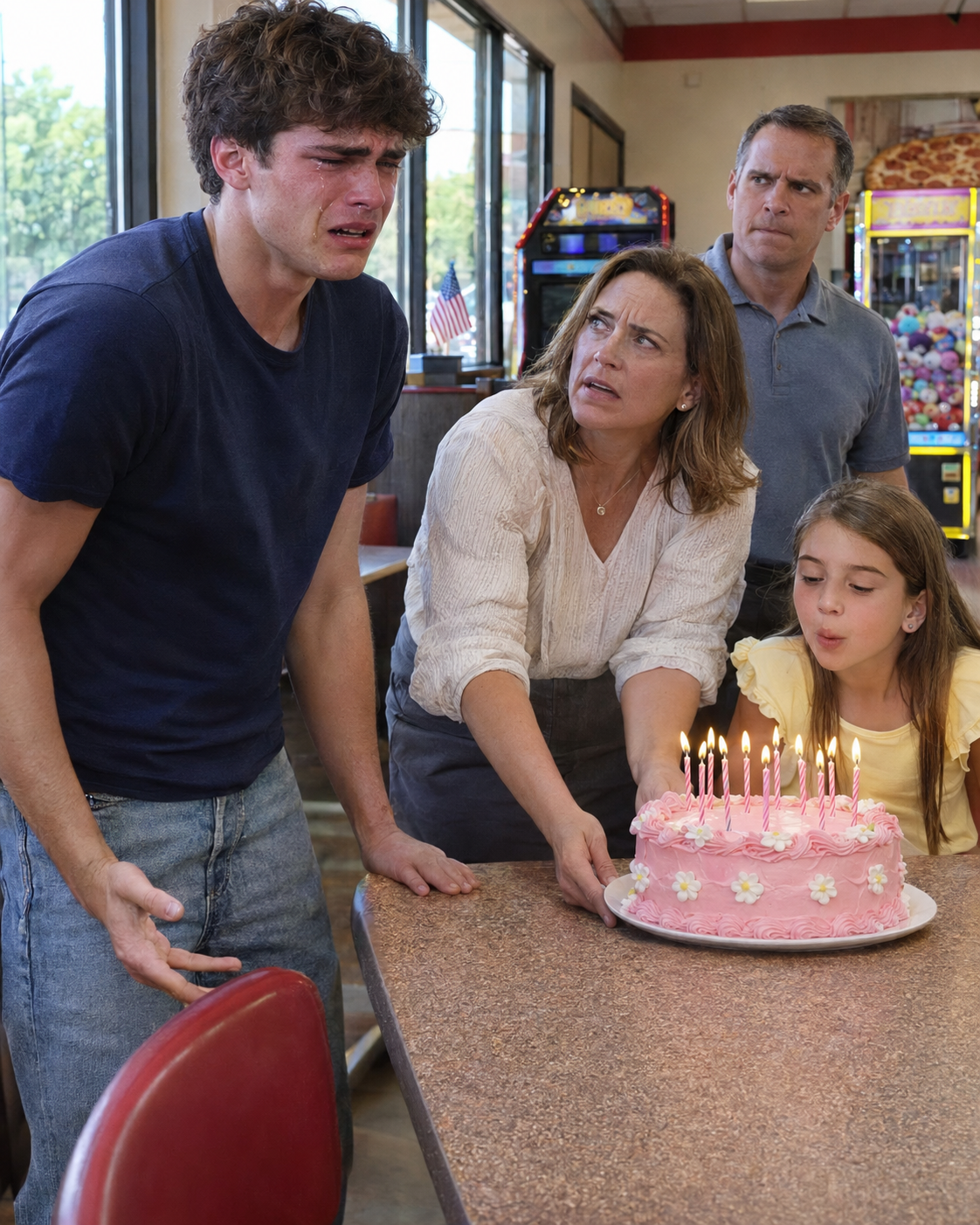
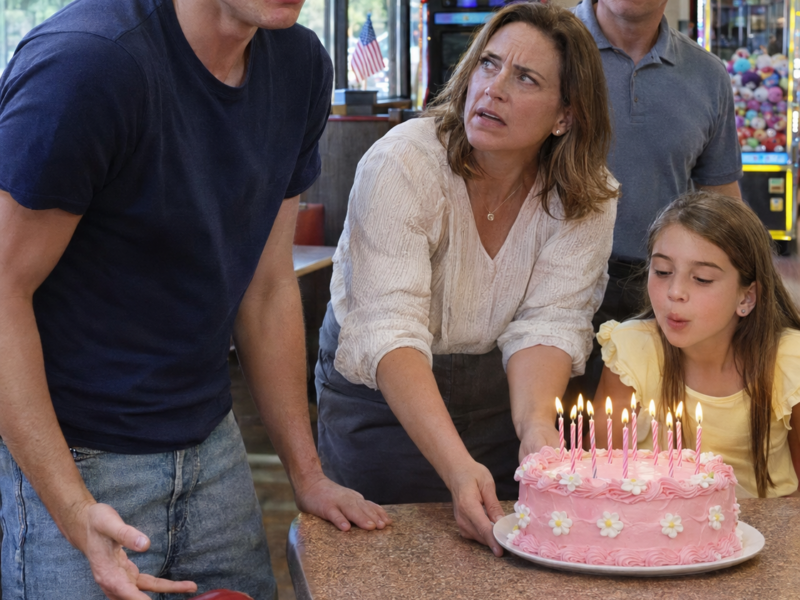
My mother carried my eighteenth-birthday cake past my empty plate and set it in front of my nine-year-old sister.
“Wait until Daddy gets his phone ready,” she told her.
Lily pulled her chair closer. My father leaned across the table with his camera, telling her to move her hair away from the candles. There were ten of them. I counted because I needed somewhere to look besides the pink frosting and white flowers, the cake my sister was already reaching for, and my name written across the middle.
I had asked for chocolate. My mother said Lily wouldn’t eat it and ordered vanilla instead.
“Mom,” I said. “Put it over here.”
She glanced at me as she pulled the lighter from her purse. “We’ll light them again for you. You know that.”
I did know that. I had been hearing it since I was eleven.
Around us, arcade machines chimed and children ran between the party tables carrying strips of prize tickets. Somebody at the next table was turning six. He had a paper crown, three friends sitting beside him, and a dinosaur cake directly in front of his chair.
My grandparents were at our table. So were aunts, uncles, and cousins. Not one of my friends was there.
My father lowered his phone. “Come on, Ethan. You’re eighteen. Don’t start.”
I meant to say something ordinary. Move the cake. Give me the lighter. Just let me have this one.
Instead, I started crying.
It happened so quickly that my mother was still holding the flame to a candle when she looked up. I pressed my lips together, but a sound came out anyway. My chest hurt. I couldn’t get enough air to make a sentence.
“Ethan?” Grandma said.
I had spent years making sure nobody heard me cry. Now I was doing it in a pizza restaurant full of little kids, with eighteen years of my life supposedly being celebrated around me.
My father set his phone down. His first expression wasn’t worry. It was irritation, the look I knew from arguments at home when I failed to make something easy for him.
“What is this about?” he asked.
I looked at the cake, then at my sister waiting for permission to blow.
“You really don’t know?”
My mother finally let the lighter go out.
Before Lily was born, my parents knew things about me without having to ask. They knew which pizza toppings I liked and that I wanted the corner piece of birthday cake because it had more frosting. My father used to take me along when he went to the hardware store. I liked choosing the loose screws from the bins and counting them into the paper bags.
I remember those things clearly, which made everything afterward harder to explain. I couldn’t tell myself they’d never cared. I remembered being cared for.
My mother hadn’t expected another baby. She was sick for much of the pregnancy, and adults stopped conversations when I came into the room. Sometimes Grandma collected me from school with an overnight bag already in her car. Sometimes Dad called after bedtime and said my mother was resting, which eventually became a phrase that frightened me more than it reassured me.
Both my mother and Lily nearly died when Lily was born. I knew that much. I also knew there wouldn’t be any more babies, though nobody explained the medical details to me. My mother went back to the hospital several times that year, and my father began sleeping with his phone beside his hand.
For a while, our whole house seemed to be listening for something terrible.
I was scared, too. I loved my mother. I wanted my sister to come home and stay home. When relatives called Lily a miracle, I agreed with them. I didn’t think being glad she was alive meant I would have to stop needing anything myself.
At first, being helpful made me feel included. I brought diapers. I warmed bottles with an adult watching. I stayed quiet when Mom finally fell asleep. Everybody told me what a wonderful big brother I was, and I tried hard to keep being one.
Then my mother got better. Lily grew into a healthy little girl. The emergencies became less frequent, but the rules in our house never changed back.
If Lily cried, everything stopped. If I complained, I was asked whether I understood what our family had been through.
The first time she blew out my candles, she was two.
I had leaned toward my cake when she began shrieking in her high chair. My mother picked her up, and I assumed she was taking her somewhere to calm down. Instead, she carried her around the table and held her over the candles.
“Just let her do it once, honey.”
“But it’s mine.”
“And we’ll light them again.”
I looked at my father. He gave me a small, impatient nod. Don’t make this difficult.
So I sat back. Lily blew spit over the icing. Everyone laughed, someone took a picture, and my mother kissed her cheek. By the time the candles were burning again, two cousins had left the table and my father was trying to find the cake knife.
I blew them out while he opened drawers.
The next year, I asked beforehand if I could go first. Mom said we’d see how Lily was doing. Lily was doing fine until the cake appeared, and then she wanted it, so we did the same thing again.
That was the year my friend Ben said, “Why does she get to do it? It’s Ethan’s birthday.”
He wasn’t rude. He sounded confused. I remember feeling relieved that somebody else thought it was strange.
My father told him we shared in our family. Later, after everyone had left, he told me my friends didn’t need to be involved in family matters. The following year, my birthday was family only. When I asked about inviting Ben, my mother said keeping it small would be easier.
It stayed easier for the next six years.
Lily also needed something to unwrap on my birthday. At first it was a little present so she wouldn’t feel left out. Then she helped open mine, and if she liked what was inside, I was expected to let her hold it. Holding became borrowing. Asking for something back became taking it away from a little girl.
Once, on her birthday, I asked where my extra present was.
My father barely looked up. “You’re a boy. You don’t need to worry about that stuff as much.”
I remember standing there with a paper plate in my hand, trying to work out what being a boy had to do with wanting someone to remember me.
By high school, I stopped making suggestions for family outings. A movie I wanted to see was too old for Lily. A place I wanted to eat had nothing she’d like. If she couldn’t enjoy something, there was no reason for all of us to go.
I could do things by myself, once I was old enough to get there. That became the solution to almost everything involving me.
At home, I shut my bedroom door and played video games. Then Lily learned she could open the door whenever she wanted. She came in to take things, ask for snacks, or tell me to change what I was watching because she didn’t like it.
After she walked in while I was changing more than once, I put a simple lock on the door.
My father stood in the hallway with his arms crossed and told me to take it off.
“She needs to learn to knock,” I said.
“She’s your sister.”
“Then she needs to learn to knock on her brother’s door.”
My mother said I could make sure I was dressed. I asked where, exactly, I was supposed to get dressed if I couldn’t do it in my own bedroom.
That argument got loud enough that they finally left the lock alone. It was one of the few times I won anything, and afterward I sat on the floor behind the door with my hands shaking.
I wasn’t proud of how angry I had become. I snapped at Lily before she even finished asking me things. Sometimes I stayed out longer than necessary or said I had homework when I didn’t. There were afternoons when the sound of her calling my name made me want to put my fist through a wall.
She had a nickname for me that meant I was supposed to fetch whatever she wanted. I asked her to stop using it. She smiled and said it louder. When I refused to get her a drink or find a toy, she called Mom at work and cried.
Then my phone rang.
“Can you please just help your sister?”
I couldn’t explain eight hours of being ordered around during a three-minute call. Eventually, I stopped trying.
For a little while, my parents hired a teenage babysitter. She quit after Lily refused to listen to her, and my parents tried to withhold her pay because, according to them, she hadn’t done the job properly. It took other adults getting involved before they paid what they owed.
The second sitter stayed. But any day I wasn’t working or at school, my parents expected me to cover for her.
I took every shift I could get at my part-time job. When somebody wanted a Saturday off, I volunteered. My manager thought I was saving for something special. I was mostly buying hours outside my house, though I kept the money, too.
By senior year, most conversations with my parents were about when I’d be home and whether I could watch Lily. They learned about my classes at parent-teacher conferences. I finished with B’s and C’s, nothing that would get my picture in the paper, but I finished.
At graduation, my father told another dad how hard they had pushed me to work and be responsible.
I stood beside him holding my diploma cover. He sounded so pleased that for a second I wondered if he believed the version he was telling.
Afterward, we went to the same children’s pizza place where we were sitting on my birthday. Lily had wanted to use the new prize machine. I had wanted dinner somewhere without a hand stamp.
When July came, I let myself hope eighteen would be different.
I asked for dinner at my favorite restaurant. I didn’t want a big event. I would have been happy with a few people around a table and food I chose.
“Your mother already made the arrangements,” Dad told me.
I asked whether we could change them.
“Everybody knows where to go, Ethan. Don’t turn this into a problem.”
So I put on a clean shirt and went. I ate the pizza. I played a few old arcade games and gave my tickets to a little boy who was short of enough for a plastic airplane. I thanked my relatives for coming.
I did everything I had learned to do to get through my own birthday.
Then my mother brought out that cake.
“Please don’t do this here,” she said now, looking past me at the neighboring tables.
I wiped my face with the heel of my hand. “Where am I supposed to do it?”
“We’re trying to have a nice afternoon.”
“For who?”
The question came out louder than I meant it to. My uncle Rob stopped folding his napkin. At the far end of the table, a cousin lowered her cup.
Lily leaned toward the candles, and I pushed my chair back so hard it caught on the chair behind me.
“It’s my birthday,” I said. “Why do I have to keep telling you that?”
My mother looked frightened now. “Of course it is.”
“Then why am I sitting here watching you give it to her?”
I hadn’t planned any of it. There was no speech in my pocket, no decision made on the drive over. Words came out in the wrong order. I said something about graduation, then about Ben, then about the cake. I couldn’t stop crying long enough to make myself sound reasonable.
Dad told me to lower my voice.
“I’ve been quiet every year.”
“That’s enough.”
“No. You don’t get to say that and have it be enough.”
I had never spoken to him like that in front of anyone. His face changed, and some part of me still expected to be sent to the car, lectured all the way home, and told how badly I’d embarrassed my mother.
But everybody was looking now. I couldn’t make them stop seeing me, and for once I couldn’t make myself stop, either.
“You ask me to act grown up when you need a babysitter. You say I’m too old to care when I want something. When do I get to just be your kid?”
Mom said my name. I stepped away from the table before she could touch my arm.
“I don’t want the cake.”
I left through the front doors with my face wet and my shirt sticking to my back. Outside, the July heat felt thick after the restaurant’s air-conditioning. I walked to our car and found it locked, so I sat on the curb beside it.
That made me cry harder. I was eighteen, I had just told my parents I couldn’t stand being treated like this, and I still needed somebody to unlock a car so I could sit down somewhere private.
Aunt Lynn came out first, followed by Grandma, Grandpa, and two of my uncles. They stood around me for a moment, uncertain where to put themselves.
“Sweetheart,” Aunt Lynn said, “we didn’t know about the cake. It was in the box when we got here.”
I looked up at her. “You knew where the party was.”
She didn’t answer.
“You were here for graduation. You were here last year.”
Grandma lowered herself onto the curb beside me. Grandpa started to help her, but she waved him off.
“Your mother always said you didn’t mind letting Lily have a turn,” she said.
“Did you ever ask me?”
Her mouth opened, then closed.
It was a cruel question to ask someone who had brought me presents and loved me all my life. It was also the question I had wanted to ask for years.
“I thought you were being kind,” she said quietly.
“I was trying not to get in trouble.”
Uncle Rob rubbed the back of his neck. He was looking at the restaurant, where a cartoon animal smiled from a sign above the doors.
“I should have asked,” he said.
I didn’t know what to do with that. I was ready for excuses, for someone to tell me I had misunderstood things. A simple admission made my throat close again.
“Look at this place,” I said. “Does it look like somewhere I’d pick for my eighteenth birthday?”
“No,” Grandpa said.
“And there are no friends. Everybody else I know gets to have their friends. Mine said something about Lily taking my candles, and after that, Mom and Dad wouldn’t let me invite them.”
Aunt Lynn sat on the other side of me. “I didn’t know that part.”
“There are a lot of parts.”
Through the glass doors, I could see people carrying pizza trays. A little girl came out with her father and stopped to stare at me until he gently turned her toward their car. I wiped my nose on a napkin somebody handed me.
“I don’t need every day,” I said. “I know she’s little. I know what happened when she was born. But there are three hundred and sixty-five days in a year. Was one too much?”
Grandma put a hand on my back. She didn’t rub it or tell me to breathe. She just left it there.
My father came outside a few minutes later. He walked quickly, holding our car keys, and for a second I thought he was coming to let me in.
Then I saw his face.
“Your mother’s in there crying,” he said. “Do you understand what you’ve done?”
Nobody moved.
“Everybody in that place is looking at us. Lily’s upset. You ruined her moment, and now your mother can barely speak.”
I stood up.
“Her moment?”
“You know what I mean.”
“Tell me.”
He glanced at the others. “We’re not doing this with an audience.”
“Then why did you come out here and say it?”
“Because you made us look like terrible parents.”
I was shaking hard enough that my teeth clicked together. “You did that. I just stopped pretending.”
He took a step toward me, and Grandpa moved between us. He didn’t shove my father or raise a hand. He simply stood there, close enough that Dad had to stop.
“You need to listen to him,” Grandpa said.
“Dad, you don’t know what he’s like at home.”
“Then tell me. What has he done that means he can’t blow out his own birthday candles?”
My father stared at him.
Uncle Rob spoke next. “He’s out here crying, and you came to tell him his sister’s upset?”
Dad looked toward Aunt Lynn. Whatever he hoped to find on her face wasn’t there.
“We’ve all watched this,” she said. “Don’t stand there and tell us we haven’t.”
It happened slowly, then all at once. People who normally let my father finish began interrupting him. He tried to explain that Lily was difficult at parties, that I understood how she was, that this had never been a problem before.
“It wasn’t a problem for you,” Uncle Rob said.
My father backed toward the doors. Most of the others followed him inside, still talking. Grandpa stayed with me, and Grandma got up carefully, dusting grit from the back of her pants.
For years I had imagined somebody finally taking my side. In those imaginary versions, I felt wonderful when it happened. Standing in that parking lot, I just felt sick.
I asked Grandpa if we could leave.
“Yes,” he said. “You’re coming with us tonight if you want.”
“I don’t have anything.”
“We’ve got a toothbrush.”
That nearly finished me. I had been braced for an argument about where I belonged, and he was talking about a toothbrush as if taking care of me was simple.
We moved to their old minivan. Grandma opened the sliding door and sat beside me while Grandpa stood outside with one hand resting on the roof. Nobody asked me to go back in and make things right.
About half an hour passed before my parents came out. Aunt Lynn and Uncle Rob were with them. My mother’s face was blotchy, and Dad had the stiff, emptied-out look he got when a conversation had gone badly and he couldn’t find a way to end it.
“We’re sorry,” Mom said.
I stared at the rubber floor mat between my shoes.
“We should have listened when you said you wanted somewhere else. We can do another dinner. Anywhere you want.”
Uncle Rob made a small sound behind her. Dad glanced at him, then added, “And from now on, your birthday is your birthday. Lily doesn’t blow out your candles. She doesn’t get presents.”
It sounded like rules for something they had just discovered, a mistake on a reservation or a missing item in a bag.
“What about all the other times?” I asked.
Mom twisted a tissue between her fingers. “We can’t change those, honey.”
“I know.”
“The cake was a mistake. I suppose we thought, at your age, you wouldn’t be that concerned about it.”
I looked at her then. “You keep saying my age. I was eleven when you started.”
She stopped twisting the tissue.
“And twelve. And thirteen. When was I supposed to care enough for you to listen?”
Dad’s jaw tightened. “We’ve apologized, Ethan.”
Grandpa’s hand came down from the roof.
“Don’t,” he said.
My father looked at him, then away.
“He doesn’t owe you a better mood because you’ve finally heard him.”
Mom tried to step into the open doorway of the van. I pulled back so quickly my shoulder struck the seat. Aunt Lynn caught her gently by the elbow.
“Give him some room.”
“I’m his mother.”
“I know. Give him room.”
I hated seeing her hurt. That part of me hadn’t disappeared. It sat beside all the other feelings and made them more exhausting.
“I can’t do this right now,” I said.
I got out on the other side of the van and started walking. I didn’t have a destination. Aunt Lynn came after me before I reached the end of the row.
“You don’t have to talk to them,” she said. “Just come back so your grandparents can get you out of here.”
She walked beside me without taking my arm. When we returned, Grandpa was speaking to my father in a voice I had never heard him use before.
“We failed him, too,” he said. “All of us. I accepted your explanation because it was comfortable. That doesn’t make it true, and it doesn’t make this his fault.”
My father had nothing to say.
Grandma had already gotten into the passenger seat. I climbed into the back, and she turned around to ask whether I wanted the air-conditioning higher. I nodded. She adjusted it and faced forward.
For once, nobody needed me to explain a small thing I wanted.
We hadn’t pulled away when Uncle Rob came out carrying two gift bags and a cardboard box with one corner torn. Grandpa rolled down his window.
“What happened?” he asked.
My uncle looked into the back seat, saw me watching, and hesitated.
“Just tell me,” I said.
While we were outside, Lily had stayed at the table. My parents had given her a piece of the birthday cake to settle her down, and somewhere in the confusion she had started opening my presents.
One of them was a new smartphone.
When an adult finally told her it was mine and took it away, she grabbed it back and threw it at the wall.
My uncle lifted it from the box. The screen was shattered, and the edge of the case had split. He was holding the first expensive present I had seen that day, and it was already broken.
Lily had gotten her own new phone for her birthday a few months earlier.
“She has one,” I said.
“I know.”
“She already has one.”
I couldn’t seem to get past that. I still needed there to be some reason beyond the fact that it was mine.
Grandpa switched off the engine. “Where are her parents?”
“Inside with her. They’re handling it.”
He looked at Uncle Rob for a long second. My uncle nodded, as if he understood everything Grandpa wasn’t saying.
“We’ll call you tonight,” he said. “Take him home.”
I heard Lily before I saw her. She came through the restaurant doors pulling against my mother’s hand, yelling that everybody was mean. My father followed with the remaining bags. Mom said something close to her ear. Lily jerked away and kept yelling.
For the first time, I watched them without feeling that I was about to be asked to solve it.
Grandpa started the van again.
On the ride to their house, I said I never wanted another birthday. Grandma didn’t argue that I would feel differently later. She asked whether I wanted to stop for food, and when I shook my head, she let it go.
Their guest room smelled like clean sheets and the cedar chest at the foot of the bed. I had slept there during my mother’s hospital stays, back when I kept asking how many more nights until I could go home.
This time, I put my shoes beside the bed and hoped nobody would tell me I had to leave early.
Grandma brought me a glass of water and one of Grandpa’s old T-shirts. She paused at the doorway.
“Can I come in?”
I said yes, and she set the glass on the nightstand.
“Your mom called. I told her you’re safe and you’re staying here.”
“Is she mad?”
“She’s upset.”
I waited for the rest. Your mother’s upset, so you need to call. Your mother’s upset, so let’s think about her feelings.
Grandma sat in the chair near the window. “I told her you needed some sleep.”
I looked at the borrowed shirt in my lap. “I wasn’t trying to make everybody hate them.”
“I don’t hate your parents.”
“Everybody was yelling.”
“People were angry. They had reason to be.”
I worked my thumb through a small hole near the shirt’s hem. “I said awful things.”
“You were hurt.”
“That doesn’t make all of it okay.”
She nodded. “No. But you don’t have to sort out every word tonight.”
I lay awake for a long time after she left. My face hurt from crying, and whenever I closed my eyes, I saw my mother’s hand moving the cake away from me. Eventually I heard Grandpa washing something in the kitchen, the faucet running and stopping, and that ordinary sound helped me fall asleep.
In the morning, there was toast and a bowl of scrambled eggs on the table. Grandpa was reading a section of the newspaper with his glasses halfway down his nose. He folded it when I came in but didn’t start a conversation about yesterday.
We talked about my work schedule. Then he asked if I needed to go home for my clothes.
I said I did.
“I’ll drive you.”
My mother was waiting when we arrived. She hugged Grandma, then looked at me as if I might decide to come toward her. I carried the borrowed shirt inside, washed and folded, because Grandma had let me use the machine after breakfast.
“Can we talk?” Mom asked.
“Not yet.”
Her face crumpled. I felt the familiar pull to say something that would make it stop. Instead, I went to my room.
For most of that week, we lived around one another. Dad left for work. Mom knocked occasionally and asked if I wanted dinner. I ate when they were finished or took food upstairs. I answered practical questions and ignored everything that sounded like a request to tell them we were okay.
We weren’t okay. I didn’t know how to make that clear without having the entire argument again.
On Saturday, Grandma called and asked me to have dinner with her and Grandpa.
“Just come hungry,” she said.
I should have recognized something in her voice, but I was tired and wanted to get out of the house. Grandpa picked me up late that afternoon. He asked about a shift I’d worked, and we talked all the way to a restaurant with actual menus and no prize counter.
Inside, Grandma stood near the entrance to a small side room. Aunt Lynn was behind her, smiling nervously.
I stopped walking.
There was a banner across the back wall with my name on it. Underneath, someone had added CONGRATULATIONS, GRADUATE. My relatives were standing around a long table, and in the middle was a chocolate cake with eighteen candles.
My parents were there, too.
Mom started toward me with a smile that seemed to require every muscle in her face. Dad stayed beside his chair.
“Surprise,” my aunt said, softly enough that it sounded like a question.
I turned to Grandma.
“I know,” she said. “We should have told you. If you want to leave, you can.”
I looked back into the room. People had come for me again, this time paying attention to what that meant. Grandpa stood beside me, waiting. He wasn’t nudging me through the doorway.
“I’ll stay,” I said.
Grandma touched my shoulder. “All right.”
The chair at the center of the table was empty. My name was written on a folded card in front of it, in my aunt’s handwriting. Lily sat near the far end with her arms folded and the toes of her shoes kicking the chair legs.
I took my seat. Nobody asked me to switch so she could be closer to the cake.
Dinner was strange. Everybody seemed to be trying to talk normally, and the effort made ordinary questions sound important. Uncle Rob asked what I was doing about work now that school was finished. A cousin wanted to know if I still played the same games.
I answered them. After a while, I stopped waiting for someone to tell me Lily was bored.
My parents watched from across the table. Every time I smiled, Mom leaned forward a little. I could almost see her trying to measure how much of the damage had been repaired.
I smiled more than I felt because I didn’t want my grandparents to think I hated what they’d done. I also laughed for real when Grandpa told a story about getting lost on the way to his own graduation. Both things happened, sometimes within a minute of each other.
When the plates were cleared, Aunt Lynn moved the cake in front of me.
“Chocolate all the way through,” she said.
I looked at the eighteen unlit candles. My hands went cold.
Lily sat up. “I want to do them.”
My father said, “No, Lily.”
She stared at him as if he had answered a different question.
“But I always do.”
“Not tonight.”
That was the whole conversation for a few seconds. I kept waiting for the rest of it, the part where he turned to me and asked me to be reasonable.
Instead, he stayed facing her.
Grandpa lit the candles. Because I had been so miserable about the word birthday, my relatives sang a clumsy little version of “Happy Day” they must have worked out beforehand. A few lost their place. Grandma laughed at herself and started the last line again.
I didn’t make a wish. I just leaned forward and blew out the candles before anyone could change their mind.
Lily screamed.
It was sharp enough that a server stopped in the doorway. Mom stood so quickly her chair hit the wall. Dad caught Lily’s hand before she could reach for the cake, and between them they got her into the hallway.
I sat back, staring at the thin curls of smoke.
Aunt Lynn picked up the knife. “Corner or middle?”
For a moment, I couldn’t answer.
“Corner,” I said.
She cut it and put it on my plate.
Nobody followed my parents to ask me to give Lily another turn. Grandpa started handing plates down the table. Conversation resumed, awkwardly at first, then more easily. When Lily came back, her face was red, and she wouldn’t look at anyone. My mother sat beside her and kept her there.
I ate the cake. It was good. I was allowed to notice that.
They replaced the phone Lily had broken. My father handed me the unopened box and said her phone had been taken away. I thanked him without saying anything about forgiveness, and he accepted that, though it clearly wasn’t the response he hoped for.
Then Grandpa pushed a small envelope across the table.
Inside was a car key.
I looked at him. “What is this?”
“Come outside with me.”
I followed him through the restaurant, holding the key so tightly its teeth pressed into my palm. The rest of the family came behind us.
At the edge of the parking lot sat an old white Volvo. The paint was a little dull, and the cloth seats had faded where the sun hit them. There was a small dent near one wheel and a dealership sticker on the trunk so old that only half the letters remained.
I knew it was mine before Grandpa said anything, but I still couldn’t make myself walk up to it.
“Everybody put something toward it,” he said. “I did the work it needed. Tires are good. Brakes are good. Starts every time.”
“You’re serious?”
“Try the key.”
I unlocked the driver’s door. It opened with a heavy, solid click. Inside, the floor mats had been scrubbed, and the dashboard smelled faintly of the cleaner Grandpa kept in his garage.
There was an owner’s manual in the glove compartment. I don’t know why that detail mattered so much, but I picked it up and turned it over as if it proved the car was real.
Grandpa stood beside the open door. “Nothing fancy.”
“I love it.”
The words came out before I could protect myself by making them sound smaller.
He smiled. I got out and hugged him, and he held on longer than usual.
Then Lily screamed again.
“Where’s mine?”
My mother closed her eyes.
“I want a car, too!”
“You’re nine,” Dad said.
“Then he can’t have one!”
Mom led her back inside before the yelling got louder. They went toward the bathrooms, and we didn’t see them for a while. Dad stayed by the curb, looking at the place where they had disappeared.
Uncle Rob stood beside him. “She’s going to keep expecting it until you keep saying no.”
My father nodded without looking up.
I got back into the Volvo and put both hands on the steering wheel. Through the windshield, I could see my grandparents talking quietly with my aunt. My parents had helped make this party possible, and I was grateful for the car and the phone. I still didn’t want to go home with them.
I turned the key. The engine caught, and Grandpa leaned down to show me which switch controlled the headlights.
For the next few days, I drove whenever I had a reason and sometimes when I barely had one. I drove to work early. I drove to the grocery store for things we didn’t urgently need. Once, after a shift, I sat in the parking lot listening to the end of a song because nobody was waiting to tell me it was time to leave.
I kept the car clean. I took the paper cups out every evening and parked where I could see it from my bedroom window.
That was where it was when Lily took a hammer to it.
I was upstairs putting away laundry when I heard the first crash. At first I thought someone had dropped something in the driveway. Then there was another blow, followed by my mother’s voice.
“Lily! Put that down!”
I reached the window in time to see my sister lift the hammer again. The windshield already had a white, splintered mark spreading across it. There was an open, glittering hole where one of the side windows should have been.
By the time I got downstairs, Dad had caught her wrist. She fought him, twisting and screaming, and tried to bite his arm when he took the hammer. Mom was kneeling beside her, trying to keep her from stepping backward into the broken glass.
Two side windows were gone. The windshield was cracked badly enough that I couldn’t drive the car.
I stopped at the edge of the driveway. There were pieces of glass on the seats Grandpa had cleaned.
“Why?” I asked.
Lily looked at me over Dad’s arm. Her face was wet, and for once I couldn’t tell whether she was angry or scared.
“You got everything,” she shouted.
I stared at her.
My father heard it, too. He looked from her to the car, then down at the hammer in his hand.
“No,” he said. “He got a birthday present.”
She started screaming again.
Mom took her inside. I wanted to yell after her. I wanted somebody to understand how it felt to finally have something of my own and find it smashed in the driveway a few days later.
Instead, I walked to the driver’s side and put my hand on the roof.
“Don’t touch the glass,” Dad said.
“I can see the glass.”
He took that without correcting my tone.
“I’ll get it fixed.”
“Grandpa worked on this.”
“I know.”
“He did all that work.”
Dad stood beside me, still holding the hammer, and didn’t say it was only a car. I think he understood that would have been the last thing I could bear hearing.
I called Grandpa myself. He came over and walked slowly around the Volvo, stopping at each broken window. He looked more tired than angry, which made it worse.
Dad told him he would pay for everything.
“You need to deal with what’s happening in the house, too,” Grandpa said.
“We are.”
“You have to keep doing it after everybody goes home.”
My father nodded. This time, he didn’t argue that nobody understood how difficult Lily could be.
My parents paid an auto glass company to replace the two windows and the windshield. The car looked the way it had before, and Grandpa helped me check for little pieces of glass caught around the seats. I kept finding reasons to look out the window at it, even after the repairs were done.
Lily was grounded for the rest of the summer. Her phone stayed put away. My parents stopped replacing a refusal with a treat to calm her down, though the first evenings were loud enough that I drove over to my grandparents’ house until bedtime.
There were more calls from relatives. I heard parts of them through the kitchen doorway. People who had shrugged at her behavior before were asking my parents what they intended to do about it. My father stopped trying to explain the whole thing as an unusual tantrum.
“We let it get this way,” I heard him say once. “I know we did.”
In the weeks that followed, they began making arrangements for a boarding school that accepted children Lily’s age. My mother cried over the paperwork. Dad kept saying Lily needed structure they had failed to give her and that doing the same things at home would not be enough.
I asked him whether he really thought sending her away would help.
“I think we need help teaching her how to live with other people,” he said.
He was looking at me when he said it, and I wondered how much of that sentence he understood.
I wasn’t part of choosing the school. I didn’t know whether it was the right answer. I only knew that getting a place in a school wouldn’t undo years of telling a little girl that every disappointment meant somebody had wronged her.
For most of my life with Lily, I had wanted my parents to tell her no. Watching them finally do it was uglier and sadder than I had imagined.
She left at the start of the school year. According to my parents, she hated the uniform, the schedule, and being told when to put things away. She tried to blame other children when she broke rules, and the adults checked what happened instead of automatically believing her.
Their early visits went badly. She cried, shouted at them for leaving her there, and demanded to come home. Mom called me after one of those visits and began telling me how hard it had been.
I listened for a few minutes, then said I had to get ready for work.
It wasn’t a lie. It also wasn’t the only reason I ended the call.
My own plans had started taking shape in August, when Dad knocked on my door and waited until I answered.
“I’ve got something you might be interested in,” he said.
A friend of his needed help at a parts warehouse about forty miles away. It was full-time work, and the man was willing to interview me. Dad wrote the name and phone number on the back of an envelope and set it on my desk.
“You’d have a commute,” he said. “Or you could look for somewhere closer.”
I looked at the envelope. A few months earlier, the idea of moving out would have seemed too large to handle all at once. Now I had a car, some savings from my part-time job, and a reason to start making calls.
“Does he know I’m eighteen?”
“Yes.”
“And he actually needs somebody?”
“He does. You’d have to talk to him yourself.”
I picked up the envelope.
Dad remained in the doorway, and I knew there was something else he wanted to say. Finally, he asked me to let him know how it went.
I called the next morning. The interview was ordinary. The man asked about my work experience, whether I could get there on time, and whether I was willing to learn. He didn’t ask about my family or tell me how lucky I was to have my father looking out for me.
I accepted the job and started commuting while I looked for a place to live.
The apartment search was harder than getting hired. Rooms that looked decent in photographs were too expensive once I counted utilities. Some landlords wanted a rental history I didn’t have. One asked for credit information, and I stood outside afterward feeling embarrassed by how many basic parts of being an adult I hadn’t learned yet.
I applied for my first credit card during those weeks. Getting approved didn’t answer every question on a rental application. I still had to gather proof of my pay, keep calling places, and work out how much I could put toward a deposit without leaving myself unable to buy groceries.
Grandpa sat with me one evening while I wrote the numbers on a legal pad. He let me do the figuring. When I forgot to include gas, he tapped the page with his finger.
“That car doesn’t run on good intentions.”
I laughed, erased a number, and started again.
By September, I had been approved for a studio apartment near enough to work that I wouldn’t spend most of my free time driving. It had a narrow kitchen, a bathroom with a noisy fan, and a window that looked over a small parking lot.
The first time I stood in the empty room, I could hear somebody moving a chair upstairs. A truck passed outside. The refrigerator clicked on.
I checked the lock on the door, then opened it and closed it again.
The key worked. I tried it twice anyway.
Moving took less time than I expected. Most of what I owned fit into boxes in the Volvo, with my grandparents helping carry the rest. There wasn’t much furniture, but there was enough to sleep, sit, and eat.
On my last afternoon at home, Mom stood beside the kitchen counter while I checked that I had everything. Lily was already away at school. The house was so quiet that I could hear Dad closing a drawer in the garage.
“Do you need towels?” Mom asked.
“I’ve got some.”
“What about dishes? We have extras.”
I took two plates and a bowl. It seemed mean to refuse something useful just to prove I could, and I was tired of having to measure every small decision for what it might mean.
She wrapped them in an old dish towel. When she handed them to me, she held on for a second longer than necessary.
“You’ll come back for dinner?”
“Sometimes. I’ll let you know.”
She nodded, though I could see it hurt her.
Dad came in as I was carrying the last box out. He followed me to the car and checked that nothing was blocking my view through the back window.
“Call if you need something,” he said.
“Okay.”
“Ethan.”
I turned.
He looked at the repaired windshield, then at me. “I’m glad you got the job.”
“Me, too.”
We stood there for another moment. Then I got into the car and drove to my apartment.
That first evening, I put away the plates, made a sandwich, and ate it sitting on the edge of my bed. I had bought too much bread and forgotten salt. There was a stack of boxes by the wall, and I couldn’t find the charger I had packed so carefully.
I was happier than I had been in years.
Living alone didn’t make me good at everything. I was tired after work. I worried about money. I learned that leaving laundry until Sunday night was a bad idea and that a cheap meal wasn’t much use if I hated it enough to throw half of it away.
But when I made a mistake, it stayed the size of that mistake. Forgetting groceries meant another trip to the store. Wanting an evening by myself meant staying home. I no longer had to explain why either of those things mattered.
My parents still called and sent messages. Some asked about work or the car. Others began with those subjects and slowly became questions about when I would come over, whether I was still angry, and how long things were going to be like this.
I answered when I could. Sometimes I left the phone on the counter until I felt ready.
Once, Mom said, “We miss you.”
I wanted to believe it, and I did believe parts of it. I also remembered being in the next room for years without anyone asking what I was doing.
“I need some time,” I told her.
She didn’t like that answer. She did let the call end with it.
My grandparents remained easier to talk to. I went over for dinner and helped Grandpa in the garage when I had a free afternoon. They asked questions and waited for the answers, even when I said something they didn’t want to hear.
One evening, I told him I felt guilty about being so relieved to have left.
“Your parents want things to feel normal again,” he said. “You don’t have to hurry for their sake.”
“You think they’re really sorry?”
He set down the wrench he was holding. “I think they are. I think they’re also uncomfortable with what they’ve learned about themselves. Both can be true.”
That was more useful than being told to forgive them or being told never to speak to them again. I didn’t have to decide the rest of my life that evening.
My parents were working more hours to pay for Lily’s school. They had a quieter house, difficult visits with their daughter, and a son who no longer came home at the end of every day. I didn’t enjoy knowing they were unhappy. I also didn’t offer to move back and make the house feel better.
I hope Lily learns things we should both have been taught sooner. I hope she gets to be a person who can hear no without feeling the world has turned against her. Right now, she is still angry, and I am still keeping my distance.
As for birthdays, I don’t know what I’ll want when the next one comes. Dinner with my grandparents, maybe. A few friends. I have months to think about it, and nobody has made a reservation without asking me.
On a recent Saturday, Grandma called while I was washing a pan in my little kitchen. She and Grandpa were thinking about going out for supper and wondered if I wanted to come.
“Sure,” I said, drying my hands.
“Where would you like to go?”
I started to tell her anywhere was fine. The words were already there, easy and familiar.
Then I looked out at the white Volvo parked below my window and named my favorite restaurant.
“Six o’clock?” she asked.
“Six is good.”
After we hung up, I finished washing the pan and set it in the rack. I had a few hours before dinner. I could take a drive, call a friend, or sit right where I was.
At a quarter to six, I put on a clean shirt, picked up my car keys, and went out to dinner.