My Son Uninvited Me From Christmas Dinner but Left My Credit Card on File for 21 Guests
My son’s message arrived at 9:20 on the Sunday before Christmas.
Dad, don’t come anymore. Nobody here likes you. You only ruin everyone’s good time.
I was standing at the kitchen sink with a dish towel in my hand. There was one plate on the drying rack. I had already dried it, but I picked it up and wiped it again while I read the message.
Derek was forty-three. I was seventy-one. For six Christmases, I had paid for our family’s holiday dinners, trying to keep everyone together after my wife, Lorraine, died. I knew generosity didn’t guarantee good manners. I had never considered that my son might decide I wasn’t welcome at a dinner I was paying for.
I typed three different replies. The last began with, Your mother would be ashamed. I erased that one fastest. Then I sent a single word.
Okay.
At 7:50 the next morning, an email from The Ironwood Room arrived. The guest count for our Christmas dinner had been changed from twenty-two to twenty-one at the request of the event contact, Serena Whitten.
My daughter-in-law had removed one person. Every other arrangement remained in place, including the credit card carrying my name. I set my coffee down and went looking for a pen.
A month earlier, I had driven to Derek and Serena’s house in Franklin with two pecan pies buckled into the passenger seat of my pickup. Lorraine’s recipe card was tucked in my shirt pocket. I hadn’t needed to consult it in years, but I liked having it with me.
Nora opened the door before I knocked. “Grandpa! You brought Grandma’s pies.”
“Careful. Hug me after I put them down.”
She was fourteen and growing so fast that the top of her head nearly reached my chin. Her brother, Cooper, came from the den and took the pies. At nineteen, he could carry both in one hand and still give me the other.
“How’s organic chemistry?” I asked.
“Personal. It hates me.”
“Get through your final. We’ll discuss it over a steak.”
He smiled. “You always come through.”
I liked hearing that. I ought to admit it at the beginning. Nobody had forced me to become the man who solved a problem by reaching for his wallet. After Lorraine died, there were days when it was the only thing I knew how to do that made somebody happy.
Serena took the pies and set them beside an expensive bakery box. Her parents, Beverly and Russell Stanton, were already in the living room. Her sister Nadine and Nadine’s husband, Curtis, had arrived with enough food for another family.
Derek squeezed my shoulder as I sat down. “Glad you’re here, Dad.”
He sounded as though he meant it. That was part of what made the weeks afterward so hard. There had been real affection in that house. I wasn’t inventing every good thing I remembered.
Over dessert, Serena announced Christmas dinner at The Ironwood Room in Nashville’s Gulch neighborhood. Five o’clock, twenty-two people, a tasting menu and a beautiful tree.
“A private room?” Nadine asked.
“That’s the plan. I’ve been working on it.”
People began discussing clothes. Russell asked about the wine. Cooper asked what a tasting menu cost, and Derek told him not to worry about it.
Then Serena turned to me. “They need twenty-five hundred tomorrow to hold the reservation, Gerald. Would that be all right?”
“What’s the whole evening going to cost?”
“I’ll handle the details. You just take care of the deposit.”
I had spent forty years in construction, much of that time running budgets. Details were how you kept a job from eating you alive. Still, I was at my son’s table, and my granddaughter was telling me about the Christmas tree.
“Everything’s under your name and email,” Serena added. “It was easier that way.”
I said I would pay the deposit.
Derek raised his glass. “To Dad. The family banker.”
Everyone laughed, and I did too. Nora slid a crooked piece of pie onto my plate. It was much too large. “Grandma would’ve cut it bigger,” she said.
I couldn’t argue with that.
The next morning, at my desk in Brentwood, I entered my card number into the restaurant’s payment portal. I read the part about the nonrefundable deposit and skimmed more of the remaining terms than I should have. The confirmation showed an estimated total of $5,200. It was a generous Christmas present. I could afford it, and I wanted to give it.
By Monday evening, three more confirmations had arrived. The private room upgrade added $1,800. Wine pairings and other drinks added another $2,090. Champagne, flowers, and a jazz trio added $2,810.
The revised estimate was $11,900. I wrote the figures on a legal pad and added them twice. There was no error. Serena had added $6,700 without asking me.
When I called the restaurant, Claire, the event manager, explained that Serena was the authorized contact on the booking. The arrangement I had accepted when paying the deposit allowed her to make changes.
“I should have read that more carefully,” I said.
“You can change the authorization, Mr. Whitten. We’d need your instructions in writing.”
“And the payment?”
“Your deposit comes off the final total. The remaining balance is currently assigned to the card on file.”
I wrote that down, too. Claire offered to go through the additions with me. I thanked her and said I would speak to my family first. I still thought there had been a misunderstanding. Serena had mistaken my willingness to pay for the dinner for permission to spend whatever she liked. Surely we could straighten that out.
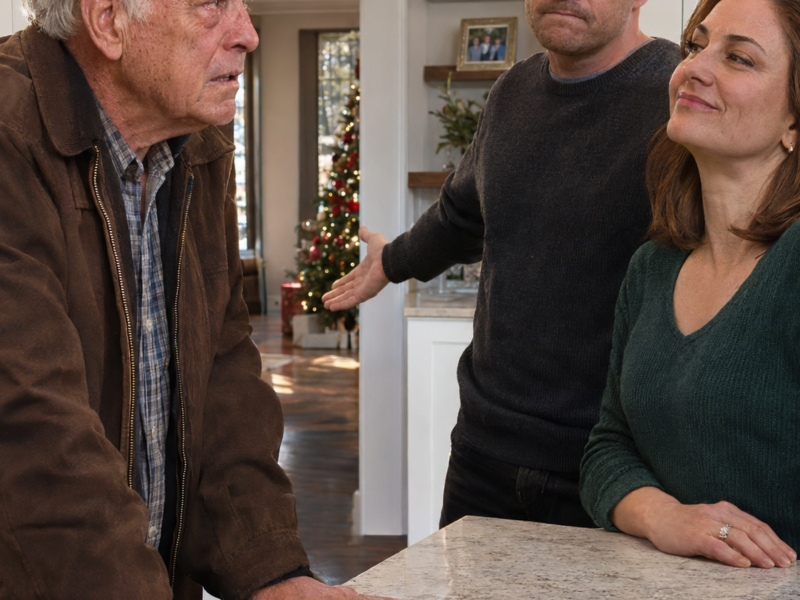
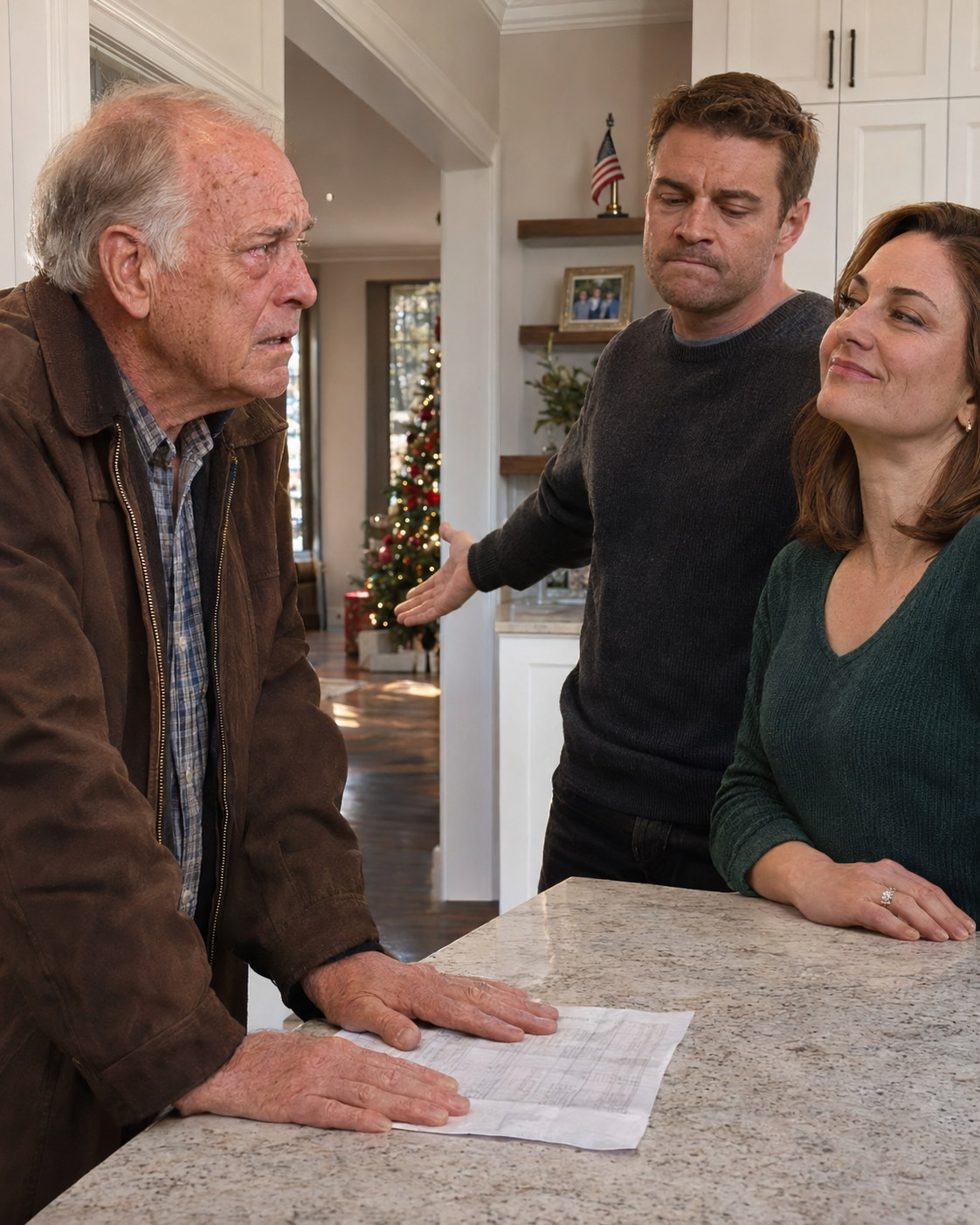
The following Sunday, I took one page of figures to Derek’s house. Serena and Nadine were drinking coffee at the kitchen island. Derek came in from the den carrying a beer. I waited until Nora had gone back upstairs before unfolding my paper.
“I spoke with Claire,” I began.
Serena lowered her cup. “You called the restaurant?”
“The confirmations come to me. I had questions.”
“Gerald, I told you I’d handle everything.”
“That’s what I’d like to discuss. I agreed to a dinner estimated at fifty-two hundred. The estimate has more than doubled.”
Derek leaned against the counter. “She’s trying to make it special, Dad.”
“It can be special. I’m asking the three households to divide the additions, or we can take some of them off. The champagne and musicians would be a place to start.”
“My parents are guests,” Serena said.
“So am I, apparently. I haven’t chosen a single thing.”
That came out sharper than I intended. I took a breath and pressed the curled edge of the paper flat. “I want us to have a good Christmas. I’ll cover what I agreed to. But I need to be asked before anyone commits my money beyond that.”
Nadine glanced at the page. “You made a spreadsheet for Christmas?”
“It’s a few numbers.”
“Curtis and I are stretched thin this year. We already bought clothes for this dinner.”
“Then let’s make the dinner less expensive.”
Serena folded her arms. “You said yes in front of everyone. Now you’re presenting us with a bill.”
“I’m not asking anybody to pay me back.”
“Your mother would have loved an evening like this,” Derek said.
I looked at him. “Your mother would’ve asked what it cost.”
He shifted his beer from one hand to the other. “Come on, Dad. You’re not exactly hurting for money.”
For a moment I couldn’t speak. I could hear the television in the den and the refrigerator behind me. The figures had seemed so reasonable at my kitchen table. Here, I felt embarrassed for having brought them.
“I’m not hurting,” I finally said. “I just want to be asked.”
Cooper had come to the doorway. “That’s fair, Dad.”
“Stay out of this,” Derek told him.
Nora appeared behind her brother. She looked from my face to her mother’s and pressed her lips together.
“Why don’t you go home and let everyone settle down?” Derek said to me. “We can deal with it after Christmas.”
“After Christmas, the money will already be spent.”
Nobody answered that. I left the paper on the counter. Outside, the cold reached the back of my neck, and I remembered my scarf. Lorraine had knitted it the winter before she became ill. It was hanging beside the laundry room door, the entrance I’d used for years without knocking. I went back for it.
The kitchen door was partly open. I had the burgundy wool in my hand when I heard Serena say, “He embarrassed me in front of Nadine.”
“He’s hurt,” Derek said. “Give him a few days.”
“What if he refuses? My mother already told everyone the dinner was taken care of.”
“He won’t refuse. He’ll complain, then he’ll pay.”
I stopped moving.
“You sound awfully sure.”
“When has he ever said no to something involving the kids? Nora says, ‘Please, Grandpa,’ and he folds like a lawn chair.”
Something tapped against the counter. A spoon, perhaps. I remember that little sound as clearly as the words.
“And if he keeps arguing?” Serena asked.
“Bring up Mom. He can’t stand the thought of letting her down.”
There was a pause. “I don’t want a fight with your father, Derek. I just want one nice evening where I don’t have to explain every decision.”
“He’s still covering Nora’s orthodontist next month. He wants to help us. Let it go. He’ll come around. He always does.”
I stood there long enough to hear a cupboard close. Then I lifted the outside door by its handle so the hinge wouldn’t squeak and walked to my truck.
I didn’t start the engine. I laid Lorraine’s scarf across my knees and sat with both hands on the wheel. My son knew exactly how lonely I was. He knew what I had promised his mother. He knew how much I loved those children. I had trusted him with all of that, and he had explained how to use it.
I bent forward until my forehead rested against the steering wheel. It was a while before I could drive.
My sister Sylvia came over two days later with a tin of snickerdoodles. She was sixty-six and had been recognizing my bad days since we shared a hallway as children.
“You look awful,” she said.
“Come in, then. You can inspect me in better light.”
She put the tin down and took off her coat without smiling. Our cousin Roxanne had forwarded her a message from Serena. According to it, I was counting every dollar in front of the grandchildren, using money to control the family, and making everyone walk on eggshells.
“Roxanne wanted to know if you were ill,” Sylvia said.
I read the message on her phone. Serena had ended it with, Please keep this between us. “How many people got this?”
“I don’t know. Enough.”
I told Sylvia about the estimate and the kitchen conversation. When I reached the part where Derek said I wasn’t hurting for money, my voice wouldn’t cooperate. She pushed the cookie tin toward me and waited.
I couldn’t tell her about the laundry room yet. Saying those words aloud would mean hearing them again.
“Gerald, why are you so afraid to tell them no?”
I broke a cookie in half. Crumbs scattered across my palm. “Because I don’t know what happens afterward.”
She didn’t make me explain. She knew about the empty chair at breakfast, the television left on for company, the way I started checking my phone on Thursday to see whether anybody needed me on Sunday.
“They do love me, Syl.”
“Then a reasonable question about a dinner shouldn’t put that in danger.”
Before she left, she told me there was a holiday group chat. The restaurant’s menu had been posted with the words, Courtesy of Gerald. As always. I checked my phone. I wasn’t in it.
That night, I wrote Derek and Serena an email. I kept it short. I would pay the $5,200 I had agreed to. They could share the additions or remove them. I wanted to enjoy Christmas with my family. I signed it Love, Dad.
For days, neither of them answered. I left Derek a voicemail. I sent Cooper a message about his final and Nora an old bicycle joke. Their silence bothered me more than their parents’ did.
At church the following Sunday, Beverly turned away when I wished her a merry Christmas. When I tried again, she said Serena had shown her my email.
“It read like a collections notice, Gerald.”
People were putting on coats around us. I stood holding mine while she resumed a conversation with someone else.
Leonard Pruitt, an usher I’d known for years, came over and offered me coffee and cake. There was a chair beside him, he said, and he would be glad to have me in it. I thanked him. Then I went home alone, too embarrassed to accept the simple kindness I’d been hoping to find somewhere else.
Serena finally answered later that week.
We will take care of everything. Please let the money talk rest. The holiday should be good for everyone.
I read it several times. I wanted to believe she meant they had arranged to share the expense. But she hadn’t said that, and I was tired of asking people to explain sentences designed to end a conversation.
Then came the Sunday-night text from Derek.
Nobody here likes you.
I wondered whether he had asked Nora. Whether Cooper, who still hugged me with both arms, had agreed. I knew better, but knowing better didn’t stop the words from getting in.
I sat beneath our anniversary photograph that night. Two weeks before Lorraine died, she had asked me to keep our family close. Derek went quiet when he was afraid, she said. I mustn’t let him drift away.
I had promised. Then I had paid for dinners, school expenses, vacations, and whatever else kept me involved. Each time someone said I was wonderful, I felt, briefly, that I was doing what she had asked.
There had been no part of that hospital conversation about paying for a room where I wasn’t allowed to sit.
By morning, when the updated guest list appeared, I was ready to ask a different set of questions. Claire answered my call at nine. “Serena reduced the party yesterday afternoon,” she confirmed. “She gave us the revised names. You aren’t on that list.”
“And the card?”
“It’s still assigned to the balance.”
“She took me off before Derek sent his message.”
Claire waited. I appreciated her for that. She didn’t try to explain my family to me. I drew three lines on my legal pad. I could leave everything alone. I could cancel the dinner and lose the deposit. Or I could leave their celebration intact and stop financing the rest of it.
“Can I withdraw the card without canceling the event?”
“Yes. We’ll need a signed authorization change and identification. Your deposit would stay applied. The hosting party would need to provide another payment method.”
“Before they eat?”
“Before we continue service, yes. We’ll explain it at check-in.”
I pictured Nora’s green eyes when she talked about that tree. Canceling the whole evening would give me an ugly kind of satisfaction for perhaps a minute. Then I would have to live with having done it.
“I’ll come in tomorrow,” I said.
Claire met me at the host stand on Tuesday afternoon. She had a clipboard waiting, but first she took me through the private dining room. Staff were preparing it for the holiday events. A tall fir stood near the window, its white lights glowing even in daylight.
“Your granddaughter called about the star,” Claire said. “I promised we’d have one.”
“That sounds like Nora.”
She showed me the seating plan. Serena had put Derek near her parents. Cooper would be beside Sylvia. My original place had been between Nora and the window.
Claire opened a folder and handed me a cream-colored place card. Gerald Whitten, written carefully in blue ink. “This was removed with the revised list. I saved it.”
I ran a finger over my name. Somebody had taken the time to make it beautiful. Somebody else had decided it wasn’t needed. “Keep it for me,” I said. “I’d rather not put it in a drawer at home.”
She slipped it back into the folder and sat across from me. We went through the form together. The $2,500 deposit remained credited to the dinner. The room, menu, music, and other arrangements would continue. My authorization for further charges would end. A member of the hosting party would have to provide payment. I read every sentence this time.
“Do you want us to contact Serena today?” Claire asked.
I considered it. I could already hear the calls that would follow, the explanations, the suggestion that I was confused or oversensitive. Serena had written that they would take care of everything. I had my son’s instruction to stay away.
“No separate call,” I said. “Explain the payment requirement when they arrive, the way you normally would.”
It wasn’t the most generous decision I have ever made. I knew they would be surprised, and some part of me wanted them to have to answer a question about money for once. But they would be told before the meal proceeded, and they could decide how to pay for what they had ordered.
Claire made a note. “And you’re certain you don’t want to cancel?”
“Certain. My granddaughter should get to see the tree.”
My signature wandered on the first letter. I braced my wrist with my other hand and finished it. Claire passed me a copy, and I folded it into my coat pocket.
Outside, I stood beside the truck for a moment before getting in. I felt lighter, then ashamed of feeling lighter, then angry at myself for the shame.
The dinner would happen. I had already paid twenty-five hundred dollars toward it. The rest belonged to the adults who had chosen it. I drove home repeating that last fact until I could hear it without making excuses for them.
Cooper and Nora appeared at my door that afternoon carrying a cookie tin. “I drove,” Cooper said.
“I picked the music,” Nora added.
“Twenty minutes of Christmas songs.”
“You’re welcome.”
I put my arms around both of them. Nora’s hair smelled faintly of vanilla. The hug lasted long enough that Cooper patted my back, as if to let me know he understood something he wasn’t going to say.
In the kitchen, Nora opened the tin. She had decorated every cookie herself. One Santa had a broad, uneven face. “He looks like a potato,” she admitted.
“Your grandfather has looked worse on a Christmas morning.”
She laughed and pushed that one toward me. Cooper had earned an A-minus on his chemistry final. I made a fuss over it until he blushed. For a little while, the kitchen sounded right again.
Then Nora asked whether I was feeling better.
“Better?”
“Mom said you needed rest. Dad said that’s why you aren’t coming Thursday.”
Cooper stopped stirring his cocoa.
“I’m not sick, sweetheart. Your dad and I have a disagreement to work through.”
“About the dinner?”
“About a few things. We’re the ones who need to handle them.”
Her face fell. “I got a green velvet dress. It has pockets.”
“A sensible designer.”
“I’m taking a cookie in case dinner takes forever.”
I tried to smile, but she was looking too closely at me.
“Who’ll be here with you, Grandpa?”
I could have made up a plan. Instead, I told her I would cook something, do my crossword, and probably watch an old movie.
Her eyes filled. I pulled my chair beside hers. “I can have one quiet evening, Nora. You don’t need to fix it for me.”
“I’ll send pictures.”
“I’d like that.”
“You have to answer. Sometimes you forget.”
“I’ll keep the phone where I can see it.”
I gave them the Christmas envelopes I had already prepared and told them to wait until Christmas morning. Cooper thanked me. Nora hugged my neck so hard I lost a button against the edge of the table. We spent several minutes looking for it, and she laughed again when I found it inside my slipper.
At the door, Cooper lingered while his sister walked to the car. “Mom said you wanted to audit Christmas.”
“I asked what the dinner cost.”
He looked down at his keys. “I didn’t think you were sick.”
“I’m all right.”
“If somebody says something about you that isn’t true, what do you want me to do?”
I studied him for a moment. He was waiting for an answer he could use. “Tell the truth, Cooper. You don’t have to make a speech. Just tell the truth.”
The next morning, Derek pulled into my driveway with Serena beside him. She stayed in the SUV while he carried a poinsettia up the porch steps.
“Merry Christmas Eve, Dad.”
I had been clearing frost from the railing. I set the scraper down. “Morning, son.”
He held out the plant. “Serena picked it. For Mom. She loved these.”
“Your mother couldn’t stand poinsettias. She said they sulked.”
His smile faltered. “Well, the thought was there.”
I took the pot. He rubbed his hands together and glanced toward the car. “About Sunday. Things got heated. You know how texts can sound.”
“I know how yours sounded.”
“I shouldn’t have put it that way.”
I waited. He looked at the frost along the rail, then at my front door. For one hopeful moment, I thought he had come to ask me to dinner after all.
“The kids said they stopped by,” he said instead.
“They brought cookies. Nora thinks I’m ill.”
“We were trying to spare her feelings.”
“She’s worried about me. How does that spare her?”
He pushed his hands into his coat pockets. “Dad, I came over to make peace.”
“Then tell me what you came to say.”
He took a breath. “The restaurant may call about the card tomorrow. A confirmation or a hold. If they do, just tell them it’s fine. Serena doesn’t want payment questions interrupting the evening.”
I looked down at the foil wrapped around the flowerpot. It had left a wet ring on my sleeve. “You told me not to come.”
“We’re going to do something afterward. Once this has settled down.”
“But the card needs to be there tomorrow.”
“Don’t put it like that.”
I wanted to tell him about the laundry room. I wanted to ask whether he had practiced this conversation in the car. Mostly, I wanted him to look at me and understand without another page of explanations.
He stepped forward and hugged me. My arms hung still for a moment before I hugged him back. “Love you, Dad.”
“I love you, too.”
That was true. It would have been easier if it hadn’t been. He went down the steps, reminding me to answer if the restaurant called. Serena lifted two fingers in a small wave through the windshield. I watched them leave, then carried the plant inside.
The card said, For Dad, for everything. I put it beside the pot on the windowsill.
Late that afternoon, I went to Lorraine’s grave wearing the burgundy scarf. I brushed a little frost from the stone and told her about the children, Cooper’s grade, and Nora’s dress. Then I told her I had signed the form. “I still love him,” I said. “I’m just having a hard time knowing what to do with that right now.”
There wasn’t an answer, of course. There was cold ground, the sound of a car on the cemetery road, and enough quiet to finish what I had come to say.
Christmas morning brought thank-you messages from both grandchildren. Nora used more exclamation points than I had used in my entire life. Cooper said he would check in later.
Sylvia called before lunch. She had offered to spend the evening at my house, but I had asked her to keep her place at the dinner. The children would have someone sensible nearby. Besides, I wanted to find out whether I could spend one evening alone without treating it as a verdict on my life.
“Eat a proper meal,” she told me. “And call if you change your mind.”
I roasted a small chicken with lemon and thyme. Lorraine’s recipe called for butter and patience. I managed the butter.
At 5:02, Nora sent a picture of the table. Candles glowed beside the plates, and the tree filled the corner behind her. Part of her thumb covered the lens.
It has a star. Wish you were here.
I sent back, Beautiful, sweetheart. Have a good dinner.
Cooper texted that he missed me. Sylvia said she was beside him. I stood in my kitchen smiling at the screen until the oven timer reminded me about the chicken.
At 5:25, Claire called.
“Your family has arrived, Mr. Whitten. We’ve explained that we need another payment method. Your son says there must be a mistake.”
“There isn’t.”
“I understand. He asked me to contact you.”
I gripped the edge of the counter. Through the phone, I could hear the distant clatter of a busy restaurant.
“The deposit is still applied?”
“Yes. All twenty-five hundred dollars.”
“And their dinner can go forward once they arrange payment?”
“Exactly.”
“Then my instructions stand.”
She didn’t ask me to justify them. Before hanging up, she said Nora had asked whether I might stop by later.
I thanked her for telling me and stood very still after the call ended.
My phone began ringing almost immediately. Derek first, then Serena, then Derek again. I could feel myself preparing to surrender, rehearsing how I would explain that I hadn’t meant to upset anybody.
I put the phone on Do Not Disturb and laid it facedown beside my crossword. They had been told what they needed to do. I needed a little time to let them do it.
At six-thirty, I turned the screen over.
There were 112 missed calls.
I sat down before I had finished scrolling. Forty-three were from Derek. The others came from Serena and relatives who had barely spoken to me in weeks. There were twelve texts from my son and five voicemails.
For a moment, all I could think about was the road between Franklin and Nashville. Cooper had driven. The weather had been cold. Nora had promised more pictures, and there hadn’t been another one.
I opened the messages with a finger that kept hitting the wrong place.
Dad, call me.
Dad, answer.
This isn’t funny.
Pick up. We need to fix this.
There was no mention of an accident. I listened to the first voicemail. “Hey, Dad. Some mix-up with the card. They’re saying it’s been taken off. Give me a call.”
He sounded irritated, but unafraid. I let my breath out. The second message was sharper. There were twenty-one people waiting, he said. Serena’s parents were watching him argue about the bill. Behind his voice, I heard Serena say, “Tell him we’re being humiliated.”
In the next, he reported that Beverly wanted to speak to Claire’s supervisor. In the last, he was nearly shouting. “Dad, pick up the phone. Just pick up.”
Then Serena, farther away but perfectly clear: “Keep calling. He always answers.” I listened to that one twice. For weeks, I had been leaving messages that went unanswered. Now the dinner needed a credit card, and nobody could bear to wait an hour.
I set the phone beside my plate. The chicken had dried out. I cut a small piece, chewed it, and put the fork down. I wasn’t hungry anymore.
The part I kept searching for wasn’t there. Nothing about missing me. Nothing about the empty chair. Not even a question about whether I was all right.
I called Derek back. He answered before the first ring finished. “Finally. Where have you been?”
“Is anyone hurt?”
“What?”
“Nora, Cooper, your aunt. Is everybody safe?”
“Yes, Dad. Nobody’s hurt. We’ve been trying to reach you because you pulled your card.”
I closed my eyes. Whatever happened next, the children were safe. I could deal with a dinner bill. “Then why did all of you call me a hundred and twelve times?”
“Because we’re sitting here with a twelve-thousand-dollar dinner. Because everybody’s looking at me. Do you understand how embarrassing this is?”
“I understand being embarrassed in front of family.”
“Don’t start. You could have warned us.”
“I asked you to talk about it at your kitchen counter. Then I put it in writing. Serena told me you’d take care of everything.”
“She meant the arrangements.”
“And you meant I shouldn’t come. I understood that part.”
A door closed on his end. The restaurant sounds grew quieter. “Dad, we’re going to discuss the text. But right now I need you to call Claire and straighten this out.”
“There isn’t an error. I went in Tuesday and signed the change myself.”
“On purpose.”
“Yes.”
He was quiet long enough that I heard him breathing. Then Serena’s voice came close to the phone. “Ask him to put the card back.”
“I heard her,” I said.
“She’s upset.”
“So am I.”
“You can’t leave us with this on Christmas.”
“The room is there. The food is there. My deposit is there. You need to pay the rest.”
“Fine. You want an apology? I’m sorry. Now will you fix it?”
I looked at the flowerpot on the windowsill. I had watered it that morning because the soil was dry. Even angry, I couldn’t seem to leave a living thing unattended.
“That isn’t an apology, Derek. It’s another way of asking me to pay.”
His breath came out hard. “What do you want from me?”
“For you to wonder whether I’m all right.”
He didn’t answer.
“You had all those chances. You never asked.”
“I was upset about what you did.”
“I know. I’m trying to tell you what upset me.”
The line stayed open. I wanted him to use the quiet. I wanted him to say something that wasn’t about the restaurant. Instead, he said, “Nora’s going to know you did this deliberately.”
“She can know. Tell her the whole thing. Start with why I wasn’t invited.”
“You promised Mom you’d keep us together.”
My hand tightened around the phone. “I did. I love you. I love your children. I’m still your father tomorrow. But I’m not paying the rest of that bill.”
“Dad.”
“Go back to your family. Work out what each household owes. You can handle it.”
I told him I loved him once more and ended the call. Then I sat with my elbows on the kitchen table until the shaking stopped. Saying no hadn’t made me feel powerful. It had made me feel seventy-one, tired, and terribly sad that my son needed to hear it this way. But I hadn’t changed my answer.
A little later, Cooper sent a message.
We’re coming after dinner. Me, Nora, and Aunt Sylvia. Please be home. I need to tell you something.
When their headlights swept across my living room that night, I was at the front door before they reached the steps. Nora came straight into my arms. Her green velvet dress was creased at the waist, and the skin beneath her eyes looked sore. “I brought your cookie,” she said.
From one pocket, she produced a gingerbread star with a broken tip. She had carried it through the entire evening. I took it carefully. “Those pockets were a good idea.” She nodded against my coat.
Sylvia followed with a foil-covered plate. Cooper shut the door behind them. He looked pale, and he kept his keys clenched in his fist until I took them and put them on the entry table.
We settled in the living room. Nora tucked herself against my side while Cooper sat forward in the armchair. “Dad said you were trying to ruin Christmas,” he began.
I waited.
“Claire explained the deposit was still there and you hadn’t canceled anything. Mom said she didn’t care how the restaurant described it. You’d done it to embarrass us.”
He swallowed. “I asked why you should pay if you weren’t invited. Dad said you chose not to come.”
Nora tightened her hand around mine. “That’s when I got my phone out,” Cooper said.
After visiting me Tuesday, he had gone home and used the shared family iPad. Derek’s messages appeared on it. Cooper had found the text and taken a screenshot.
I looked at him. “You’d seen it?”
“I wanted to call you. I didn’t know what to say. Then tonight Dad kept saying you stayed away on purpose.”
He had stood up at the table and read his father’s words aloud.
Dad, don’t come anymore. Nobody here likes you. You only ruin everyone’s good time.
Hearing them in my grandson’s voice hurt differently. I had spent days trying to keep the ugliness from reaching him. He had been carrying it around in his pocket.
“Beverly asked to see the phone,” Sylvia said. “She read it twice.”
Russell had turned to Derek and asked whether he had written it. Derek began explaining that it had been a bad week. Russell repeated the question.
“Dad finally said yes,” Cooper told me.
The room had gone quiet. Nadine started crying. Curtis looked at Derek and shook his head. Serena said everyone was being manipulated, but nobody reached for their phone to call me again.
“I went to the bathroom,” Nora whispered. “I didn’t want them watching me cry.”
I put my arm around her shoulders. “You didn’t do anything wrong, sweetheart.”
“You didn’t either.”
I couldn’t answer her right away.
Sylvia explained that the adults had provided replacement payment so service could continue. When the final check came, they divided the balance by household. The total was $12,640. After my deposit, they owed $10,140.
Russell paid his and Beverly’s share and took her home. Nadine and Curtis covered theirs. Derek’s first card wouldn’t go through for his portion. A second one did.
I looked toward the dark window. My first impulse was to ask how much Derek had needed, whether he would be all right until payday. I kept the question to myself. He had made choices about a dinner. He could live with the bill.
“Nadine asked me to tell you she’s sorry,” Sylvia said. “She meant it.”
“Did Derek know you were coming here?”
“I told him I was bringing the children. He said fine.”
Cooper rubbed his palms down the front of his pants. “I felt sick when I stood up, Grandpa.”
“I’m sorry you had to.”
“I wasn’t going to sit there and let him say that about you.”
I reached across and squeezed his hand. He had done what the adults should have managed long before he needed to get involved.
Before they left, Cooper told me one more thing. Near the coat check, he had heard Serena speaking urgently to Derek. “She said, ‘From now on, don’t let him look at the books.’ I don’t know what she meant.”
Neither did I. There were no books I knew of, no shared account, no household business I managed for them. I put the question aside for the night. Nora wanted cocoa. Sylvia wanted me to eat the dessert she’d brought. Cooper took the empty mugs to the kitchen without being asked.
For the first time all day, I sat in a room with my family and didn’t wonder what I was supposed to provide next.
The next morning, Serena sent an email to forty-three people. This time, she included me. She said I had deliberately sabotaged Christmas and humiliated Derek. She described years of contributions to something she called the family fund, along with the wonderful vacations I had given everyone in Destin and Gatlinburg. She wanted a public apology and my commitment to continue supporting that fund.
I read the message twice, then went back to those two words.
Family fund.
I had never agreed to a family fund. There was no account I had established, no arrangement I remembered discussing. I had given Serena access to my card years earlier for Nora’s orthodontist and purchases for the children. I had paid the balance and filed the statements. Somewhere along the way, permission for particular expenses had become, in her telling, a permanent obligation.
Before I could decide what to say, Nadine replied to everyone.
Curtis and I want no part of this. Gerald does not owe us an apology. You owe him one.
Other replies followed. Some were brief. Some asked to be removed from the conversation. A cousin wrote that she was sorry she’d believed the first version without calling me.
I didn’t answer them immediately. There was comfort in being believed, but I couldn’t stop thinking about what Cooper had overheard at the coat check.
Then Russell called. “I owe you an apology, Gerald.”
I sat down.
“I should’ve asked what was happening weeks ago. Beverly told me you were making everyone miserable. I let that stand.”
“I appreciate the call.”
“There’s something else. I read Serena’s email. I need to tell you something about the card.”
When Serena was twenty-two, he had given her a secondary card for books and emergencies. Three years passed before he looked closely enough to discover the shoes, salon visits, and a weekend in Miami.
“I saw how things were going at Thanksgiving,” he said. “I recognized it, and I said nothing. I told myself it wasn’t my business.”
I watched a drop of water travel down the kitchen window. “Why didn’t you tell me?”
He took a long breath. “Because she’s my daughter, and saying it would have meant admitting I hadn’t dealt with it very well myself. I’m telling you now because you should read your statements.”
After we hung up, I called Sylvia. She came over the next morning with tea, reading glasses, and two highlighters. I had brought a box down from the hall closet. Years of statements were inside, filed neatly enough to impress anybody who didn’t know I had barely examined them. We set those beside the receipts and travel paperwork I had kept.
“We’ll go slowly,” Sylvia said. “If something needs an explanation, we mark it. We don’t guess.”
We began with Destin. I remembered approving $1,900 for the grandchildren’s beach week. The records showed $7,860 in spending attached to the trip. Beyond the original amount were a $3,100 villa upgrade, a $1,460 spa package, and another $1,400 in airfare.
I tapped the spa charge with my finger. “I never went on that trip.”
“I know.”
“She said the children needed a break.”
Sylvia slid the next page toward me. “Keep reading.”
The Gatlinburg trip had cost $4,200. I had pictured a cabin, snow, and cocoa for Cooper and Nora. The paperwork included a couples suite and ski rentals. There were annual amounts described as Christmas gifts for the children, followed by personal purchases that didn’t match that description.
Then we found a $1,400 dinner in the Gulch, marked in the expense notes as Christmas. I knew the date. It was Serena’s birthday dinner. I remembered seeing a photograph afterward, everybody gathered around a dessert with a candle in it. I hadn’t been invited to that one, either.
Some pages took longer than others. I wanted to be fair about every purchase. A meal with the children could cost more than expected. A trip could have legitimate additions. I wasn’t going to turn an ordinary family expense into an accusation because I was angry.
But the salon appointments were there. The boutique receipts were there. The spa package was there. Sylvia counted thirty-seven salon visits in the records we reviewed.
At one point, I put both hands flat on the table and stared at them. Those hands had checked bids, signed payroll, and caught small mistakes before they became expensive ones. At home, I had treated asking questions as a failure of love.
Sylvia made sandwiches. We ate without moving the papers.
By late afternoon, we had traced $46,800 in spending through Serena’s use of the card. Of that, $18,300 matched the family expenses I had agreed to cover. The remaining $28,500 went to personal purchases and additions I had never authorized.
I checked the subtraction twice. “Twenty-eight thousand five hundred,” I said.
Sylvia nodded. I went to the window. A neighbor was hauling an empty trash bin up his driveway. Everything outside looked ordinary. I envied him the small problem of getting his bin over the curb.
“What are you going to do?” Sylvia asked.
“First, stop giving her access.”
“Good.”
“Then I’m going to put this in front of both of them.”
We organized the pages in a blue binder, the kind I used to carry to job meetings. One section for each year. Statements beside the records that explained them. No angry notes in the margins. The numbers didn’t need help from me.
Derek texted while we were finishing. He wanted to see me alone. I told him Tuesday evening, at his house. Serena needed to be there.
Before that meeting, I dealt with the card company and ended her access. I put the new arrangements in a folder I would actually open each month. It was a small task compared with what lay ahead, but completing it steadied me.
On Tuesday, I arrived with sparkling cider under one arm and the binder under the other. Derek looked tired. He stepped aside and told me the children were upstairs. Serena sat at the dining table, where three bowls of spaghetti were waiting.
“I’m not here to shout,” I said. “But we need to go through this.”
I set the binder between us. Serena glanced at it. “Gerald, it’s still Christmas week.”
“Yes.”
I opened to Destin. “I agreed to nineteen hundred dollars. The spending came to seven thousand eight hundred sixty. There was a villa upgrade and a spa package. Who were the extra airline tickets for?”
She looked at the page. “Friends came with us. It was a family trip.”
“I paid to send the grandchildren to the beach. You didn’t ask me to pay for your friends.”
“It came out of the family fund.”
“Show me where I agreed to that fund.”
“It was informal. You’ve always helped.”
“Helping with a particular bill isn’t permission to use my card whenever you want.”
I turned to Gatlinburg, then the birthday dinner. Serena started to explain one charge, stopped, and folded her hands in her lap. Derek stared at the binder. “Did you know?” I asked him.
He rubbed his forehead. “I knew about some of it.”
“Which parts?”
“The salon. And I saw the suite charge for Gatlinburg. I told myself there was probably an explanation.”
“Did you ask for one?”
He shook his head. Serena reached for the binder. “You’re making every little thing sound dishonest.”
I let her turn the page. She stopped at the summary Sylvia and I had checked together. “Twenty-eight thousand five hundred dollars,” I said. “That’s the part I didn’t agree to.”
Her hand went still. “You never said there was a limit.”
“I said the card was for the children.”
Derek moved his bowl away. “Dad, I’m sorry.” I waited for him to continue. “I should have looked. I should have asked. I knew enough to know I needed to.”
“Why didn’t you?”
His eyes filled. “Because it was easier to let you pay than to have the argument.” Serena said his name, but he kept looking at me.
“And the text?” I asked.
He pressed his knuckles against his mouth, then lowered his hand. “She said if you weren’t there, you couldn’t make a scene about the bill.”
“Derek,” Serena said again.
“But I wrote it. Every word. Nobody took my phone and did it for me.”
There was the son I needed to speak to. Frightened, ashamed, and finally staying in the conversation. “I came back for my scarf that Sunday,” I told him. “I heard you in the kitchen.” He closed his eyes.
“I heard what you said about Nora asking me for things. I heard you talk about using your mother to get me to agree.”
Serena looked toward the hallway. Derek didn’t move. “I kept hoping you would call because you wanted to talk to me,” I said. “Then you came over with that plant and asked me to approve the card.”
“I know.”
“I don’t think you do yet. But I need you to try.”
The spaghetti had stopped steaming. Upstairs, something fell to the floor, followed by Nora’s voice and Cooper answering. All three of us looked toward the ceiling.
I closed the binder. “I’m not asking for this money back. I’m going to leave what’s already spent in the past. But you won’t have access to my cards again. No trips booked first and explained afterward. If I offer help, we agree on what it covers before anyone spends it.”
Serena stared at the blue cover. “And the children?” she asked.
“Are my grandchildren. I love them. They don’t owe me a side in this, and neither of you should ask them to take one.”
“Cooper shouldn’t have read that message in front of everyone.”
Derek lifted his head. “I shouldn’t have sent it.”
She looked at him, then back at me. For once, neither man at her table hurried to make the moment easier for her. “I didn’t think it had gone that far,” she said.
I left the binder where she could reach it. She could read every page. They both could. I had another copy at home, along with the restaurant form and the email in which she had promised to take care of everything.
I wasn’t ready to pretend this was settled. There were things Derek had said that I would hear for a long time. The next invitation would be difficult to trust. But my money was back under my control, and the children had shown me that their affection had never depended on the bill.
Derek reached toward me, stopped, and put his hand on the table.
“I don’t need you to pay me back,” I told him. “What I need is for you to never again make me pay for your silence.”
He nodded. He didn’t ask me to forgive him on the spot or explain what I could do to make the evening easier. He sat with what I had said.
Then he looked at me. “Dad, are you all right?”
I had wanted that question for weeks. Hearing it didn’t undo the text or the phone calls. It didn’t erase the pages between us. But he was looking at my face, and he waited for the answer.
“I’m getting there,” I said.