My Daughter-in-Law Handed Me a Chore List for 25 Christmas Guests. Then My Flight Was Canceled.
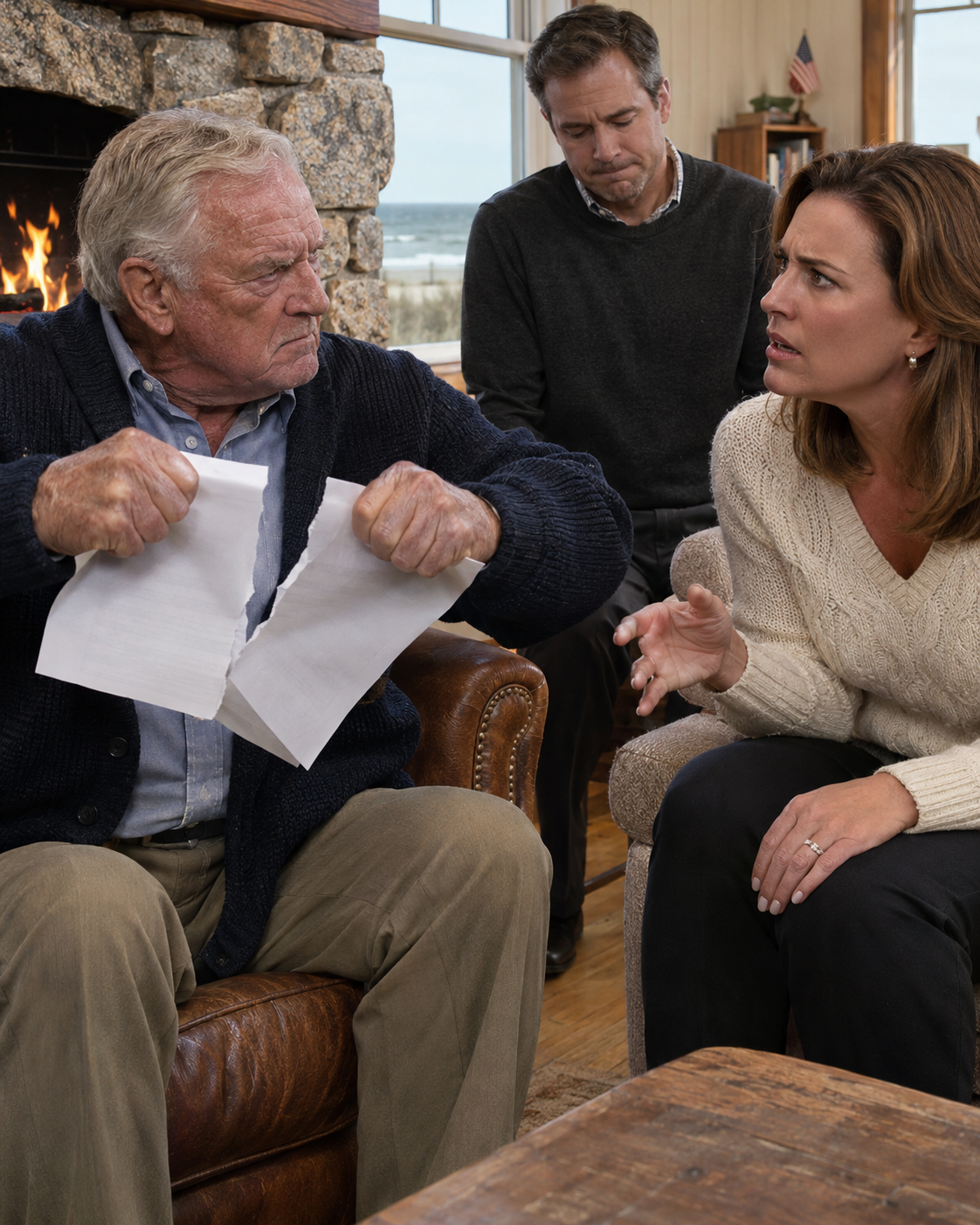
“My whole family is spending Christmas here,” Nadine said. “It’s only twenty-five people.”
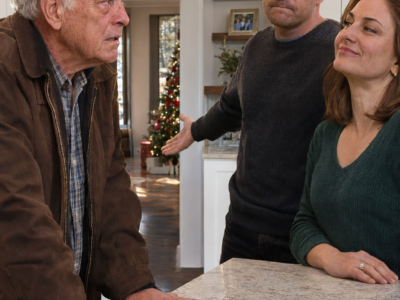
She laid three typed pages across my open book. Groceries on the first page, cleaning on the second, cooking on the third. She had even written down which bathrooms needed their grout scrubbed. I looked past her at my son. Derek stood beside the fireplace, turning his phone over in his hand.
“Did you know about this?” I asked.
“We thought it would be good for you, Dad. Having people around.”
I was seventy-seven years old. Apparently, what I needed to brighten my Christmas was to clean four bathrooms and cook for twenty-five strangers in the house I paid for.
“Some of them will start arriving tonight,” Nadine added. “My mother needs gluten-free options. And please get the beer on the list. My brother-in-law won’t drink the domestic kind.”
“What will you two be doing?”
She looked surprised by the question. “Hosting.”
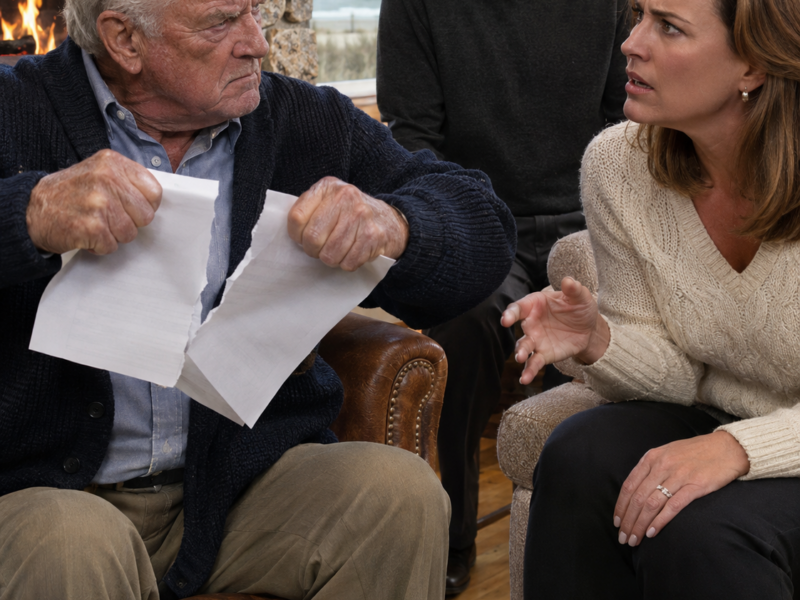
For a few seconds, the only sound was the fire settling behind her. I read the last line on the third page. Polish the silver. Lorraine’s silver. Lorraine’s kitchen. Lorraine’s house, which I had spent five years trying to keep from feeling empty. I closed my book, folded the pages, and tore them down the middle.
“Dad.” Nadine stepped forward. “I spent an hour on that.”
I tore them again and put the pieces into the fireplace. One corner curled black before the rest caught.
“Then you’ve already done an hour’s work toward your party,” I said. “You can do the rest yourselves.”
Derek finally put his phone away.
“Come on. There’s no need to make a scene.”
“You invited twenty-five people into my home without asking me. You handed me a cleaning schedule. What part of this did you think I would enjoy?”
Nadine folded her arms. “We’re trying to give this family a Christmas.”
“Then give it one. I’m going to Florida. You can buy the groceries, cook the meals, and clean up afterward. I’m nobody’s servant.”
It was December 22. Until that morning, I hadn’t made a single plan to leave North Carolina. I meant every word anyway.
My name is Gerald Whitmore, though almost everybody calls me Gerry. I spent more than forty years working as a structural engineer, most of them on commercial projects along the coast. I did well enough to retire comfortably, and I had never minded sharing what I had. That last part had become a problem.
After Lorraine died, Derek and Nadine offered to move into our house on the Outer Banks. They said they worried about me living alone. Derek was forty-five now, working in sales, and Nadine was forty-two. They had plenty of reasons to want more room and fewer bills, but at the time, I heard only that my son wanted to come home.
For the first few weeks, hearing footsteps upstairs helped. So did finding two extra coffee cups in the sink. I told myself the little inconveniences were a fair price for having family nearby. Then the arrangement settled into something nobody had discussed.
I paid the property taxes, utilities, and groceries. When one of their leased cars needed work, Derek left the estimate beside my place at breakfast. Nadine ordered things for the house on my accounts and called them improvements. Neither of them seemed to remember the part about looking after me. I remembered it. I simply stopped bringing it up.
Lorraine and I had built the house in the late eighties. We lived in a travel trailer while the work went on, arguing over window sizes and eating sandwiches off a cooler. She wanted to see the water from the kitchen sink. I thought we ought to spend the money on something more practical. She got her window. For thirty years, I was glad she did.
There was a photograph of us on the unfinished porch, Lorraine in work pants with a pencil behind her ear, me holding a level. Derek was a little boy in a plastic hard hat, standing between us with one hand in each of ours.
That photograph used to sit on the mantel. After Nadine moved in, it traveled to a hallway shelf, then to my bedroom. My old chair disappeared from the living room, too. Friends who called were told I was resting. Sometimes I learned they had called only when I ran into them weeks later.
None of those things seemed large enough to fight over by itself. Put together, they left me eating breakfast in a house where I was beginning to feel I needed permission to sit down. I had contributed to that arrangement by saying yes when I wanted to say no. I knew that. But even after everything, I still expected Derek to notice when his wife went too far.
He watched the last corner of the grocery list burn and said nothing.
I left them downstairs and went to pack. Halfway up, I paused beside the hallway mirror. It reflected the fireplace and the space where they were standing. I expected an argument. Nadine complaining about me, perhaps, and Derek promising to talk me around.
Instead, my son let out a breath and nodded at his wife. She caught his arm. For one unguarded moment, they both looked relieved. Not relieved that I had agreed to host. Relieved that I was leaving.
Upstairs, I booked an afternoon flight out of Norfolk and put a few shirts into a suitcase. I stood for a while with my shaving kit in my hand, trying to decide whether that look in the mirror meant anything. Maybe they were simply glad to have the house to themselves. Maybe I had made a small thing ugly because I was tired of feeling old. I had become practiced at finding explanations that hurt less.
When I came down, Nadine was waiting with my coat. Derek handed me my keys. Neither offered to drive me to the airport.
“Enjoy yourself, Dad,” he said.
I waited for him to add, Call when you get there. He didn’t.
They stood together on the porch as I backed out. In the rearview mirror, I could see them watching until I reached the bend in the driveway.
The storm caught me before I reached Virginia. Snow swept across the highway, and the wind pushed at the side of my SUV hard enough to make me ease off the gas. By the time I reached the terminal, flights were disappearing from the departure board. Mine changed from delayed to canceled while I stood beneath it with my suitcase.
I bought coffee and sat beside a family trying to find a hotel room. I should have been doing the same thing. Instead, I kept seeing Nadine’s hand close around Derek’s arm in that mirror. Neither had called. Not even after the cancellations began appearing on the news.
I took out my phone to tell them I was coming back, then put it away. I didn’t want another argument about twenty-five guests. I would let myself in, go to bed, and decide what to do in the morning.
The return took nearly four hours. I followed the cleared tracks where I could and pulled over once to let a plow pass. When I finally turned onto my road, it was after ten.
The house was bright in every window. Four black sedans occupied the driveway. A large, unmarked work van stood near the utility entrance. I saw no children’s luggage on the porch, no relatives unloading presents, no sign of the Christmas Nadine had described.
The drift across the upper drive looked deep enough to trap the SUV. I parked near the cedars by the road and walked the last stretch, keeping my head down against the wind. I used my key at the side door. Before I had both boots off, I heard drilling. There were voices in the living room and the occasional electronic chirp of measuring equipment. I knew those sounds. I had spent much of my working life around them.
Derek’s office door was partly open. On the desk lay a jumble of folders, my old property records among them. A wastebasket beside it held torn letters, one with my name visible across the fold. I pulled it out. The letter demanded repayment by the end of the year. It said the writer was finished waiting. Near the bottom, in language no ordinary lender would use, it mentioned Derek’s wife and “the old man.”
We know where he lives.
I stood there listening to strangers work on my house, holding a threat addressed to my son. I photographed the torn pages and put them back. Whatever Derek had done, it was bigger than another overdue bill. I was coming out of the office when he turned the corner carrying a stack of files.
“Dad?”
The files slipped. He made a useless grab for them as they scattered across the floor. Beyond him, a man had a scanner aimed at the beam above the fireplace. Two others were studying measurements near the windows.
“My flight was canceled,” I said.
Nadine appeared from the kitchen, wiping her hands on a Christmas apron. She stopped when she saw me, then recovered quickly.
“Oh, you poor thing. We were just going to call. My family can’t get through this weather.”
I looked toward the living room. “Who are they?”
“Appraisers. Derek thought we should update the insurance on the antiques.”
“Tonight?”
“It was the only time they had.” She gave a little laugh. “You know how busy everyone is before Christmas.”
Derek knelt to gather the files. “We wanted to take care of it while you were away.”
I could see Lorraine’s pottery on the mantel. Nobody was looking at it. One man was measuring the room, another the structure supporting the floor above it. There could have been a reasonable explanation for that work. The explanation they had given me wasn’t one. I was tired, cold, and suddenly afraid of asking the next question without knowing the answer.
“I’m going to bed,” I said.
Nadine stepped aside so quickly that her apron brushed the doorframe. Upstairs, I left my light off. I listened to doors opening and closing, cars starting, voices fading. I lay down without undressing, but every time I closed my eyes, I saw the letter.
Near three in the morning, I went downstairs again. The sedans were gone. The van remained beside the garage, its roof carrying a fresh layer of snow. I put on my coat and boots and went out to look at it.
A small fleet label near the rear door identified Coastal Demolition and Excavation. Beneath that was another name: Vanguard Holdings. I knew Vanguard. Their proposed resort developments had been in the local paper often enough.
I stood with my gloved hand against the van, looking back at the kitchen window Lorraine had insisted on. Then I went inside before the cold could make my hands shake any worse. A light showed beneath Derek’s office door. I stopped in the hall. Nadine was on the phone.
“The measurements are finished,” she said. “Yes, he came back. The airport closed. We told him it was insurance.”
She listened for a moment.
“He’ll leave again tomorrow. I’m handling his dosage. You handle the medical paperwork.”
I stayed where I was until she ended the call. Then I went upstairs carefully, holding the banister the whole way.
For three months, she had brought me orange juice every morning. She said she added vitamins for my energy and joints. It had seemed like one small kindness in a household where kindness had become scarce.
During those same months, I had begun forgetting things. An appointment. Part of a conversation. Why I had walked into a room. Some afternoons, the fatigue came on so heavily that I had to lie down. Once, my hand shook enough to rattle a spoon against my cup, and Derek took it from me without meeting my eyes.
I had gone to the clinic. I had started keeping notes. I had lain awake wondering how long I would know my own mind well enough to recognize it slipping away. Now I sat on the edge of my bed until morning, remembering every glass she had handed me.
At breakfast, I told them I had found another flight for that afternoon.
“You don’t have to rush,” Nadine said, already reaching into the refrigerator.
She poured the juice into my usual glass and set it in front of me. As I pulled out a stool, I noticed a business card against the baseboard. Vanguard Holdings. The acquisitions director’s title was printed beneath the name. I dropped my reading glasses, bent to retrieve them, and slipped the card into my pocket.
“Drink that before you go,” she said. “You look worn out.”
The juice looked ordinary. The glass was the same one Lorraine used to give me with Sunday breakfast. Nothing about it warned me. I picked it up but didn’t drink. When Nadine turned toward the dishwasher, I transferred a little into the small, clean medicine bottle I had brought down in my pocket. I put the cap on beneath the counter and set the glass back where it had been.
“My stomach’s off,” I said.
She glanced at the juice. For a second, her expression changed.
“You need to keep your strength up.”
“I’ll get something at the airport.”
I left the rest untouched. At the door, I hugged my son. I don’t know why I needed to do that. Perhaps I wanted some familiar response from him, something that would let me believe I had misunderstood.
“Merry Christmas, Derek.”
He patted my back. “You too, Dad.” Nadine stood behind him, holding the door open. I drove away slowly. At the bend, I looked in the mirror again. She lifted her hand, and my son met it with his.
A quick, relieved high five.
This time, I didn’t look for a kinder explanation.
I went south instead of north. During the night, I had rented a small cottage about twenty minutes from home. It had a kitchen table, a working heater, and a driveway hidden from the main road. That was all I needed.
I set the bottle on the table and called Everett Langham. Everett had handled my legal affairs for thirty years. He was seventy-five, wore the same kind of dark suit in every season, and had never confused speaking loudly with having something useful to say.
I told him about the list, the men in the house, the letter, and what I had heard outside Derek’s office. When I reached the orange juice, he stopped me.
“Have you had medical attention?”
“I wanted to get the sample tested first.”
“We can do both. Send me the address. Don’t drive anywhere.”
My second call was to Cody, my younger sister’s son. He was twenty-five and worked in cybersecurity. Years earlier, when his parents lost their college savings, I had covered his expenses at Georgia Tech. He had thanked me at graduation so earnestly that I finally told him to stop thanking me and go find something worth doing. Now, when I told him I needed help getting into my home security system, he asked only where I was.
Everett arrived first. He took one look at the little bottle and asked when I had last had anything to eat or drink from my kitchen. Then he took my car keys.
I spent part of that day answering medical questions I had never expected to be asked. What had I consumed? How often? When had the dizziness begun? Was there someone at home who might have given me something without my knowledge? I could describe the symptoms without difficulty. Saying my son’s name was harder.
The doctors examined me and began the tests and care they considered necessary. Everett arranged for the juice to go to a laboratory and made sure the bottle, the timing, and my account of collecting it were documented. He also contacted investigators. The threats in Derek’s office concerned him as much as the property deal.
By the time I was back at the cottage, Cody had covered the kitchen table with equipment. Everett put my medical instructions beside the coffee maker, where neither of us could pretend to forget them.
“This doesn’t wait until the house business is finished,” he told me.
I nodded. I had spent months being told my health was a burden to everyone. It took me a moment to recognize the difference when somebody was actually concerned.
Cody had recovered access to the house’s security recorder through my original owner’s account. Derek had disabled the household display, but the separate recording system was still there.
“These are the common rooms and entrances,” Cody said. “I’m preserving the original files. Whatever we find, the investigators will need those.”
On the screen, I saw my dining table in the middle of the living room. Plans covered the wood. A silver-haired man stood at one end with a woman in a dark suit beside him. Derek was facing them. Nadine carried coffee cups around the table. Cody played the recording from earlier that afternoon.
Across the top of one drawing were the words Vanguard Coastal Resort. Underneath, smaller but still readable, was Demolition Phase 1. My house appeared as a set of lines to be removed. I leaned forward, trying to make out the porch. Everett put a hand on the back of my chair.
The silver-haired man was the acquisitions director whose card I had found. He tapped the paperwork.
“The price is eighteen million. Five is already in escrow. We’re not releasing the other thirteen until the documents are complete.”
Derek pulled out a folder. “I have power of attorney.”
“You have a health-care document,” the woman said. “We discussed this. Where is the physician’s statement?”
Everett reached across and paused the recording.
“That paper concerns medical decisions, Gerry. It does not give him authority to sell your house.”
“Then what are they doing?”
“Trying to put a respectable-looking explanation around a fraudulent sale.”
He started the recording again. Nadine stepped beside Derek. “The doctor is coming this afternoon. You’ll have what you need for tomorrow.”
“And your father?” the director asked.
“We’re handling his care,” she said.
That was how they discussed what would happen to me. One question between the escrow money and the signing appointment. The woman gathered her papers. They had rushed ahead on documents Derek supplied, treating the ownership checks as something to finish after they got the signatures they wanted. No one at that table asked to speak with me.
Everett opened a folder of his own. Three years earlier, he had helped me put arrangements in place for the house that were more substantial than a will. At the time, I had complained about the amount of paperwork. He had told me I was paying him to think about what might go wrong. Now he was calling the people responsible for those arrangements and asking for certified records.
“Can they get the house?” I asked.
He looked directly at me. “Derek cannot authorize this sale. I’m making sure nobody can pretend otherwise.” For the first time since I had heard Nadine through the office door, I could draw a full breath.
But the house was only part of it. Cody had also preserved financial files connected with Derek’s dealings. Some were incomplete. Some contained account numbers we couldn’t identify. Everett cautioned us not to treat every figure on a screen as an established fact. Even so, the outline was there, and investigators later confirmed it.
Derek had taken four million dollars from his employer and lost it in speculative trading. Trying to replace the money before it was discovered, he had borrowed another two million from the Norfolk lenders whose threats I had found in his office.
Six million dollars he couldn’t repay. An eighteen-million-dollar house he didn’t own.
The deal with Vanguard included offshore accounts and instructions for moving money in ways that had nothing to do with paying for my care. It gave the federal investigators something concrete to follow. My son’s plan was to pay his creditors, replace the stolen money, and leave the country with what remained.
I thought about the repair estimate he had left beside my breakfast plate. I had paid it without asking a question.
“Why didn’t he come to me?” I said.
Neither man answered.
I knew why the question was useless. He had come to me, in the way he had chosen. He had moved into my house and started taking what he believed would eventually be his.
At four-thirty, a car pulled into my driveway.
The man who got out carried a medical bag. Nadine met him at the door and brought him to the sofa. Cody turned up the sound.
“Dr. Beckett,” she said. “Thank you for coming.”
Nolan Beckett. I recognized the name from the Norfolk area. I had never been his patient.
She gave him copies of my recent clinic records. He turned the pages while Derek sat on the edge of a chair, rubbing his palms against his trousers.
The records described the dizziness, the weakness, the lapses I had been embarrassed to discuss. I remembered sitting in the clinic trying to explain that I knew something was wrong, even on days when I could answer every question correctly.
Now a man who had never met me was using those visits for something else.
“The history supports significant deterioration,” Beckett said.
“And you can state that it’s permanent?” Nadine asked.
He looked at her, then at Derek.
My son handed him an envelope. When Beckett opened the flap, I could see the edges of cash. He put it in his bag and took out another document.
“Does he even intend to examine me?” I asked.
Nobody at the cottage answered. We watched him sign.
There was no examination. No call to me. No conversation with the doctors who had seen me. He signed a statement describing a man he had never spoken to as incapable of managing his own affairs.
Everett wrote down the time.
That small movement steadied me more than anything he could have said. He was treating what we saw as something that could be proved and answered.
After Beckett left, I walked to the cottage window. Someone in the next yard was trying to free a shovel from a frozen snowbank. He worked at it for a minute, stopped, and laughed at himself.
It seemed impossible that ordinary things were still happening.
The laboratory contacted us that evening.
The sample contained a prescription sedative and thallium, a toxic metal. I had never had a reason to know much about thallium. Hearing it named did not make me feel clever for suspecting something. It made me cold all over.
Everett sent the findings straight to the medical team. There were more instructions, more calls, and arrangements for continuing treatment. Nobody told me that determination or a good night’s sleep would put this right.
The laboratory could establish what was in that bottle. It could not tell us, from one sample, exactly how much I had been given over the preceding months. But the symptoms, the morning routine, and Nadine’s words in the office no longer looked like separate things.
I sat with my hands open on my knees.
For months, I had been ashamed when I lost the thread of a conversation. I had started saying less at dinner so neither of them would have to correct me. Sometimes I pretended to be tired when I was frightened.
I thought I was sparing them the difficulty of watching me decline.
Cody set a glass of water beside me and stayed until I picked it up. I noticed that he drank from his own glass first. He didn’t make anything of it.
“Uncle Gerry,” he said, a little later. “They’re in the living room.”
On the screen, Derek stood beside the bar with a drink. Nadine was gathering the papers Beckett had left.
“I hate this,” Derek said.
She kept stacking the pages. “We’re almost through it.”
“He’s my dad. I sit there and watch him drink it. He forgets what he was saying halfway through a sentence.”
The cottage became very quiet. I had known my son was part of the sale. I had seen him pay the doctor. Still, some foolish, stubborn part of me had kept a separate place for the juice. Perhaps Nadine had told him the supplements were harmless. Perhaps he didn’t know what they contained. Now I heard him describe watching me drink them.
Nadine put down the papers.
“Do you want to tell your employer what happened to the money?” she asked. “Do you want those men coming here?”
“That’s not what I’m saying.”
“He’s seventy-seven, Derek. He’s had his life. Tomorrow gets us out of this.”
He stared into his glass. I waited for one word. No. Stop. Anything. He put the drink down and asked whether the notary had confirmed the appointment.
I bent forward until my elbows rested on my knees. Cody took off his headphones. Everett stayed beside the table. Nobody tried to tell me Derek hadn’t meant it.
After a while, I said, “Save that part.”
“I have it,” Cody answered.
I nodded, but it took me another minute to sit up.
By morning, Agent Briggs was coordinating the investigation. Everett had given him the recordings, the laboratory findings, the threatening letters, and the information about the proposed transfers. There were already reasons for officers to act. The closing would show exactly who intended to take part and what they were prepared to sign. Briggs spoke to me directly. He wanted to know where I was, who was with me, and whether Derek knew I had contacted anyone.
“He thinks I’m still trying to reach Florida.”
“Keep us informed of any contact. Let us handle the people at the house.”
When Nadine asked about my travel plans, I told her I might come home that afternoon. It explained my return without giving them a reason to abandon the meeting.
I spent much of Christmas Eve waiting. I followed my medical instructions, ate the toast Cody made, and watched Everett move between phone calls. Once, I asked him to repeat something because I had lost track of it. He repeated it. No sigh. No look exchanged with anybody else. I hadn’t realized how much I had come to dread that look.
Shortly after two, the Vanguard director and his attorney arrived. A third man came with them, carrying a briefcase and looking unhappily at the icy front steps. He was the notary. Nadine had cleaned the living room. The fire was lit. The papers were arranged neatly, and the chairs had been pulled up to my dining table. She had managed all that without my help.
The director asked for Beckett’s statement. Derek handed it over. While the attorney read, Nadine went to the bar.
“Cody,” I said.
“I see her.”
She took out the decanter holding the bourbon Derek had given me for my last birthday. She looked toward the table, then reached into her cardigan pocket. Two little vials appeared in her hand. I watched her empty them into the decanter. She replaced the stopper, moved the liquor gently, and arranged two glasses beside it.
I couldn’t identify what she had added from a picture. After the laboratory result, I had no intention of finding out by drinking it. Everett was already on the phone to Briggs.
I went into the bedroom and changed into the suit I had packed for Florida. I wanted my son to look at me as his father when I walked through the door. That was all. A suit couldn’t undo what had happened to my body. My fingers fumbled with the collar button. I tried twice before I got it through.
Everett drove. Cody stayed with the recording equipment, preserving what happened as the people at the table prepared to sign. On the way, Everett asked whether I wanted to wait somewhere else while officers went in.
“No.”
He nodded. “Then you stay beside me.”
The storm had passed, leaving hard banks of snow along the road. We drove slowly. Outside the house, Briggs spoke to us briefly. Officers were in position. He made clear that he was responsible for what happened next, and that I was not to confront anyone alone. Everett stayed at my shoulder as we approached the entrance.
Through the glass, I could see Derek leaning over the table. He finished writing, straightened, and handed the pen toward the notary. I opened the door. My son looked up. His hand stayed extended for a moment, still offering a pen nobody took.
“Dad. We thought you’d be later.”
“Obviously.”
Nadine moved first. She crossed the room with both hands out, her face taking on the expression I had seen so often at breakfast.
“You must be exhausted. Come sit down.”
“I’m fine standing.”
She glanced at Everett, then at the people around the table. “He’s had a difficult few months. Travel makes the confusion worse.” I looked at my son. He said nothing.
Nadine touched my arm. “Let me get you a little bourbon. You’ll feel better.” She turned to the bar and picked up the decanter. When she came back with a glass in her other hand, I saw her tilt the stopper free with her thumb.
I knocked the decanter away. It struck the floor between us and broke. Bourbon spread beneath the table, and a piece of crystal slid against my shoe. The noise made me flinch.
Nadine stared at the floor, then at me.
“I don’t drink thallium, Nadine.”
She opened her mouth. Nothing came out. Briggs came through the doorway with officers behind him. He told everyone to step away from the table and keep their hands visible. Everett immediately pointed out the spilled liquid so no one would walk through it. The director stood so quickly that his chair scraped backward.
“What is this?” he demanded. “We’re in the middle of a private transaction.”
“In my home,” I said.
Nadine found her voice. “He’s confused. We have a physician’s statement.”
“The one Derek paid for yesterday?”
My son’s face changed. Everett placed copies of our documents on a dry corner of the table. He kept the originals in his case. The laboratory report was on top.
“The drink served to Mr. Whitmore yesterday morning contained a sedative and thallium,” he said. “The investigators have the report and the sample documentation. They also have the recording of Dr. Beckett’s visit.”
Nadine took a small step backward. An officer moved with her. I looked at Derek. “I watched you give him the money.”
“Dad, you don’t understand what was happening.”
“He signed that statement without speaking to me. I watched that, too.”
The attorney from Vanguard set down the medical document she had been holding. She did it carefully, using two fingers, as though the way she touched it could change why she had brought it there. The director turned toward her. “You said this was covered.”
Before she could answer, Derek stepped forward. “I have power of attorney. He signed it himself. I’m responsible for him.”
“Health-care decisions if your father couldn’t make them himself,” Everett said. “Not this.”
“He can’t manage all of it anymore.” Derek’s voice rose. “Look at him. He doesn’t even know what he wants. One day he says one thing, the next day—”
“Because you watched me drink what she gave me,” I said.
He stopped. I had spent months trying to hide the lapses he was now offering as proof that I should lose my home. There was no answer he could give that would make that smaller. He pointed at the contract instead.
“It’s signed. The money’s in escrow. You can’t just come in here and cancel everything.”
Everett took out another set of papers. He had shown me the certified copies at the cottage. I knew exactly where to look. I laid them in front of my son.
“You couldn’t sell this house even if that medical paper said everything you claim it does.”
Derek stared at the heading.
“Three years ago,” I said, “the property went into an irrevocable trust. There’s an independent corporate trustee in Delaware. You have no authority over it.”
The Vanguard attorney leaned forward. Her eyes moved over the first page, then the next. She looked toward Everett. He answered before she asked.
“The trustee has authorized no sale. There is no resolution, no consent, and no valid authority for Mr. Whitmore’s son to sign on its behalf.”
“He told us—” she began.
“You had title records available to you,” Everett said. “You proceeded on what he told you.”
She closed her mouth. I watched my son try to understand that all the pressure, all the deceit, all those breakfasts had failed to give him the one thing he needed.
The trust had protected the property. It hadn’t protected me from the people at my own table. I would have traded every page of it for a son who had put his hand over that glass and said, Don’t drink it, Dad.
The director started toward Derek.
“You assured me you controlled this.”
An officer stepped between them. The director stopped, breathing hard, and began demanding that someone contact the escrow company. His attorney was asking permission to use her phone. The notary kept saying he had only been hired to witness a signature. Briggs gave another order, and the separate arguments died down.
Nadine tried to move toward the kitchen. An officer intercepted her, turned her away from the doorway, and brought her hands behind her back.
“Derek,” she said sharply.
My son didn’t move. He was looking at the trust documents. When the handcuffs closed around Nadine’s wrists, she looked across the room at me. I waited for her to say she was sorry, though I don’t know what I would have done with an apology.
She said, “You’re destroying this family.”
Everett moved a little closer to me. I didn’t answer her. Two officers approached Derek. He backed into the edge of the fireplace, then stopped when one told him to turn around. He obeyed, looking over his shoulder at me while they secured his wrists.
“Dad. Please.”
I had heard that voice when he was a child and something had gone wrong that he couldn’t fix. Even there, even then, my body remembered the urge to go to him.
“They were going to kill me,” he said. “Those men I borrowed from. They said they’d kill us.”
“I saw the letters.”
Relief passed across his face. “Then you understand. I didn’t have a choice.”
“You could have told me.”
“I was scared.”
“So was I.”
He blinked.
“Every time I forgot something. Every time I couldn’t trust my own hands. I was scared, Derek. You sat across the table and watched.”
He began to cry. I looked at the gray in his hair and saw, all at once, the little boy in the plastic hard hat and the grown man who had signed those papers. They were both my son. I could not make one erase the other.
“Help me,” he whispered.
I held the back of a chair because my legs had begun to shake.
“I can’t help you get away with this.”
The officers took him toward the door. I watched him go. It hurt, and I did not ask them to stop.
The house did not become peaceful the moment they left. For hours, it belonged to investigators. They photographed the table, collected documents, and secured what remained around the broken decanter. I answered questions in a room where I had once helped Derek with his homework.
Afterward, I sat in the kitchen with Everett. Someone had turned on the light above the sink. Outside Lorraine’s window, there was nothing but dark water and the reflection of two tired old men.
“You need somewhere to rest,” he said.
I wanted to say that I was home. Instead, I asked him to stay until I fell asleep. He did.
Once the investigators released the rooms, professionals handled the cleanup. Another crew packed Derek and Nadine’s belongings. I paid for six months of storage and had the access information sent through the appropriate people. I couldn’t bear to sort through every shirt and pair of shoes, looking for something that explained my son.
I took the photograph of Lorraine and me from my bedroom and returned it to the mantel. Then I brought my old chair back. Those were small tasks. They were the first ones I chose entirely for myself.
The investigation kept moving after Christmas. Vanguard’s records led to other fraudulent acquisitions and payments that had no place in legitimate business. Accounts were frozen. The company began coming apart, and its executives and attorney faced cases of their own. Derek’s financial records helped investigators pursue the people who had lent him money. What he knew, together with what was already documented, helped expose the lending operation and bring arrests.
I learned about most of it from Everett. He stopped using phrases like good news when he called. He understood that there were facts I needed to hear, even when there was nothing good about them.
One afternoon, Briggs came to the house with something he wanted to tell me himself. The lenders had sent four armed men down the Banks on Christmas Eve. State troopers had intercepted their van on NC-12 before it reached my property. The communications investigators recovered showed that they had intended to kill Derek, Nadine, and me, then burn the house. Briggs put a photograph of the stopped van on the table. I looked at it for a long time.
My son had told the truth about being afraid of those men. He had brought that danger into the rooms where I slept, then decided my life was the thing he could spend to get out of it.
“They didn’t reach you,” Briggs said.
I thanked him. After he left, I checked the front door and sat down near the window. I stayed there until Cody arrived that evening. For once, I didn’t pretend I had been perfectly comfortable alone.
Recovery took patience I wasn’t always pleased to find I needed. Medical appointments continued through the winter. There were treatments, repeat tests, and days when I felt better in the morning than I did by supper. I learned not to turn every good afternoon into a promise that I could resume everything the next day.
Everett checked on me. Cody came when his work allowed. Friends I had stopped seeing began visiting again. One of them brought a pie and asked why I had been avoiding him.
“I wasn’t,” I said, and told him enough of the truth.
He put the pie down, took off his coat, and stayed.
The fog eased gradually. My hands steadied. One morning in the spring, I walked down to the beach and back without stopping to wait for a spell of dizziness to pass. I stood at the porch steps, surprised by an ordinary thing I had once taken for granted.
Eventually, my doctors confirmed that I had recovered without the lasting damage they had feared. I was fortunate. I heard that word often, and I accepted it. There had been nothing inevitable about getting my health back. Getting through the days without thinking about Derek was a different matter.
Sometimes I still reached for my phone when I saw something I would once have told him. A storm warning. A story about a man we both knew. Then I remembered. I did not call. Remembering the boy did not make it safe to trust the man.
About six months after Christmas, Everett called with the sentencing results. Nadine received twenty years. Derek received fifteen. The notary received five. The proceedings involving Vanguard continued separately. I had chosen not to attend the sentencing. Everett read the terms carefully, then waited while I said nothing.
“Are you there, Gerry?”
“I’m here.”
There was a pencil on the table in front of me. I picked it up and wrote down the numbers, though I knew I would remember them. Fifteen years. My son would be an older man when he came out. I might not be alive.
I sat with that after the call. It was possible to believe the sentence was deserved and still grieve the life that had led to it.
Later that afternoon, I opened the drawings for the east wing. They were my drawings this time.
During the months of treatment, I had begun thinking about all those rooms. I didn’t want to sell the place. I also didn’t want to spend the rest of my life walking past closed doors, guarding a house that had stopped being useful to anybody.
Everett worked with the independent trustee to put a new use for the property on a proper footing. The house remained in the trust. The east wing would become a funded retreat for wounded veterans and older people who needed somewhere welcoming to recover or simply not be alone.
We brought in people who understood the care and support our guests would need. Cody agreed to manage the security and digital systems. He had other work, but he made room for this without turning it into a favor I had to keep thanking him for.
“You can pay me,” he said. “Just don’t make me wear a tie.”
For the first time in months, I laughed without being surprised by the sound.
I took part in the renovation as my strength returned. The crew handled the heavy work. I measured doorways, checked plans, and helped take down some of the wallpaper Nadine had chosen. We improved access, made the bathrooms easier to use, and arranged comfortable spaces for rehabilitation and company. Whenever someone suggested a finish that looked too much like a hospital, I asked them to try again.
“People can get care without feeling they’ve been put away,” I said. I knew how much that distinction mattered.
The first guest arrived in early summer. His name was Raymond. He was seventy-two, a Navy veteran, and recovering from a difficult replacement of both knees. His wife had died years earlier. His children lived far away, and he mentioned how busy they were before anybody asked. He came with a small duffel bag and an expression I recognized. He was trying not to need too much.
I met him on the porch while a staff member helped with his bag. “I’m Gerry. You had a long ride?”
“Long enough.” He looked past me into the house. “Are you sure I’m in the right place?”
“Pretty sure. We’ve been expecting you.”
His room had a view of the ocean and a chair that was comfortable to get out of. We had made sure of that. He stopped beside the window and set one hand on the sill. For a moment, he didn’t say anything. Then he asked whether he could sit outside in the evenings.
“Whenever you like.”
“I don’t want to be in anybody’s way.”
“You won’t be.”
That first evening, we sat by the fireplace. He told me about his years in the Navy, and I told him about a job where the concrete delivery had arrived at the wrong site. Neither story needed to be important. We had both spent too many evenings without anybody to tell the ordinary ones to.
Other guests followed. The east wing filled slowly. There were appointments to arrange and practical problems to solve. Sometimes someone wanted company. Sometimes a closed door meant they needed quiet, and we learned to respect that, too.
I kept my own rooms. I went out when I wanted and rested when I needed to. When staff had a question about the house, they asked me. If somebody wanted to move a chair, we talked about where it should go. The place began to feel inhabited without making me feel displaced.
One morning, I came downstairs and found Raymond at the kitchen table. He was moving more easily by then. There were two cups beside the coffee pot.
“I made yours black,” he said. “That right?”
“That’s right.”
He glanced toward the living room, where the photograph of Lorraine and me was back in its place over the fireplace.
“Your wife?”
“Lorraine.”
“You two built all this?”
I looked through the window above the sink. The morning light lay across the water, exactly where she had wanted to see it.
“We did.”
“Tell me about her,” he said.
I sat down, took the coffee he had poured for me, and began with the window.